Evaluating Leading RaaS Providers in the UK for Commercial Automation
The cheapest monthly rental rate for a commercial robot often turns into the most expensive headache on your balance sheet. When comparing commercial RaaS providers, UK operators quickly discover that an attractive headline fee means very little if the supplier lacks local engineers to keep hardware running.
Hesitation around initial capital outlay makes complete sense. Adopting robots-as-a-service (RaaS), a monthly rental arrangement that can bundle hardware, software, and maintenance, should remove financial exposure rather than introduce operational friction. You should never have to guess whether a machine can clear your narrowest doorways or worry about vendor abandonment when sensors require recalibration. After all, autonomous units exist to assist your staff with repetitive tasks, not create fresh headaches for management.
This guide explains how to evaluate commercial subscription terms, audit ongoing maintenance support, and verify site compatibility before committing. You will gain a practical framework to assess service models, inspect contract obligations, and select a dependable robotics partner across Britain.
Key Takeaways
- Understand how robots-as-a-service contracts eliminate initial capital risk by combining hardware, fleet software, and servicing into a single operational subscription.
- Discover how to assess commercial RaaS providers UK organisations partner with, focusing on UKCA compliance, direct manufacturer backing, and practical site surveys.
- Learn how to match chassis dimensions and payload capacities to your premises, ensuring corridors and doorways accommodate autonomous units without structural changes.
- Scrutinise service level agreements to clarify daily maintenance boundaries, avoid unexpected repair fees, and secure dependable UK-based engineering support.
- Establish practical deployment workflows that help your existing staff hand off repetitive transport and cleaning tasks without disrupting daily operations.
Understanding Robots as a Service and How UK Providers Operate
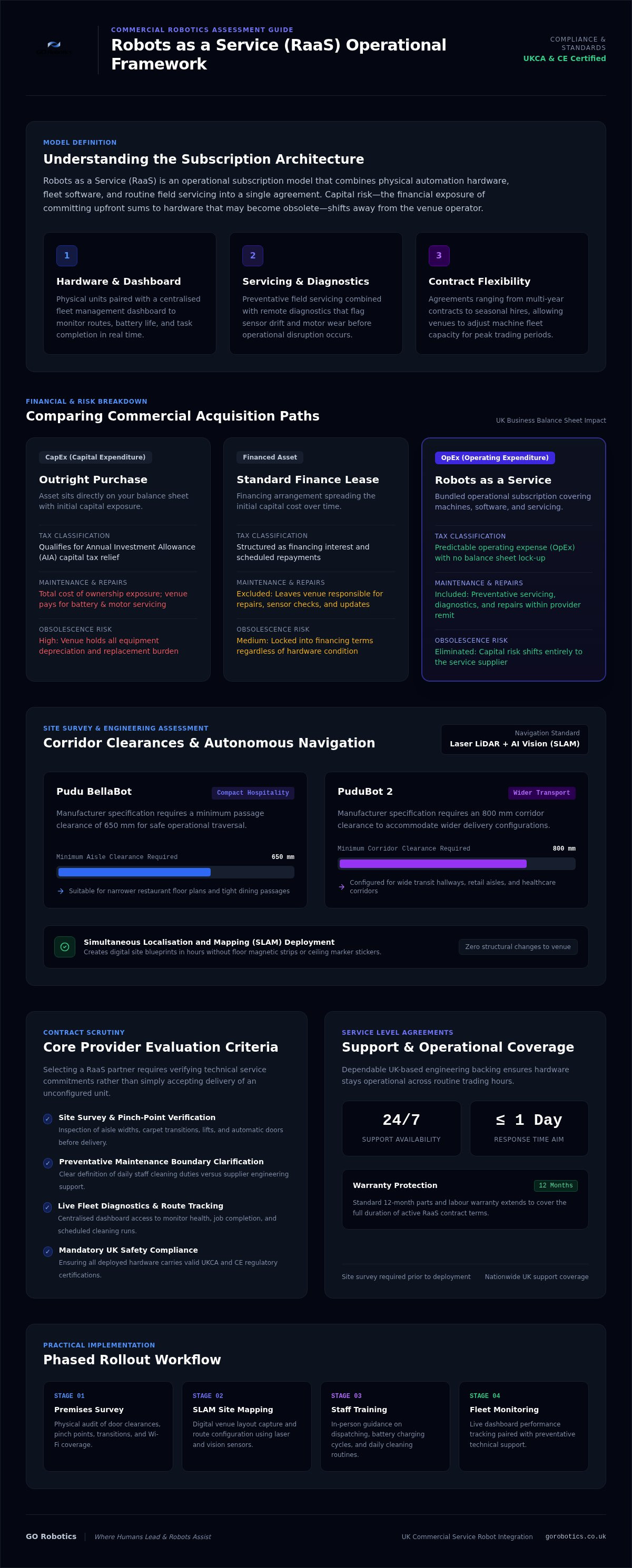
Robots as a Service (RaaS) is an operational subscription model that bundles physical automation hardware, fleet software, and routine field servicing into a single agreement. Unlike standard pure-cloud software subscriptions, a robotics arrangement involves physical machinery that experiences mechanical wear, requires floor mapping, and demands ongoing sensor calibration. When evaluating commercial RaaS providers UK organisations often confuse this framework with traditional equipment finance leases. A standard equipment lease simply finances an asset, leaving you to handle broken drive motors, depleted batteries, and operating system updates alone. A genuine RaaS subscription bundles those operational risks directly into the supplier's remit.
Deploying autonomous machines under this model helps hospitality, retail, and healthcare venues protect their cash reserves. Capital risk, the financial exposure of sinking large upfront sums into equipment that may become obsolete, shifts onto the provider. Service robots carry out routine transport and floor scrubbing tasks, freeing your team to focus on direct customer and patient care. This division of labour gives your workforce more time for attentive service while machines quietly handle repetitive transit work in the background.
The Mechanics of a Commercial RaaS Agreement
A standard subscription package simplifies ongoing operational budgeting across three core components:
- Hardware provision and fleet dashboard access: Providers supply the physical units alongside access to a centralised fleet management dashboard to track schedules and job completion.
- Maintenance and technical monitoring: Packages generally cover preventative servicing, remote diagnostics to flag system faults early, and telephone technical support.
- Contract flexibility: Terms vary from multi-year commitments to shorter seasonal hires, letting venues scale machine capacity for peak trading windows.
Capital Purchase Versus Subscription Models
Choosing between buying outright and subscribing hinges on how your finance team handles asset lifecycles. An outright purchase represents capital expenditure (CapEx). While this qualifies for UK tax relief through the annual investment allowance (AIA), it exposes your balance sheet to the total cost of ownership. Over several years, expenses like replacement lithium batteries, motor servicing, and system upgrades accumulate quickly. In contrast, RaaS categorises automation as operating expenditure (OpEx), delivering predictable cash outflows while the provider maintains the hardware throughout the subscription period.
Core Standards for Evaluating UK RaaS Suppliers
Selecting the right partner requires auditing technical onboarding protocols rather than simply signing for machine delivery. The most capable RaaS providers UK organisations rely on treat robotics as an engineering discipline. They carry out rigorous on-site assessments, manage fleet software configurations, and provide responsive engineering support rather than leaving you with an unconfigured crate on a loading bay.
Site Mapping and Technical Onboarding Protocols
Site mapping creates a digital blueprint of your venue so autonomous units can navigate safely. Modern units use Simultaneous Localisation and Mapping (SLAM) technology, which combines laser sensors with AI vision to map spaces in hours without requiring ceiling marker stickers or floor magnetic strips. Before signing, ensure the supplier assesses your narrowest pinch points. For instance, the manufacturer data lists a minimum passage clearance of 650 mm for the Pudu BellaBot, whereas wider delivery models like the PuduBot 2 require 800 mm corridor clearances. A reliable supplier verifies aisle widths, carpet transitions, and automatic door or lift integration before rolling out hardware, followed by comprehensive in-person staff training.
Fleet Management Dashboards and Remote Diagnostics
A capable robotics partner supplies a centralised fleet management dashboard to monitor your machines in real time. This platform tracks job completion, routes, and battery status across trading hours. Built-in remote diagnostics allow technicians to identify sensor misalignment or motor strain before they cause operational downtime, while strict access controls protect your internal venue layouts and customer flow data.
Regulatory Compliance and Safety Certifications
Commercial equipment must comply with UK product standards. Under UK regulations, commercial service robots can lawfully demonstrate conformity using either UKCA or CE markings, which confirm compliance with non-industrial safety requirements such as BS EN ISO 13482:2014. Look for hardware equipped with multi-sensor fusion, combining LiDAR sensors that use laser light to detect people and obstacles with 3D depth cameras to spot drop-offs and low-profile objects. Sturdy mechanical chassis with independent suspension ensure stable travel across uneven thresholds without spilling drinks or dislodging items.
To confirm that your physical venue meets these operating criteria, you can talk to an automation engineer for a practical site evaluation.
Comparing Commercial Service Robot Categories Available on Subscription
Selecting the right hardware depends on matching physical chassis mechanics to your venue floor plan and daily tasks. Reputable RaaS providers UK organisations partner with maintain diverse fleets across several operational categories rather than pushing a one-size-fits-all model. To understand the wider financial mechanics across sectors, explore our guide to robots as a service UK before assessing individual units.
Autonomous Delivery and Tray-Running Units
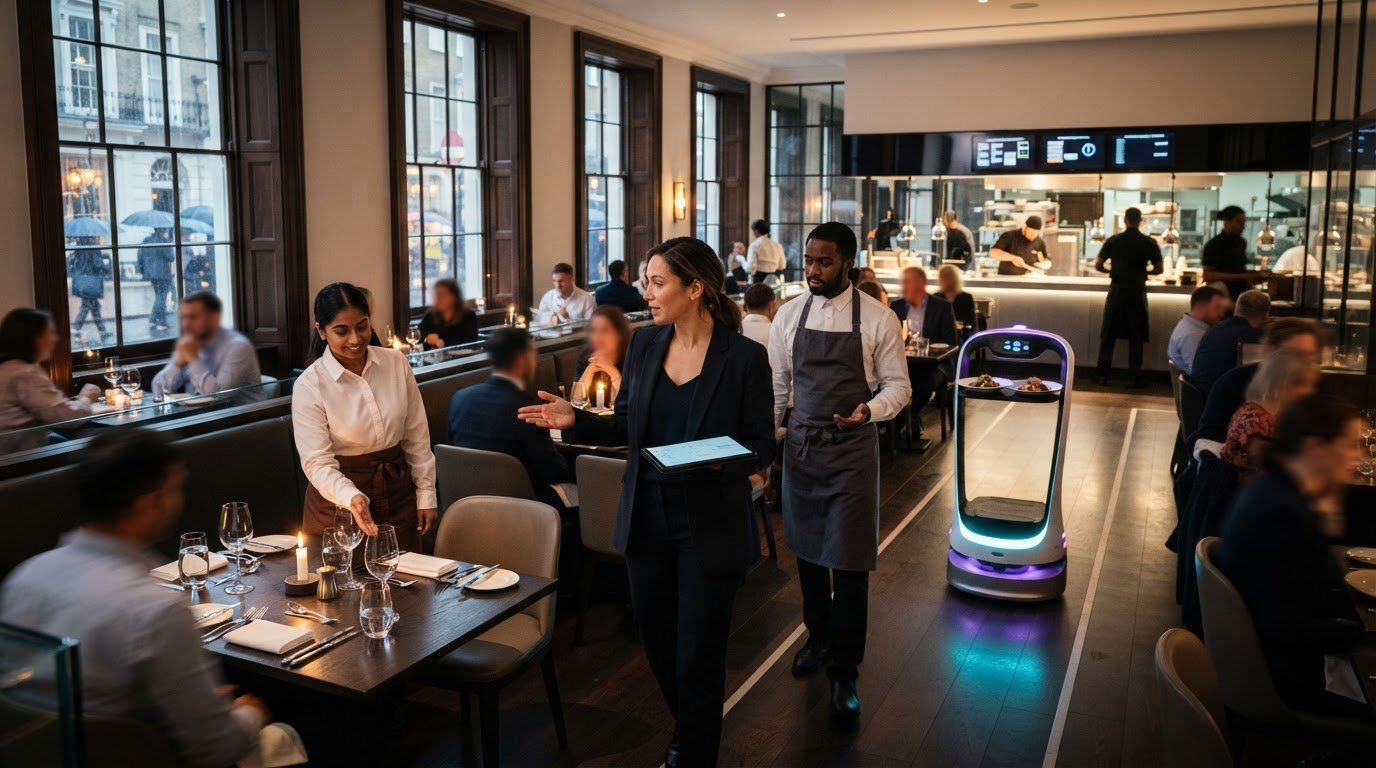
Open-tier delivery robots assist waiting staff by shuttling heavy orders and clearing soiled dishware. Models like the Pudu BellaBot feature multiple trays, while the manufacturer lists a maximum payload of 40 kg for bulk service. In multi-floor environments such as hotels and care homes, enclosed delivery units use IoT integration to communicate with automatic doors and lifts. IoT integration connects the robot to building control networks, allowing units to call lift cars and change floors without requiring human intervention or mechanical modifications to the lift controls.
Autonomous Commercial Floorcare and Cleaning Systems
Commercial floorcare systems automate routine sweeping, vacuuming, and wet scrubbing across retail centres, transport hubs, and warehouses. An autonomous scrubber like the Pudu CC1 manages sweeping, scrubbing, and squeegee drying in a single pass. Automated cleaning fleets operate on set schedules during trading hours, maintaining tidy thoroughfares while freeing your cleaning team to tackle high-touch surface sanitisation, spill response, and waste disposal. If your facilities team needs to address high-traffic floor maintenance, you can review options for a commercial cleaning robot UK deployment.
Customer Guidance and Interactive Display Units
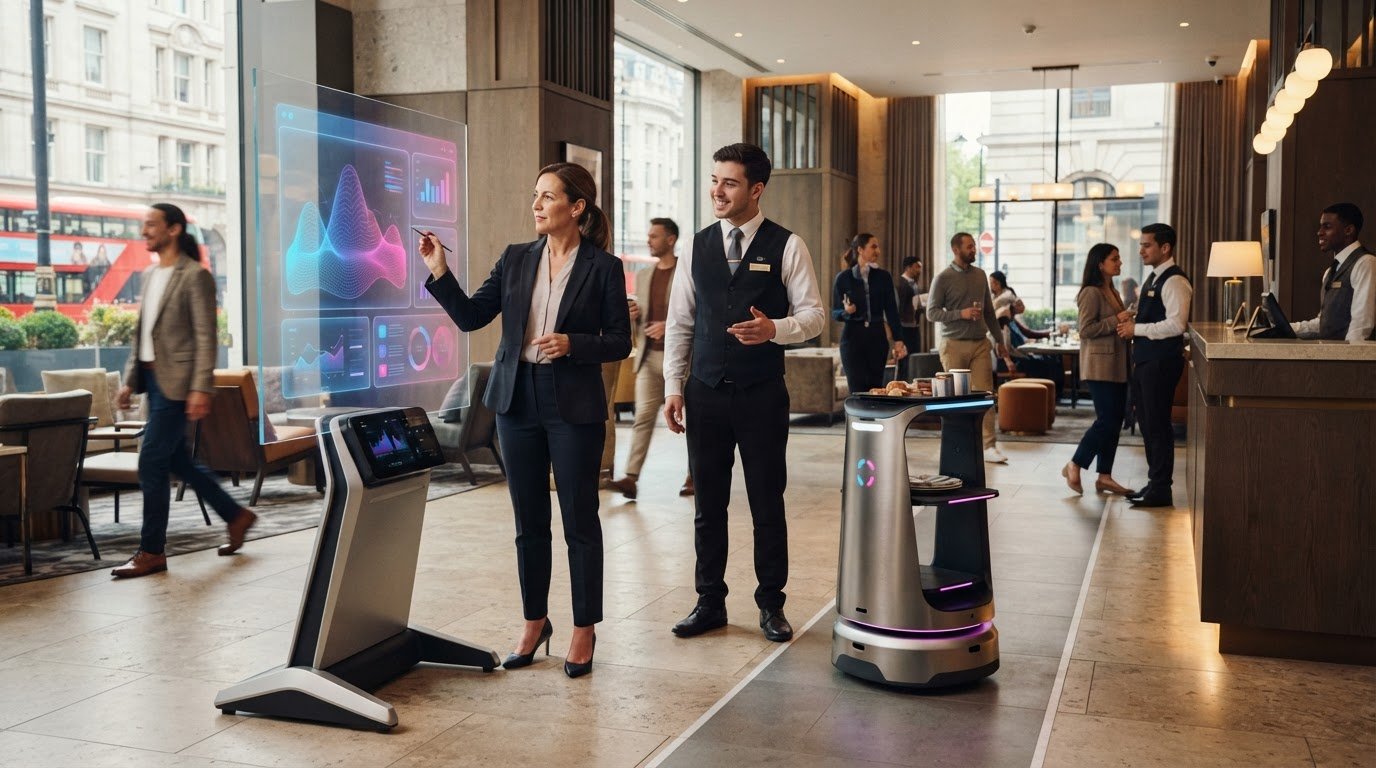
Interactive service units combine physical mobility with digital guest engagement across retail floors, corporate reception lobbies, and event spaces. Models such as the Cruzr S1 or the Pudu KettyBot integrate touchscreens and voice prompts to help visitors navigate premises, complete self-service check-in, or view promotional displays. These units guide visitors directly to meeting suites or product aisles, letting receptionists and floor hosts spend more time delivering dedicated, hands-on customer support.
Vetting Support Terms and Service Level Agreements Before Signing
Signing an operational agreement without inspecting the service schedule is the quickest route to unexpected charges. While software vendors measure service level agreements purely by server uptime, commercial robotics requires physical, on-the-ground support. Comparing RaaS providers UK venues work with means scrutinising contract terms to see where the supplier's obligations end and your daily responsibilities begin.
Read the fine print to identify common exclusions. Most commercial agreements expect venue staff to perform basic daily upkeep, such as wiping optical lenses, emptying dust collection trays, and docking machines correctly. Damage caused by liquid ingress into dry electronic bays, physical drops down stairwells, or forced manual movement with wheel locks engaged is routinely excluded from standard coverage. Ensure your contract clearly documents how routine consumable replacements, like worn drive wheels or scrubbing brushes, are handled throughout the term.
Maintenance Packages, Spares, and Warranty Coverage
A dependable subscription package must protect your operation against prolonged hardware failure. Verify that warranty cover remains active across the entire life of your agreement rather than expiring after an initial 12-month period. Chasing components from overseas factories leads to weeks of standing downtime. Reliable UK partners maintain domestic stock holdings of critical parts, including drive motors, LiDAR units, and charging docks. Before committing, confirm technical support response times; dependable suppliers aim to respond to technical queries within one business day alongside remote diagnostic monitoring.
Clarifying Total Contract Commitments and Cost Drivers
Commercial subscription costs vary based on practical deployment needs rather than arbitrary pricing tiers. Key cost drivers include:
- Deployment scale: The total number of units assigned to your site and whether extra docks are required for multi-shift schedules.
- Facility complexity: Engineering time needed for multi-floor lift integration, automatic door relays, and floor-level mapping.
- Contract duration: Multi-year operational agreements offer predictable budgeting, while flexible short-term hire options help manage peak seasonal hospitality trading.
- End-of-term flexibility: Clear guidelines on equipment upgrades, contract extensions, or scheduled collection without punitive exit penalties.
Before entering an agreement, take time to request an automation consultation to review your operational requirements and draft contract terms thoroughly.
Why GO Robotics Delivers a Complete Nationwide RaaS Solution
Deploying commercial automation successfully depends on hands-on local engineering rather than distant hardware supply. While some RaaS providers UK businesses encounter simply drop off crated machinery at the curb, GO Robotics provides a fully supported deployment framework across Britain. Every deployment reflects the core principle of Where Humans Lead & Robots Assist, configuring machines to manage heavy transport and floorcare so your employees can dedicate their attention to high-value customer service.
Complimentary Site Surveys and Objective Recommendations
A dependable implementation starts long before signing an agreement. GO Robotics carries out free site surveys to evaluate your physical floor surfaces, measure threshold steps, and audit narrow pinch points. Our engineers assess corridor clearances, automatic doors, and service paths to confirm whether your venue can comfortably accommodate autonomous traffic.
Following this inspection, you receive a tailored written proposal detailing recommended models and dock placements. Through authorised supplier partnerships with manufacturers such as Pudu Robotics and UBTECH, alongside access to other commercial models available to order, we recommend hardware that fits your specific workflow rather than offloading static warehouse inventory.
Turnkey Installation, Staff Coaching, and Ongoing UK Care
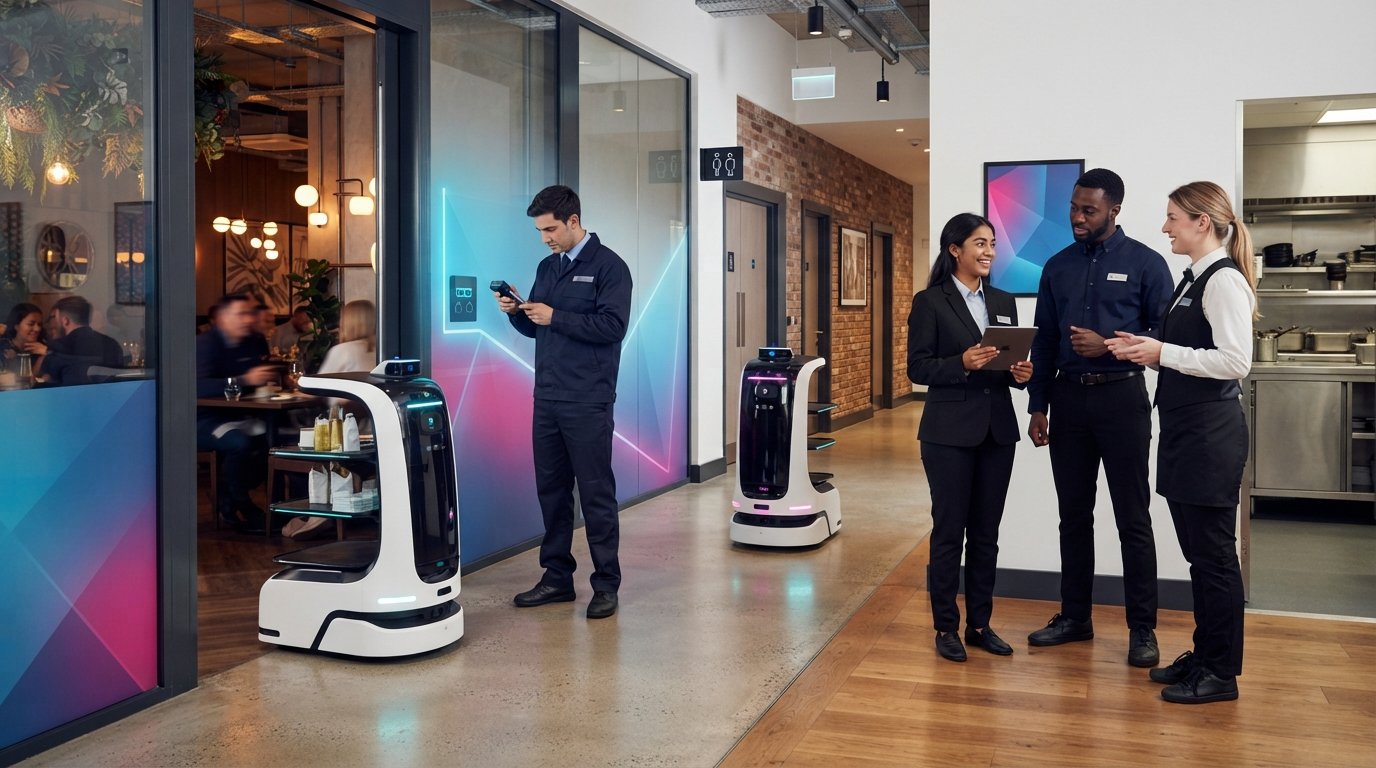
Once delivery occurs, UK-based technicians manage the entire technical setup on site. Our team builds the digital navigation blueprint, programs restricted safety zones around service stairs, and integrates automated door or lift controls. We also run structured coaching sessions with your staff, showing them how to dispatch runs, operate the touchscreen controls, and handle daily charging routines with confidence.
Subscription agreements include full warranty protection that stays active for the entire duration of your contract. Our UK technical support desk provides 24/7 technical monitoring and aims to respond to operational queries within one business day, ensuring your machines remain an active, productive asset across your trading week.
Modernise Your Operations with Confident Robotics Deployment
Selecting the right subscription partner comes down to verifiable field engineering and practical site suitability. The most dependable RaaS providers UK organisations partner with don't merely deliver boxed machinery to your loading bay. They shoulder complete operational responsibility for physical maintenance, UKCA and CE safety compliance, and full warranty cover throughout your contract term. This dependable backing ensures repetitive transport and cleaning duties run without friction while your team stays focused on delivering great service.
Through authorised UK supplier partnerships with major global manufacturers, GO Robotics provides complete nationwide support, including precision site mapping, door integration, and hands-on staff coaching. You never have to gamble on unproven hardware or manage technical hurdles alone. Book a free site survey with GO Robotics to evaluate your venue layout, review tailored equipment options, and step into the future of commercial automation with total peace of mind.
Frequently Asked Questions
What is typically included in a UK Robots as a Service subscription?
A standard agreement bundles the robotic hardware, fleet management software licences, autonomous site mapping, staff training, and ongoing servicing into a fixed monthly operating charge. When selecting RaaS providers UK organisations should check that packages also incorporate regular over-the-air firmware upgrades and comprehensive warranty coverage throughout the agreement. This full-service structure removes upfront capital risk while ensuring technical support remains available whenever operational issues arise.
How do RaaS subscriptions differ from traditional commercial equipment leasing?
Traditional equipment leasing operates purely as a finance mechanism, leaving your business responsible for routine maintenance, part failures, and system updates once the machine arrives. A RaaS agreement is an active service contract where the supplier takes responsibility for ongoing machine performance. The subscription includes software support, preventative servicing, and technical assistance, meaning you aren't left managing broken components or paying for unexpected callouts out of pocket.
Do commercial service robots require physical building modifications to operate?
No, modern commercial service units operate without physical building modifications, track guides, or ceiling fiducial tags. Leading autonomous robots use marker-free Simultaneous Localisation and Mapping (SLAM), fusing laser LiDAR with optical cameras to build a digital floor plan directly from your existing venue layout. Units navigate around standard furniture, doorways, and temporary displays, though suppliers perform a pre-deployment survey to verify floor thresholds and aisle clearances.
Can service robots navigate multiple floors using standard commercial lifts?
Yes, multi-floor delivery models can transit between levels using cloud APIs or hardware IoT relays compatible with major lift manufacturers like KONE and OTIS. These integrated systems allow the robot to call the lift car, select the required floor, and hold the doors open autonomously. The entire process requires no physical modifications to the lift mechanics, enabling smooth room service or inventory transit across multi-storey facilities.
What happens if a leased service robot experiences a mechanical fault?
When a mechanical or sensor fault occurs, remote diagnostics flag the issue immediately, allowing engineers to identify the root cause digitally. Established RaaS providers UK venues work with maintain domestic spare part inventories and aim to respond to support tickets within one business day. If remote troubleshooting cannot resolve the problem, technicians handle hardware repairs or deploy a replacement unit to prevent extended disruption to your daily operations.
Are short-term RaaS rentals available for seasonal events or peak trading?
Yes, suppliers frequently offer flexible short-term subscription terms tailored to seasonal trading surges, corporate exhibitions, and promotional pop-ups. Venues can bring in extra delivery runners or interactive display units to support busy summer terraces or winter retail peaks without committing to long multi-year contracts. These short rentals include full initial site mapping and operator coaching, allowing temp or seasonal workers to use the equipment immediately.
How do UK providers ensure service robots navigate safely around customers and staff?
Service robots maintain safety around the public through multi-sensor fusion, combining 360-degree LiDAR, 3D depth cameras, ultrasonic sensors, and emergency stop triggers. This sensor array continuously scans surroundings for pedestrians, trolleys, and sudden obstacles, automatically slowing or altering routes in real time. Legitimate UK commercial deployments must also satisfy non-industrial machinery safety regulations, carrying clear UKCA or CE marks demonstrating compliance with BS EN ISO 13482:2014 standards.