Benefits of Using Robots in Restaurants for Faster Service
Restaurants use robots for defined, repeatable jobs, such as carrying dishes, moving supplies or supporting routine food preparation. The benefits of using robots in restaurants depend on choosing tasks that suit the venue and fit its existing service. Used thoughtfully, automation can help keep routine work moving while staff focus on decisions and interactions that call for human judgement.
A robot is not a substitute for good hospitality or a fix for every staffing pressure. Its contribution depends on the task, the restaurant’s layout and how staff manage handovers. Kitchen automation and delivery robots also serve different purposes, so assess each task on its own rather than expecting one machine to solve several problems.
This article looks at how restaurants use robots and where they may support consistent preparation, quicker service and more considered food use. It also considers how automation can affect staff workloads, maintenance, safety and guest trust. These practical points can help you decide whether a robot fits your operation, and what to think through before introducing one.
Key Takeaways
- Identify repetitive journeys, such as carrying dishes, where a service robot could support your team.
- Consistent delivery can help service flow, while reducing food waste depends on the kitchen task being automated.
- Use robots to assist staff with routine work, leaving people more time for tasks that need judgement and personal attention.
- Plan how the robot will move through your venue and fit into staff routines before introducing it.
- Keep human hospitality central, and consider how different customers may feel about interacting with robots.
How are restaurant robotics currently being used?
UK restaurants with repeatable tasks and clear routes, including busy dining venues and delivery-focused kitchens, may find robots useful. They are generally assigned specific jobs, while staff remain responsible for hospitality and decisions that need human judgement.
In a dark kitchen, which prepares orders for delivery without serving diners on site, automation can support repeatable preparation and movement between work areas. For example, a robot may move ingredients or prepared items along a set route. Automated equipment can handle routine steps while staff oversee ingredients, check orders and manage exceptions before dispatch.
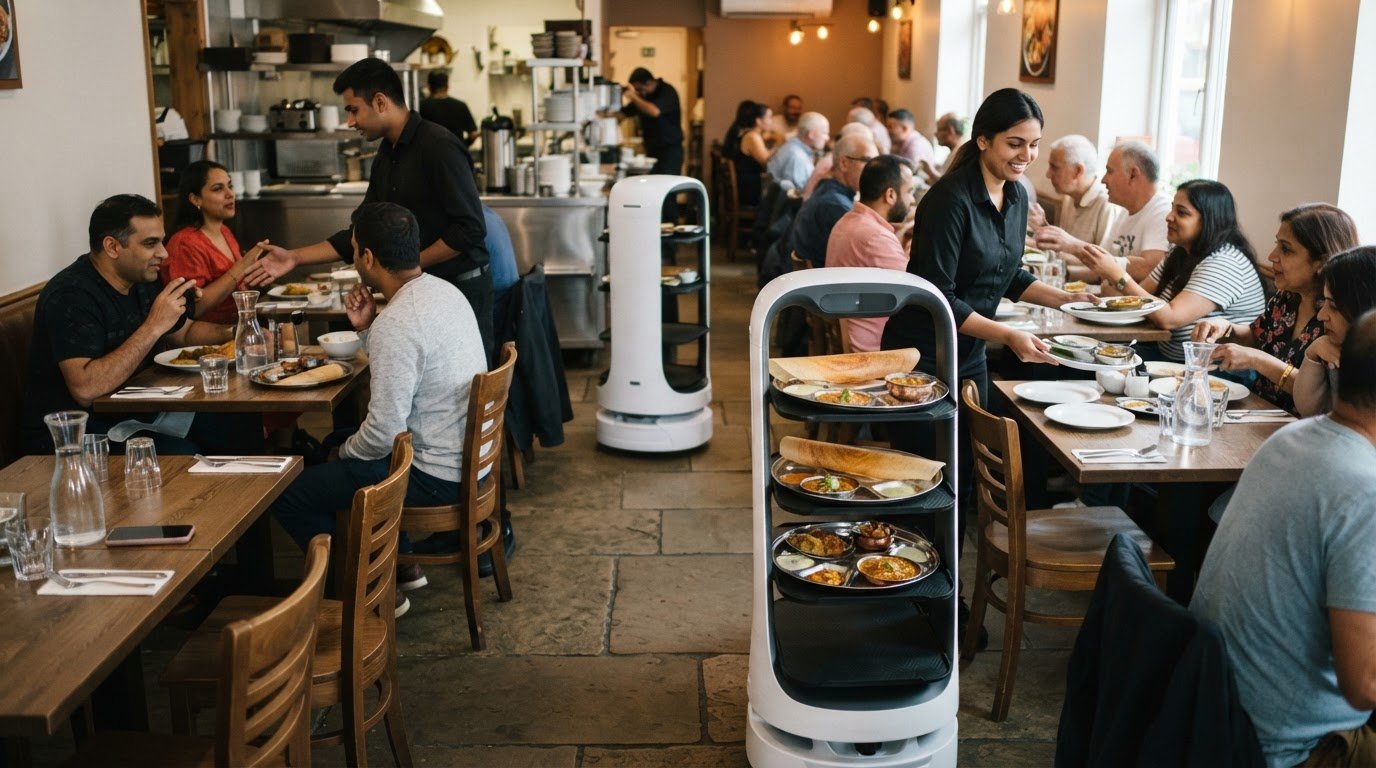
In restaurants with dining rooms, robots can carry items between the kitchen and tables or collect used dishes. Kura Sushi is one example of a restaurant using delivery robots at scale. For UK operators, the practical lesson is to define the machine’s task and handover rather than assume the same setup suits every menu or floor plan.
Restaurant Roles and Repetitive Food Preparation
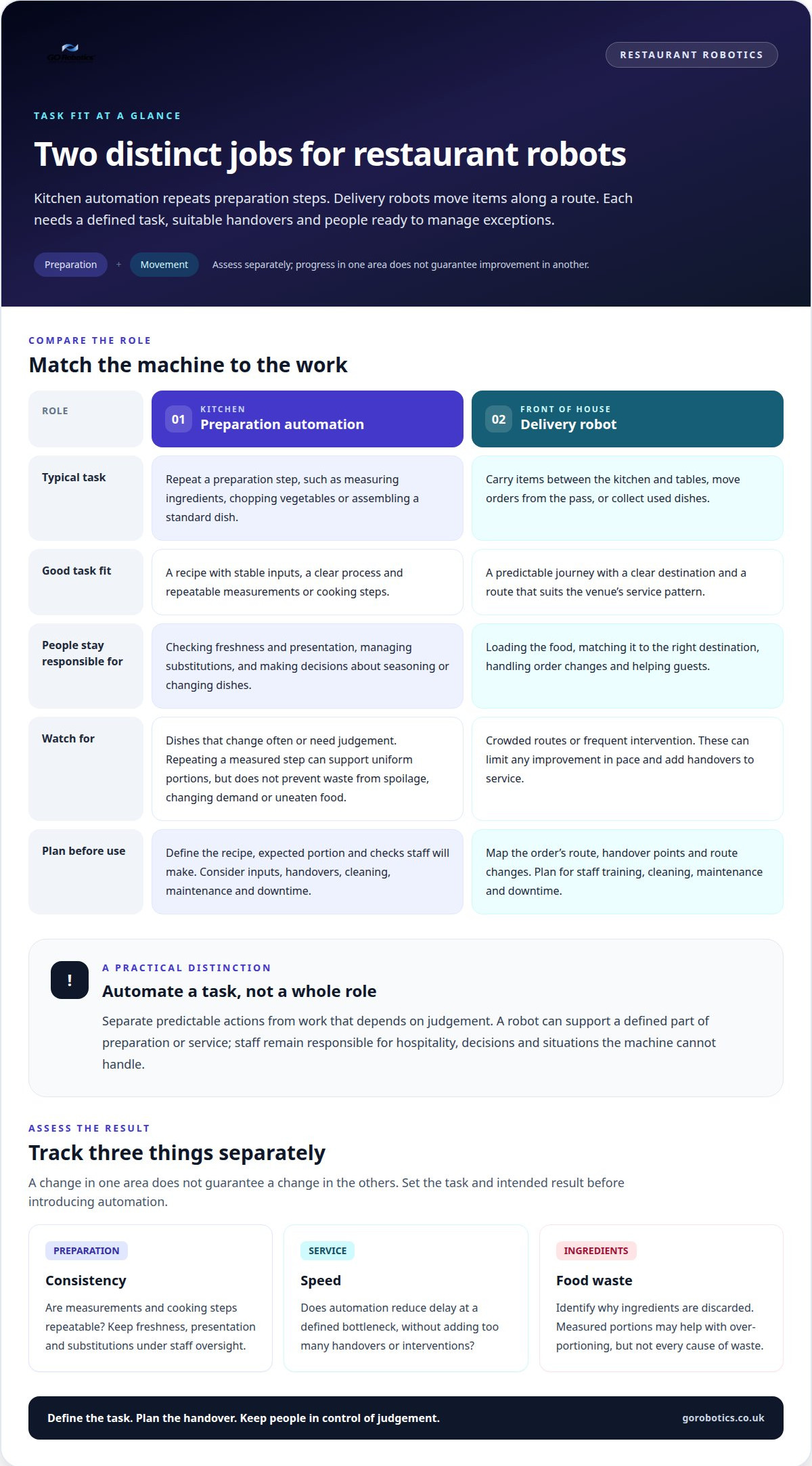
Roles suited to automation involve predictable actions, such as carrying supplies, transporting dishes or repeating a preparation step. These tasks can be separated from work that depends on a cook’s judgement. Kitchen equipment might assist with chopping vegetables or assembling a standard dish, while employees handle seasoning, presentation and customer requests.
Start by examining a task’s inputs and handovers. If staff prepare the same components repeatedly, a machine may support that part of the process. If a dish changes often or requires decisions based on its appearance or ingredients, people should retain control. This distinction helps operators consider automation without treating a whole role as interchangeable with a machine.
Assessing Restaurant Automation
Automation needs to fit the venue’s service pattern. A delivery robot, for instance, has a different role and operating needs from equipment used for repeated kitchen preparation.
Assess the workflow as well as the equipment. Staff training, cleaning, maintenance, route changes and downtime all affect how well a machine fits into daily service. A machine assigned regularly to a defined bottleneck is easier to assess than one given scattered tasks. Keep human hospitality in the plan, with staff available for guest questions, order changes and situations the robot cannot handle.
Benefits including consistency, speed and reduced food waste
The benefits of using robots in restaurants depend on matching a machine to a repeatable task. Assess food consistency, service speed and ingredient use separately: progress in one area does not guarantee improvement in the others.
Food Consistency and Portion Control
Food consistency means preparing the same dish with repeatable measurements and cooking times. Portion control keeps each serving aligned with the recipe. When a kitchen prepares a popular dish throughout service, automated equipment can measure ingredients or follow a programmed sequence. Staff still check freshness, presentation and substitutions, keeping decisions that need judgement with the people responsible for the meal.
For example, a kitchen could measure a standard quantity of rice for each bowl, then have a cook add a requested topping. Repeating the measured step can make portions more uniform and help the team track ingredient use. That information may support stock planning, but it will not prevent waste caused by spoilage, changing demand or food left uneaten.
Automation is most suitable when a recipe has stable inputs and a clear process. A dish that changes often may require a cook to adjust quantities or cooking time. Before assigning equipment to preparation, define the recipe, expected portion and checks staff will make. This supports consistency without treating every meal as identical.
Speed and Reduced Food Waste
Speed comes from reducing delays in a defined task; waste reduction depends on controlling ingredient use and preparation. A service robot can carry an order from the pass to a table while staff manage other parts of service. The benefits of using robots in restaurants are clearest when automation removes a specific bottleneck rather than adding handovers.
Consider the order’s route from kitchen to guest. Staff still need to load the food, match it to the right destination and step in if an order changes. If the route crosses a crowded area or requires frequent intervention, the robot may not improve the pace. A clear handover and suitable route help the team judge whether this task is worth automating.
To address food waste, first identify its causes. Over-portioning may respond to measured ingredients, while excess preparation may relate to ordering or demand planning. A cooking robot cannot resolve every cause on its own. Track where ingredients are discarded, then decide whether portioning or another repeatable step addresses that source of waste.
Define the task and the result you want to assess before introducing automation. Plan robot-assisted restaurant service around the workflow you want to improve.
Restaurant staffing shortages and turnover
When a shift is short-staffed, repeated trips and routine handling can leave employees less available for guests. Robots can take on defined food-service tasks, but they support a team rather than replace its judgement or hospitality.
Assisting Staff with Repetitive Tasks
Assisting staff means assigning a robot a predictable task, such as carrying cleared plates or moving supplies between a kitchen and service point. Repeated journeys and handling can interrupt other work. For example, staff can focus on preparing orders while a robot transports items along an established route. The benefit depends on whether the task fits the restaurant’s layout and workflow.
Physical strain is another consideration. Repeatedly carrying trays or moving stock can add to the demands of a kitchen shift. A robot assigned to transport items between the kitchen and a collection point may reduce some manual movement. Staff still load and unload items, prepare food and respond when a route or order changes.
Build the robot’s role around a clear handover. A team member might place a prepared order on its tray, start the delivery and check that the right food reaches the right table. This division keeps food checks with people and makes the robot’s task specific. It also gives employees a straightforward way to spot delays or exceptions during service.
Reallocating Staff Time to Customer Service
Reallocating staff time means shifting people from routine journeys towards guest-facing work, such as explaining menu choices or checking on a table. Customer satisfaction often depends on how staff respond to individual needs. A delivery robot can carry dishes while an employee answers a question about ingredients or handles a request for a change.
Consider a busy dining room where a server repeatedly carries dishes from the pass. If a service robot handles that route, the server can spend more time greeting guests, responding to requests and checking orders. The robot does not provide personal service; it can free up workflow capacity for staff to do so.
Efficiency depends on how well the new task fits the shift. Staff need to know who loads the robot, who monitors deliveries and who steps in when an order needs attention. A clear routine helps prevent duplicated work, such as a server and a robot carrying the same dishes. It also makes the change easier to explain before service begins.
Innovation works best when it addresses a real pressure point, not when it adds a task without removing another. Map a repetitive journey, such as carrying clean glasses from storage to the bar, and identify who currently does it. Then consider whether automation would let those workers spend more time on preparation or guest interaction. Keep people responsible for judgement, exceptions and hospitality.
Safety and sanitation considerations
Restaurant robots can take on defined, repetitive tasks, but they still need staff oversight and cleaning. Their practical value depends on whether they support a real operational need without disrupting safe food handling or service.
Supporting Restaurant Staff
Automation can support specific tasks that would otherwise occupy employees. This matters when a short-staffed shift must balance food preparation, clearing and guest service. A robot can transport prepared orders or move supplies along an established route, while staff remain responsible for food checks and customer requests.
That support has limits. A robot cannot cover every role in a kitchen or dining room, and people still need to load, unload and monitor its work. If a route is blocked or an order changes, an employee must manage the exception. Plan the task around a clear handover rather than treating the machine as a replacement for a team member.
Planning Cleaning and Sanitation
A robot’s contribution depends on more than the task it performs. For example, a delivery robot may reduce repeated trips, but staff still need to manage handovers, keep the route clear and follow the manufacturer’s cleaning instructions.
Consider the full workflow: staff training, routine cleaning and what happens if the robot cannot operate. Sanitation also needs a practical plan. Keep food preparation and robot-handling roles clear, clean the robot as directed by its manufacturer, and avoid placing it where it obstructs staff carrying hot dishes or working at the pass.
Assessing the Effect on Work
Automation does not remove the need for employees. This distinction matters when assessing whether a robot helps manage a restaurant’s workload. If staff use time freed from carrying trays to prepare orders or support guests, the benefit is a shift in how their work is allocated.
Compare the task before and after automation. Note which employee performs it, how often it interrupts other duties and what work takes priority when a robot handles it. Consider the cleaning arrangements and what happens during downtime. This helps you assess how automation fits the restaurant’s actual workflow.
Safety and sanitation depend on the whole working arrangement, not just the robot. Set clear routes away from busy food-preparation areas, train staff on loading and stopping the machine, and make cleaning responsibilities explicit. In a restaurant that also serves retail products, for example, keep robot movements from crossing food handling and customer collection points unnecessarily. This can support orderly service, but satisfaction still relies on staff handling questions, allergies and unusual requests with care.
Customer trust and interaction with robots
A robot changes one part of the dining experience: how an order moves from staff to guest. Trust depends on making that interaction clear while keeping people available for questions and personal service.
Customer Appeal and Restaurant Innovation
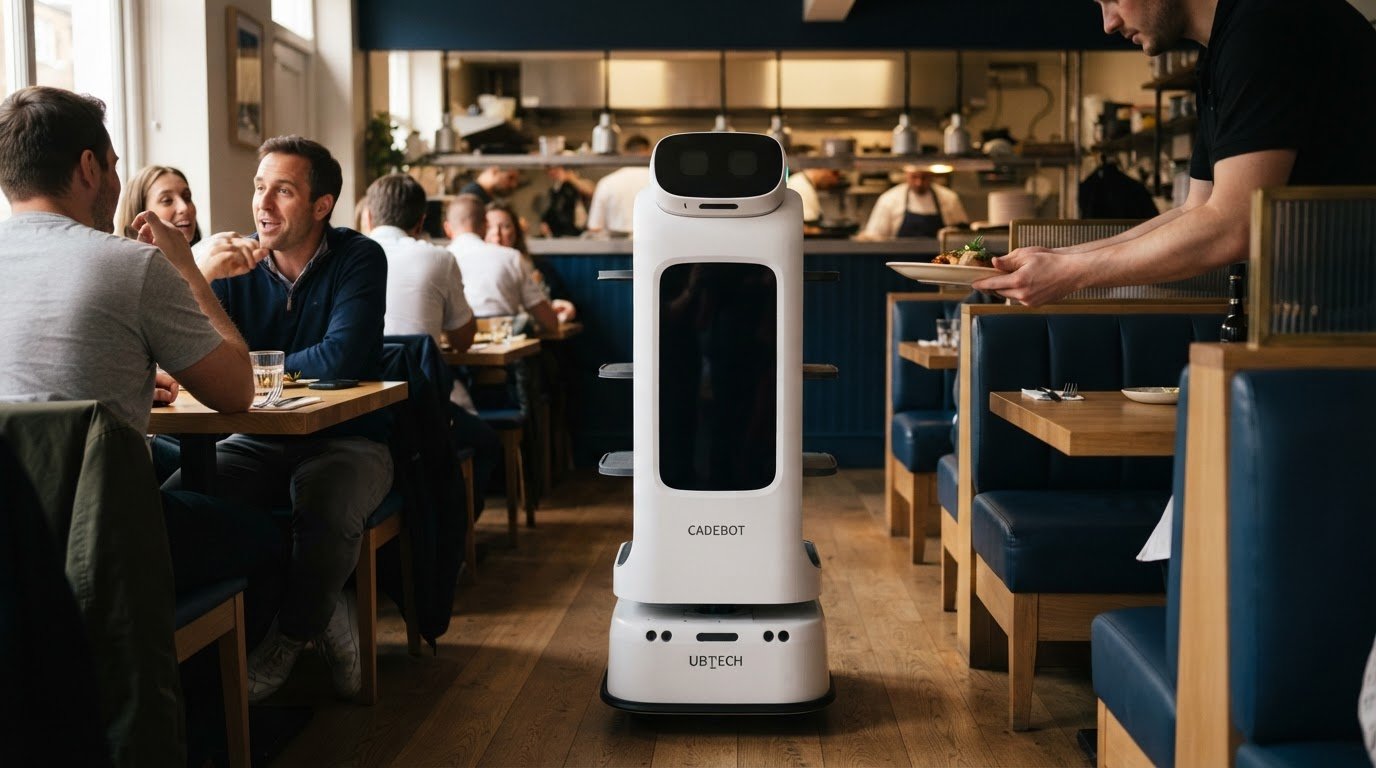
A robot can add a visible point of difference, but its appeal depends on how it fits the meal. For example, a delivery robot carrying dishes through a dining room gives guests a direct view of automation at work. National chains may use consistent service routines across venues, but each restaurant still needs to consider its layout and customer expectations.
Novelty alone does not make a better visit. Explain the robot’s role with simple staff guidance: it carries dishes, while employees remain available to help. This makes the interaction easier to understand for guests who have not encountered a service robot. It also connects innovation to a practical purpose, rather than making technology the main event.
Keep a human option visible. Guests who would rather speak with a member of staff should be able to do so without confusion. Staff can answer a menu question or resolve a delivery issue while the robot performs its assigned journey. This balance maintains familiar hospitality alongside a different service method.
Customer Engagement and Dining Experience
Customer engagement is the way guests encounter and respond to a robot during service. It matters because a clear interaction can make a delivery feel orderly, while an unclear handover can distract from the meal. Tell guests what to expect, such as where the robot will stop and which staff member can help.
For a table delivery, staff can place the order on the robot, guide its route and complete the handover with the guest. The machine carries food; people answer questions about ingredients, changes or service. This distinction is especially useful when a diner’s request falls outside the robot’s defined task.
Watch how guests respond during everyday service. If diners hesitate at a delivery point, staff can explain the process and assist with the order. If the robot narrows a walkway or interrupts conversation, adjust its route or timing. These practical decisions help the technology fit the dining room instead of asking guests to adapt around it.
Keep the purpose specific: a robot supports a delivery task, while staff remain responsible for hospitality. Plan a customer-focused robot trial around the interaction you want guests to experience.
GO Robotics
GO Robotics helps restaurant operators assess where service robots could support their team and fit their day-to-day workflow. A site survey helps match the venue’s layout and needs with a suitable option, such as Pudu BellaBot, Pudu KettyBot or Pudu HolaBot.
The right choice depends on the task you want to support, how staff and guests move through the restaurant, and how the robot would fit into service. GO Robotics supplies, installs and supports these robots, with purchase, lease and Robots-as-a-Service options available.
If you’re considering automation for your restaurant, contact GO Robotics to discuss your requirements.
Choose the right first task for your restaurant
The benefits of using robots in restaurants are clearest when you start with a specific task and practical purpose. Before choosing equipment, decide what you want to improve: a repeated delivery route, routine supply movement or another defined part of service. Then consider how the task fits staff routines and the guest experience you want to provide. This gives you a clear basis for discussing whether automation suits your venue.
GO Robotics offers Pudu BellaBot, Pudu KettyBot and Pudu CC1 for restaurant operators considering service robots. The useful next step is to talk through your venue, the work you want a robot to support and how it would fit into day-to-day service. That discussion can help bring the operational priorities and the technology together without losing sight of hospitality.
Contact GO Robotics to explore restaurant robots and plan a considered next step for your team.
Frequently Asked Questions
What tasks can robots perform in restaurants?
Restaurant robots can carry meals, collect used dishes, move supplies and assist with repetitive food preparation. The task depends on the robot: a delivery model transports items between set points, while kitchen automation can handle repeatable preparation steps. For example, an operator might assign dish collection during a busy service, leaving staff to handle table requests and check orders reach the right guests.
How do restaurant robots improve service speed and efficiency?
Robots can improve service flow by completing a defined task while employees focus elsewhere. For example, a delivery robot making regular trips from the pass can reduce interruptions for a server handling guest requests. The effect depends on route design, order timing and how often people need to intervene. If the robot causes congestion or needs frequent help, it may not improve the overall pace.
Can restaurant robots reduce staffing costs and labour shortages?
Robots can support a team during staffing pressures, but they do not remove the need for employees. A restaurant might automate repeated food transport so available staff can focus on preparation, service or order checks. Whether this changes staffing costs depends on the task, equipment and ongoing maintenance needs. Assess the work being reassigned rather than assuming a robot replaces a role or delivers a fixed saving.
What evidence is there that restaurant robots improve customer satisfaction?
There is no single result that applies to every restaurant. Assess customer satisfaction in your own venue by collecting feedback about delivery, waiting and staff availability before and after introducing a robot. Note whether guests find the handover clear, whether routes interrupt dining and whether staff respond promptly to requests. These observations help show whether the technology improves the experience or adds friction.
What are the main limitations and risks of using robots in restaurants?
The main limitations are task boundaries, route disruptions and the need for human oversight. A crowded aisle, changed table layout or unusual order can interrupt a robot’s planned movement. Restaurants also need clear procedures for loading, food checks, cleaning and guest assistance. Keep staff responsible for allergy questions, substitutions and service recovery, and plan routes so robots do not obstruct busy work areas.
How much maintenance and staff training do restaurant robots require?
Maintenance and training needs depend on the model, its assigned work and the manufacturer’s instructions. Staff should learn how to start and stop the robot, load or collect items, respond to interruptions and report faults. The operating plan should also cover routine cleaning and servicing. Set responsibilities clearly across shifts so a handover does not leave the robot unattended or maintenance tasks overlooked.