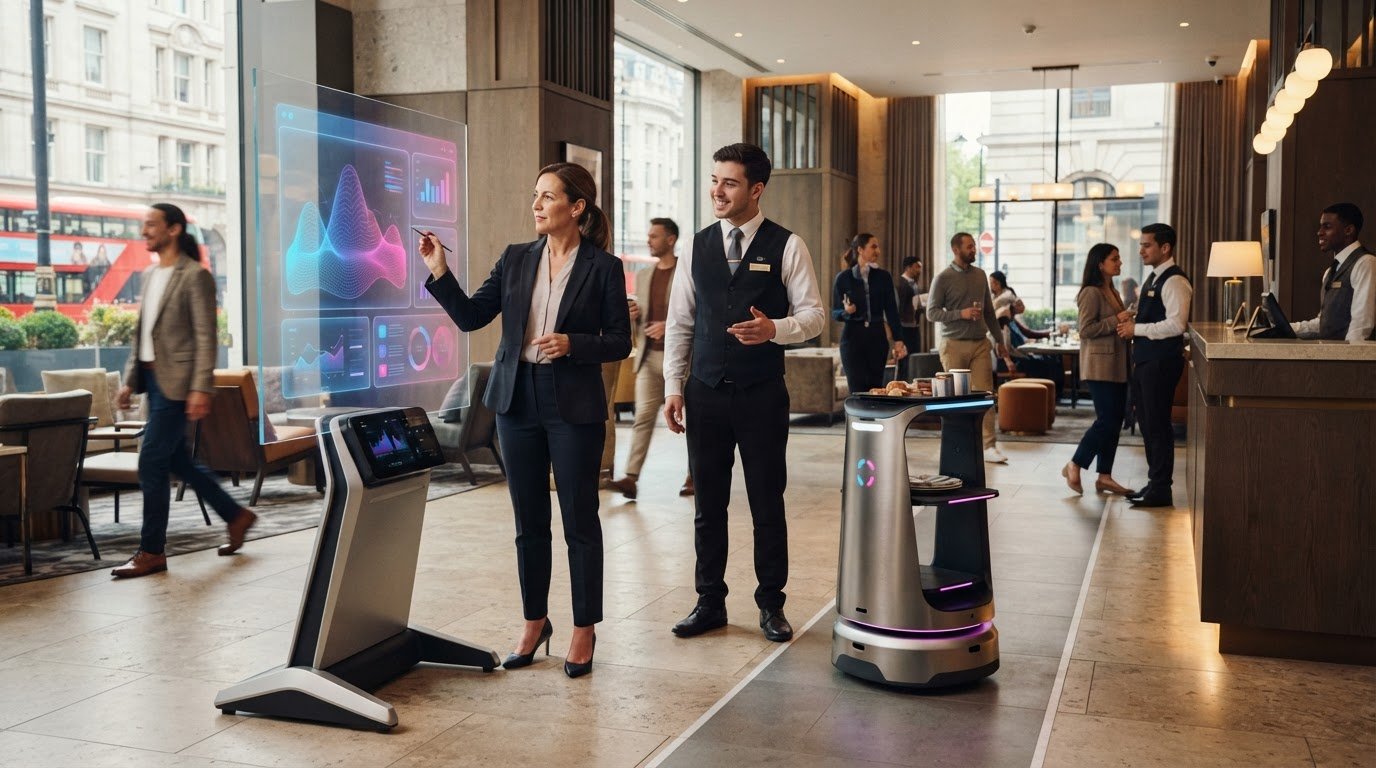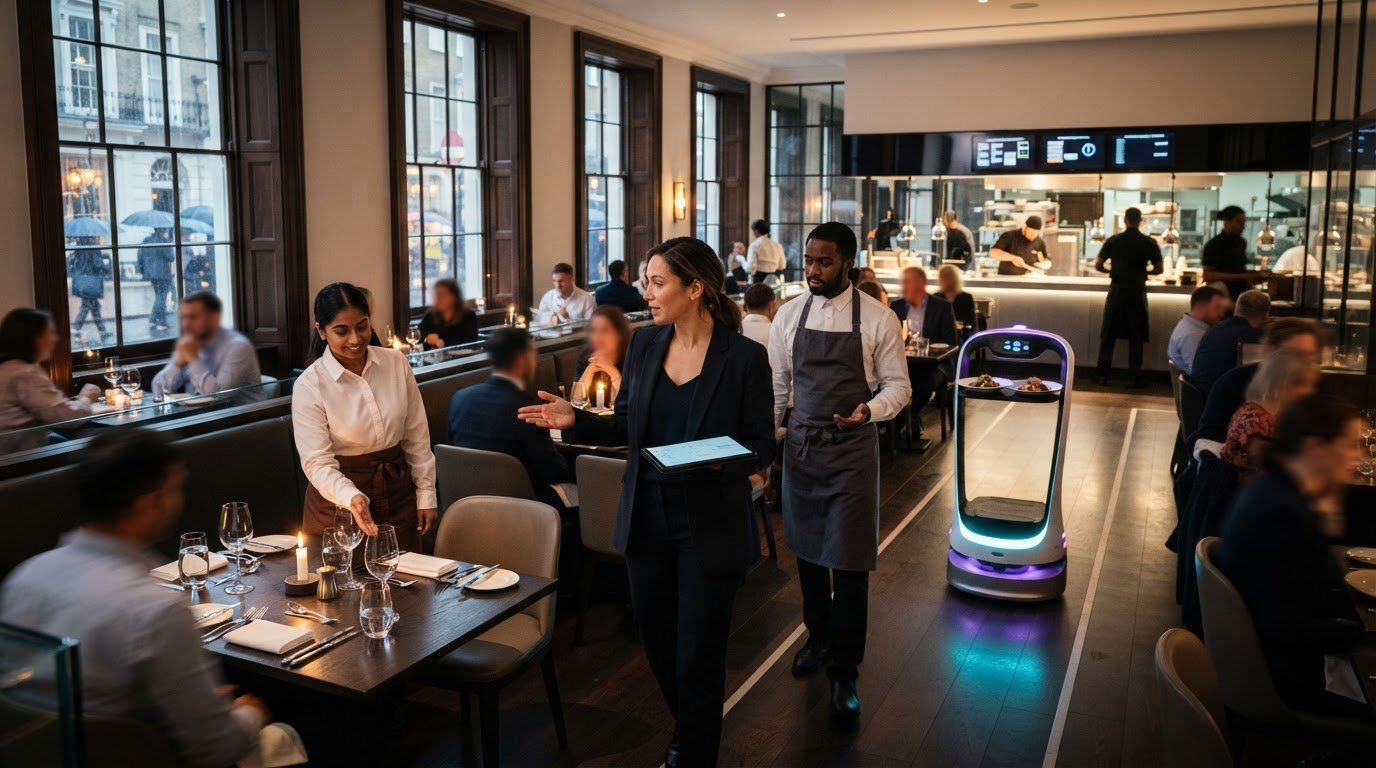
How to Run a Restaurant Short-Staffed: UK Guide 2026
Surviving a busy shift with an incomplete team succeeds by eliminating unproductive footsteps, not by demanding your remaining staff run faster. When two servers call in sick on a Friday afternoon, knowing how to run a restaurant short staffed becomes an immediate exercise in triage. You already know the dread of watching ticket times creep up while you run hot plates to table twelve instead of supervising the floor. Food goes cold, customer ratings slip, and the team members who did show up face pure exhaustion.
You cannot simply ask overworked servers to carry heavier loads or expect managers to abandon floor standards just to clear the pass. You need practical workflows that reduce transit distance and protect your team. In this guide, discover practical shift strategies, targeted menu adjustments, and assistive technology to maintain service standards with fewer staff. We examine immediate triage tactics for tonight's service alongside long-term operational changes to keep table turn times steady without exhausting your team.
Key Takeaways
- Protect kitchen ticket flow by staggering reservation arrivals and capping walk-in covers before service starts.
- Learn how to run a restaurant short staffed by shifting from isolated table sections to zoned teams that cut wasted footsteps.
- Hold concise pre-shift briefings to agree on realistic turnaround targets and prevent staff exhaustion.
- Deploy assistive runners and kitchen display technology to shoulder physical hauling so senior waiters can focus on guest hospitality.
- Cross-train floor and kitchen personnel across essential stations to build long-term operational resilience.
Emergency Shift Triage: What to Adjust When Staff Call in Sick
When unexpected sickness leaves your rota thin before evening service, planning your response immediately protects the shift. Rather than hoping the remaining team can absorb the extra pressure, successful managers calculate real operational capacity before opening the doors. Understanding how to run a restaurant short staffed begins with decisive gatekeeping at the host stand and the pass.
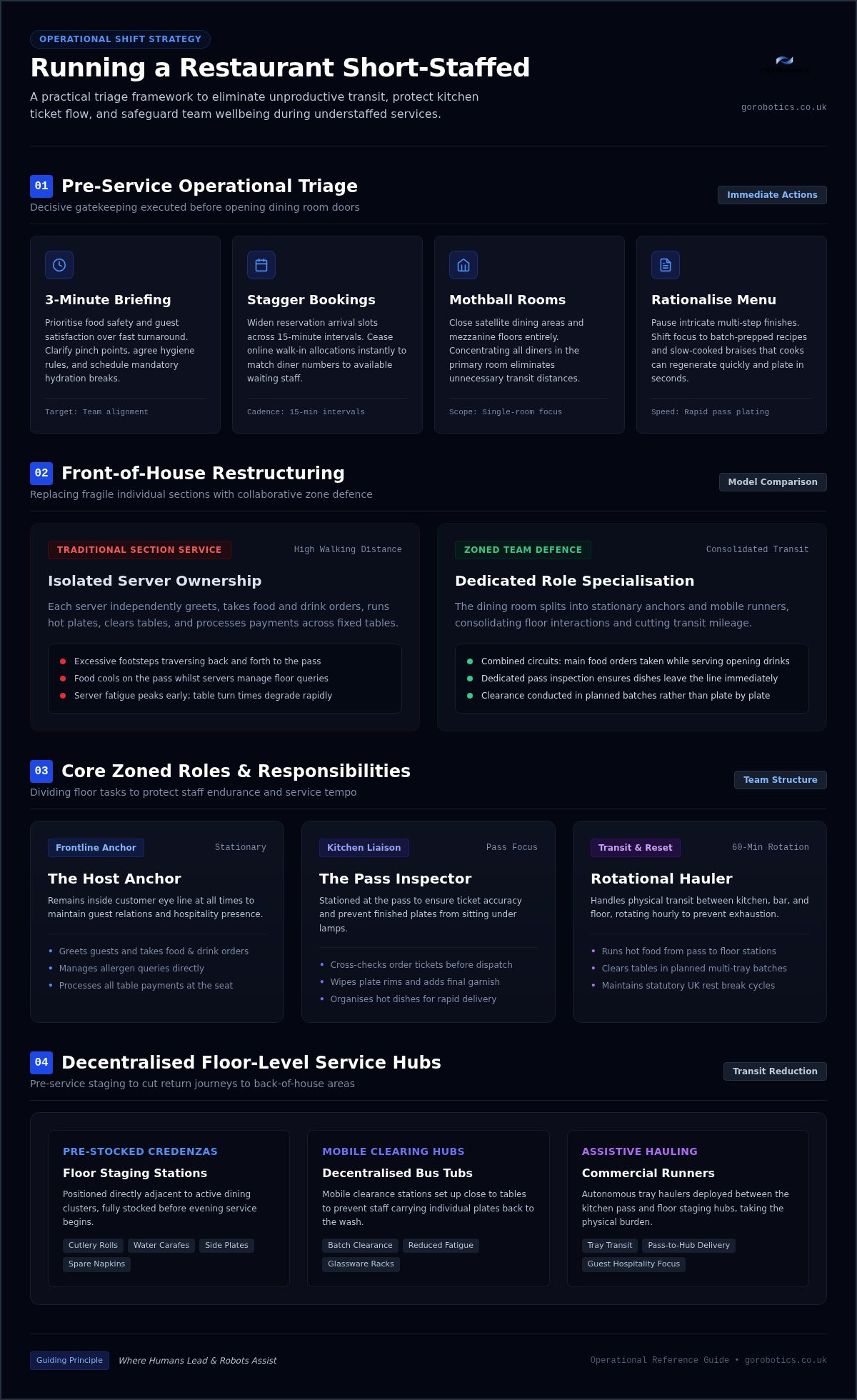
Before service starts, gather your remaining front and back-of-house staff for a three-minute briefing. Set clear boundaries: food safety and guest satisfaction outrank rapid table turnover tonight. Clarify who handles critical pinch points, agree on non-negotiable hygiene protocols, and confirm that staff take their scheduled hydration breaks.
Adjusting Seating Capacity and Staggering Bookings
Protect your kitchen pass by controlling the arrival flow early. A thin front-of-house team cannot safely deliver hot plates if three large parties sit at the same moment. Take immediate command of your reservation sheet:
- Block walk-in covers: Switch off online walk-in allocation immediately to align diner volume directly with available server numbers.
- Widen booking intervals: Spread existing reservations across fifteen-minute intervals, preventing order tickets from hitting the kitchen in concentrated clusters.
- Mothball satellite rooms: Close off secondary dining areas or mezzanine floors entirely. Concentrating diners in the main room cuts server walking distances and keeps floor oversight tight.
Menu Rationalisation for Understaffed Kitchens
When cook stations are short-handed, complicated tickets create an immediate bottleneck at the pass. Traditional French station hierarchies, rooted in the kitchen brigade system, rely on dedicated station chefs to execute intricate elements simultaneously. When one cook must manage multiple sections, complex assembly slows the entire line.
Pause multi-step dishes that require delicate, last-minute finishing. Focus the evening board on batch-prepped recipes and slow-cooked braises that cooks can regenerate quickly and plate in seconds. Inform floor staff before the doors open about any paused items. When servers understand the restricted menu clearly, they guide guest selections toward dishes the kitchen can send without delay, demonstrating how to run a restaurant short staffed without letting service standards collapse.
Restructuring Front-of-House Workflows to Reduce Footsteps
Traditional restaurant service relies on section ownership. Each waiter greets, takes orders, pours drinks, runs plates, and processes bills for their assigned tables. When you are operating down two servers, this traditional model quickly breaks down. Staff spend most of their time traversing the dining room rather than attending to diners. Mastering how to run a restaurant short staffed requires shifting from isolated sections to a coordinated zone defence that cuts wasted physical transit.
Consolidate your service floor into two distinct operational roles: guest anchors and dedicated runners. Anchors remain inside customer eye line at all times, taking orders, handling allergen queries, and processing payments. Runners handle the physical transit between the kitchen, the bar, and dining stations. Combining table visits also saves significant mileage. Staff should take main orders while serving opening drinks, rather than making two separate circuits.
Zone Defence vs Individual Section Service
Splitting service responsibilities stops your floor from unravelling when covers peak. Assigning specific duties prevents staff from duplicating journeys or neglecting tables:
- The Host Anchor: One experienced waiter stays on the dining floor to greet guests, take orders, and manage guest relations directly.
- The Pass Inspector: Keep a second team member stationed at the pass to check tickets, wipe plate rims, and ensure hot dishes leave immediately.
- Rotational Hauling: Clear tables in batches rather than plate by plate. Rotate physical clearance duties between staff every sixty minutes to manage fatigue and uphold UK statutory rest break entitlements during intense services.
Establishing Floor-Level Service Hubs
Eliminate return trips to the back of house by building decentralised staging stations. Stock service credenzas fully before service with cutlery rolls, water carafes, side plates, and spare napkins so staff rarely step off the floor to restock. Setting up mobile clearing stations with bus tubs near your primary dining cluster also saves hundreds of paces each hour.
UK venues looking to modernise their floor logistics often support these hubs using autonomous runners to haul trays between stations. You can explore how hospitality venues deploy commercial runners through GO Robotics automated service options. Removing repetitive transit lets your remaining floor staff stay visible where diners need them most, demonstrating how to run a restaurant short staffed without exhausting your remaining team.
Communication and Team Wellbeing During Demanding Shifts
High-stress services quickly erode team morale if management stays silent. When covers stay steady but headcount drops, silence from leadership breeds panic. Knowing how to run a restaurant short staffed requires transparent, steady leadership that keeps everyone focused on manageable targets. Your team will pull together through a tough service if they see that managers protect their wellbeing rather than demanding impossible speed.
Running an Honest Pre-Shift Team Briefing
Gather your entire team five minutes before opening. Outline the exact staffing deficit plainly and walk through the triage measures you have put in place. Agree on simple hand signals for when a floor runner or pass coordinator needs quick backup. Make it clear that table turnaround targets will flex tonight. In line with the HSE work-related stress guidance, managers need to spot excessive workplace pressure early and adjust demands rather than blaming workers for slow tickets. Schedule staggered ten-minute rest breaks so nobody works six hours without stepping away from the floor.
Managing Guest Expectations Transparently
Diners accept delays far better when you inform them upfront rather than leaving them wondering. Train your host to update arriving parties honestly about kitchen wait times before showing them to their table:
- Set the tempo early: Inform guests on arrival that dishes are prepared fresh to order and may take slightly longer than usual.
- Offer small courtesies: Bring iced water and complimentary bread baskets immediately to buy grace during the wait for starters.
- Standardise phrasing: Teach floor staff simple de-escalation responses like, "Thank you for your patience tonight while our kitchen prepares your dishes."
Once service wraps, pull the team together for a brief post-shift debrief. Thank every worker directly for their graft and review any friction points that slowed down the floor. Did dirty crockery back up at the dishwash station? Did drink orders sit too long on the bar counter? Resolving these operational snags immediately keeps morale high, proving that learning how to run a restaurant short staffed is about protecting your people, not running them ragged.
Using Technology and Automation to Support Floor Staff
Workforce rota software helps predict future scheduling, but it cannot carry plates or pour drinks during a sudden crunch. Physical bottlenecks happen on the route between the kitchen pass, the bar, and the floor. When deciding how to run a restaurant short staffed, targeted technology removes repetitive physical strain from your remaining team. Kitchen display systems sequence tickets electronically to prevent kitchen chaos, while service automation handles heavy hauling. For a detailed operational overview, examine our guide on hospitality robots in the UK.
Table Ordering and Contactless Settlement
Digital ordering lets seated diners browse digital menus and send drink orders directly to the dispense bar. Mobile payment terminals allow waitstaff to split bills and take contactless payments at the table side, eliminating endless journeys back and forth to a central till. Removing transaction delays gives servers more time to talk with guests and answer allergen questions.
Assistive Food Running and Bussing Robots
Commercial service units take over the repetitive hauling that wears down floor staff during peak hours. Rather than waiters walking miles back and forth to the kitchen, autonomous units ferry trays directly to dining room service hubs. The manufacturer lists a maximum payload of 40kg across four trays for the BellaBot Pro, allowing a single trip to carry dishes for an entire eight-cover booking. Staff unload the plates at table side, and the unit returns dirty tableware tubs to the wash station. Check our Pudu BellaBot rental guide to explore how flexible monthly rentals fit seasonal demands.
The Balance Between Automation and Human Hospitality
Technology should never get between your staff and your customers. Where humans lead and robots assist, teams work smoothly without physical strain. Automation handles the continuous, heavy hauling so your experienced staff can focus on greeting arrivals, explaining chef specials, and maintaining floor standards. Adopting assistive tools proves that knowing how to run a restaurant short staffed is about supporting people, not removing the personal touch. Talk to an automation engineer to arrange a site survey and assess how assistive units fit your floor layout.
Building Long-Term Operational Resilience for UK Restaurants
Emergency triage tactics survive an unexpected Friday evening rush, but persistent vacancy rates require lasting operational changes. Moving beyond shift-by-shift panic means building an adaptable roster and setting clear operating procedures that flex whenever headcount dips. Understanding how to run a restaurant short staffed over an entire season comes down to establishing multi-skilled workers and using scalable operational support.
Cross-Training Programmes for Agile Teams
Cross-training creates vital operational redundancy across your weekly rota. When team members understand adjacent roles, supervisors can rebalance staff between the pass, the bar, and the floor without friction:
- Bar and floor crossover: Train bartenders to run food and manage table orders so they can step out from behind the bar during sudden order surges.
- Back-of-house support: Instruct front-of-house staff in basic cold-starter assembly, dessert plating, and commercial dishwasher operation to help clear kitchen bottlenecks.
- Mid-week skill swaps: Schedule cross-training during quieter mid-week shifts, giving workers space to learn secondary stations without the pressure of peak weekend covers.
Flexible Robotics as a Service (RaaS) Adoption
Operational stability also means scaling physical floor capacity without committing to heavy capital risk. Monthly subscription agreements allow hospitality operators to trial assistive units with full warranty cover and ongoing maintenance included. Read our detailed guide to Robots as a Service in the UK to manage seasonal peaks and protect cash flow.
Modern service units use SLAM navigation, a mapping system that combines LiDAR sensors and optical cameras to create a digital floor plan without requiring physical ceiling tags or tracks. Arranging a professional site survey helps check passage widths, threshold ramps, and turning circles across your dining layout. Pairing clear standard operating procedures with assistive runners turns knowing how to run a restaurant short staffed into a structured, sustainable business model.
Building a Resilient Service Floor for the Future
Protecting your service standards when down on headcount comes down to decisive structure. By capping reservation arrivals to guard the kitchen pass, clustering tables into zones to reduce footsteps, and letting assistive runners handle physical hauling, you keep your team energized and your diners looked after. Knowing how to run a restaurant short staffed is ultimately about protecting human hospitality, giving your senior servers the breathing space to deliver genuine customer care.
You don't need heavy capital expenditure to relieve physical strain across your dining room. GO Robotics provides a UKCA and CE certified commercial service robot fleet through flexible monthly subscription models that eliminate upfront equipment risk. Every deployment includes complete on-site mapping, thorough team training, and reliable UK-based technical support to keep floor operations running smoothly. Book a free site survey with GO Robotics to discover how assistive service units can support your team through every busy season ahead.
Frequently Asked Questions
Can a restaurant operate legally and safely when running short staffed in the UK?
Yes, provided you maintain strict food hygiene standards, fire safety compliance, and statutory rest intervals. Operating safely means reducing available covers rather than stretching workers past legal limits. If staff absences compromise allergen tracking or safe cooking temperatures, managers must pause service or restrict the menu immediately.
How should managers communicate food delays to customers during busy, short-handed shifts?
Inform diners about kitchen delays at the host stand before seating them. Front-of-house teams manage expectations best with direct honesty, offering table water and bread baskets straight away. When guests understand current ticket wait times upfront, they remain patient and rarely post negative online reviews about service speed.
What is the best way to prioritise orders when the kitchen is operating understaffed?
Batch similar docket items together and pace tickets by table order rather than rushing everything at once. Restricting the evening menu to fast-plating, pre-prepped recipes protects the kitchen pass from bottle-necking. Understanding how to run a restaurant short staffed means holding back dockets so the pass only handles what cooks can finish properly.
How can service robots assist restaurant teams without replacing human waitstaff?
Robotic runners handle physical hauling between the kitchen pass, dispense bar, and dining stations, never replacing human hospitality. By carrying heavy food trays and dirty crockery tubs, assistive units protect servers from physical exhaustion. Staff stay present on the dining floor to greet diners, explain menu choices, and deliver personal service.
How much clearance do service robots need to navigate safely between dining tables?
Clearance needs vary by model and layout. The manufacturer states a minimum aisle passage width of 650 mm for the BellaBot Pro and CadeBot L100, while the PuduBot 2 requires 800 mm. Conducting an initial site survey ensures dining room walkways and service aisles comfortably accommodate units alongside dining chairs.
What happens if a delivery robot encounters an obstacle or guest in a crowded aisle?
Modern delivery units use multi-sensor fusion, combining LiDAR sensors with depth cameras to detect people, pushed-out chairs, and low objects instantly. When someone steps into its path, the unit decelerates smoothly, stops safely, or maps an alternate path around the obstruction. This continuous sensing prevents collisions across bustling dining rooms.