Preventing Staff Burnout in Hospitality: Practical Steps for Better Work Design
Burnout prevention starts with work design, not asking staff to become more resilient. When service demands leave little room for breaks, training or support, even experienced hospitality teams can find shifts hard to sustain. Preventing staff burnout in hospitality means examining the pressures built into the working day, not just how individuals cope with them.
You may already see signs of strain: missed breaks, tired teams, communication slipping or staff disengaging. The useful next step is to look for patterns behind these signs and make changes that work during service, not just on paper.
This article sets out practical ways to review workloads, improve communication and make time for breaks and development. It also explains how commercial robots can assist with repetitive delivery or cleaning tasks, while staff retain responsibility for guest interaction and decisions that need judgement. Automation is one option within better work design, alongside realistic shift planning, staff training and ongoing support.
Key Takeaways
- Review sustained workload, limited control and lack of support as workplace pressures, rather than treating burnout as a personal failing.
- Use changes in attendance, engagement and communication as reasons for a supportive check-in, then look for recurring issues such as delayed breaks or unclear handovers.
- Listen to staff, identify where work gets stuck, agree a practical adjustment and review its effect during service.
- Preventing staff burnout in hospitality can include using robots for repetitive service or cleaning tasks, while people lead guest care and decisions that need judgement.
- Make staff feedback part of routine operations by reviewing bottlenecks and adjusting work practices as service demands change.
Preventing staff burnout in hospitality starts with understanding the pressures
Burnout is a work-related concern that can develop when pressure continues and people have too little control, support or opportunity to recover. It isn’t a personal failing, and this article uses the term as a workplace concern, not a diagnosis. For managers, preventing staff burnout in hospitality starts with examining how work is organised, rather than expecting individuals to absorb an unsustainable workload.
Pressure can build when duties overlap. During a busy service, a team member may be serving guests, responding to requests and trying to complete routine tasks at the same time. In housekeeping, cleaning or back-of-house work, repeated tasks can become harder to manage when demand changes, priorities are unclear or help is difficult to access. The effect varies between people and venues, but persistent problems are worth investigating.
How can hospitality work create sustained pressure?
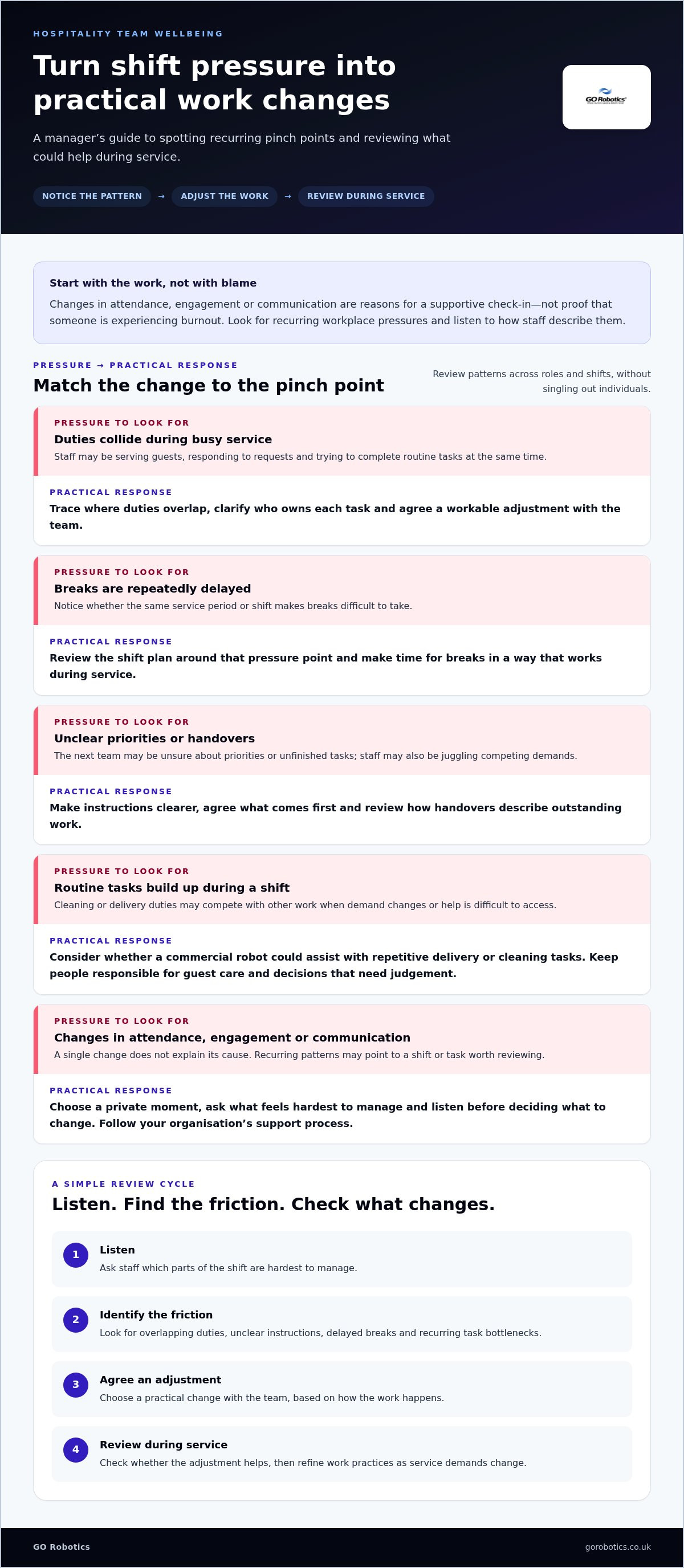
Busy periods are part of hospitality. A difficult service followed by a chance to recover is different from a pattern of working under pressure without adequate support. Look for recurring pinch points: tasks that pile up at the same time, duties with no clear owner, or breaks repeatedly delayed because service takes priority.
Unclear instructions can add to the strain. When staff are already balancing guest needs and routine work, uncertainty about what comes first can leave them juggling competing demands. Review how the shift is organised and where tasks clash, rather than focusing only on how quickly individuals work.
What burnout is, and what it is not
Occupational burnout is a work-related concern associated with prolonged workplace stress; it isn’t simply feeling tired after a demanding shift, nor is this description a clinical test. Ordinary tiredness may ease with rest. Persistent strain deserves attention when the pressures behind it keep returning. The Occupational burnout overview provides background on the term and its relationship to work.
Managers don’t need to label or diagnose anyone to respond constructively. Start with conditions staff can describe: workload, control over task order, access to support and whether expectations are clear. Treat concerns as a prompt for a supportive conversation and a closer look at work patterns, not as evidence that someone has failed to cope.
Spot the work patterns that may signal rising burnout risk
A change in attendance, engagement or team communication is a reason to check in, not proof that someone is experiencing burnout. A team member may be quieter after a demanding shift. Repeated short-notice absences linked to a particular shift could also prompt a closer look at that working pattern. Avoid drawing conclusions about an individual from one sign alone.
Look at how the work gets done. Are breaks repeatedly missed during the same service period? Do cleaning tasks build up at a particular point in a shift? Do handovers leave the next team unsure about priorities or unfinished tasks? These observations can help identify pressure points before they become accepted as simply part of the job.
Which workplace patterns should managers review?
Compare how different roles and shifts experience the work, without singling out individuals. Front-of-house staff may face competing guest requests, while housekeeping or back-of-house teams may encounter recurring task bottlenecks. Check whether staffing plans and service expectations reflect the duties people actually carry out, including less visible work such as preparation and handovers.
Combine what you observe with what staff tell you. Ask where instructions are unclear, when breaks become difficult to take and which tasks regularly compete for attention. Research on hospitality well-being, including this research on hospitality well-being from National Louis University, offers further context for employers considering staff support and working practices.
How to raise concerns without blaming staff
Choose a private moment and invite an open conversation. You might ask, “Which part of the shift feels hardest to manage?” or “Are priorities clear when several tasks need attention?” Listen before explaining the rota or responding to a recurring problem. The aim is to understand the work as staff experience it.
Be clear about confidentiality. Don’t promise that information will stay private if your organisation’s support process requires it to be shared. Explain who may need to know and what will happen next, then follow the established process. If feedback points to repeated task pressure, consider whether clearer priorities, a revised handover or more support with routine duties could help.
This review may also show where service automation is worth considering. If repetitive delivery or cleaning tasks are adding pressure, explore how hospitality robots and service automation could assist your team, while people retain responsibility for guest care and decisions that need judgement.
Reduce hospitality burnout risk with practical changes to daily work
Once you have identified a recurring pressure point, agree a clear adjustment and check whether it helps. A practical approach to preventing staff burnout in hospitality begins with the team’s experience of the work, rather than introducing a rule without discussion.
- Listen: ask staff which parts of the shift are hardest to manage.
- Identify friction: trace where duties overlap, instructions become unclear or work repeatedly stalls.
- Agree a change: decide with the team what to adjust and who will take responsibility.
- Review the effect: check how the change works in practice and adapt it if pressure remains.
Make workloads and priorities clearer
Map regular duties across service and quieter periods. Make task ownership clear, including who handles preparation, replenishment and work left unfinished at handover. If people repeat the same check or a task regularly waits because everyone assumes someone else owns it, simplify the process before adding another procedure.
Fair allocation doesn’t mean every person does identical work. It means considering the demands of different roles and shifts, then sharing tasks in a way the team considers workable. Agree which jobs take priority during a rush and which can wait. Ask staff where a plan creates extra steps or fails to match the venue’s layout and service pattern. They often see practical snags that are easy to miss when planning away from the floor.
Build support into shifts and team communication
Make break arrangements visible and plan how duties will be covered. Staff should not be left feeling that taking a break will create a problem for colleagues. Give people a clear way to flag when the workload feels unmanageable or priorities conflict. A manager’s check-in can surface pressure early, provided the response is practical rather than dismissive.
Keep handovers concise and useful. Pass on current priorities, changes to the plan and outstanding tasks, with a clear owner where possible. This gives the next shift shared expectations instead of leaving staff to piece together what happened.
Supervisors set the tone. Help them hear concerns without treating them as a lack of commitment, and ask what support or adjustment could help. No single change will suit every person or venue, so review what happens during shifts and refine the approach with staff.
Use hospitality technology to support staff, not replace them
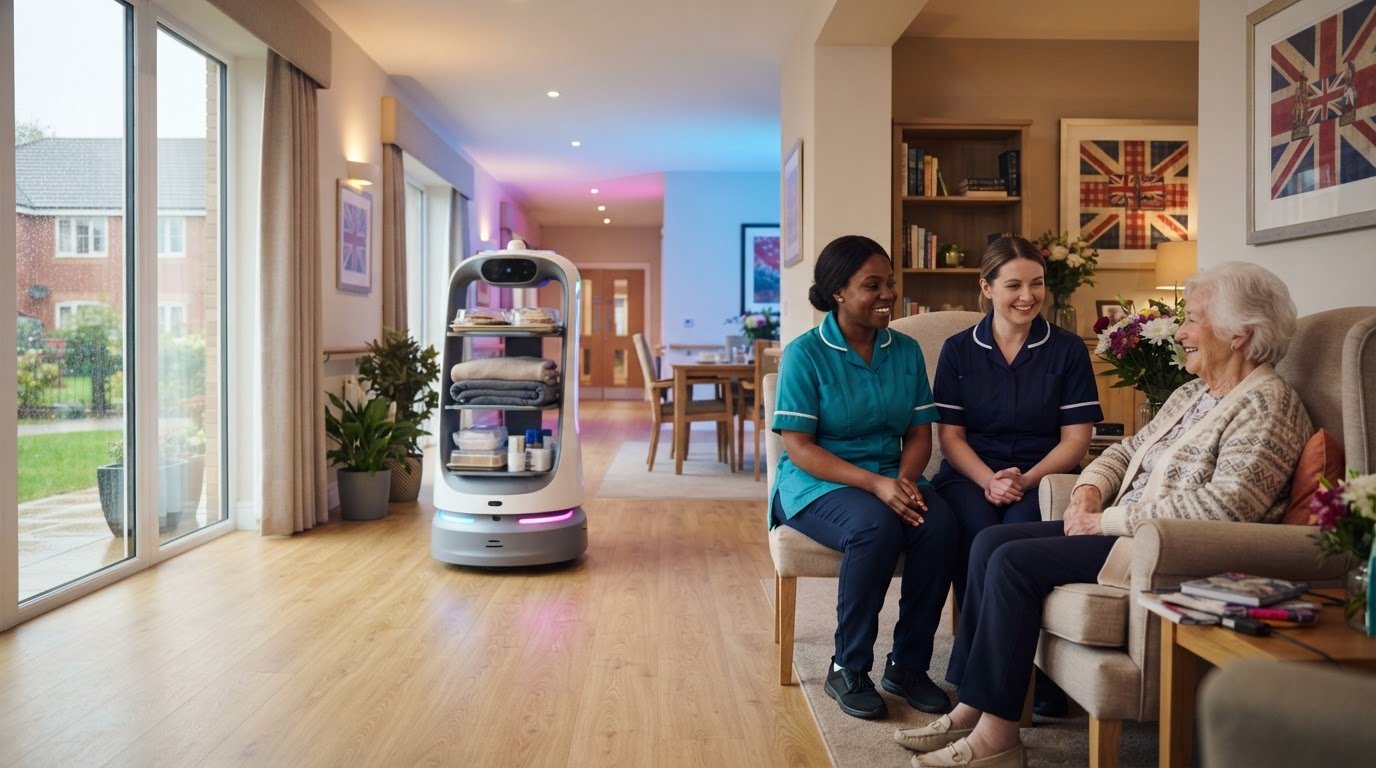
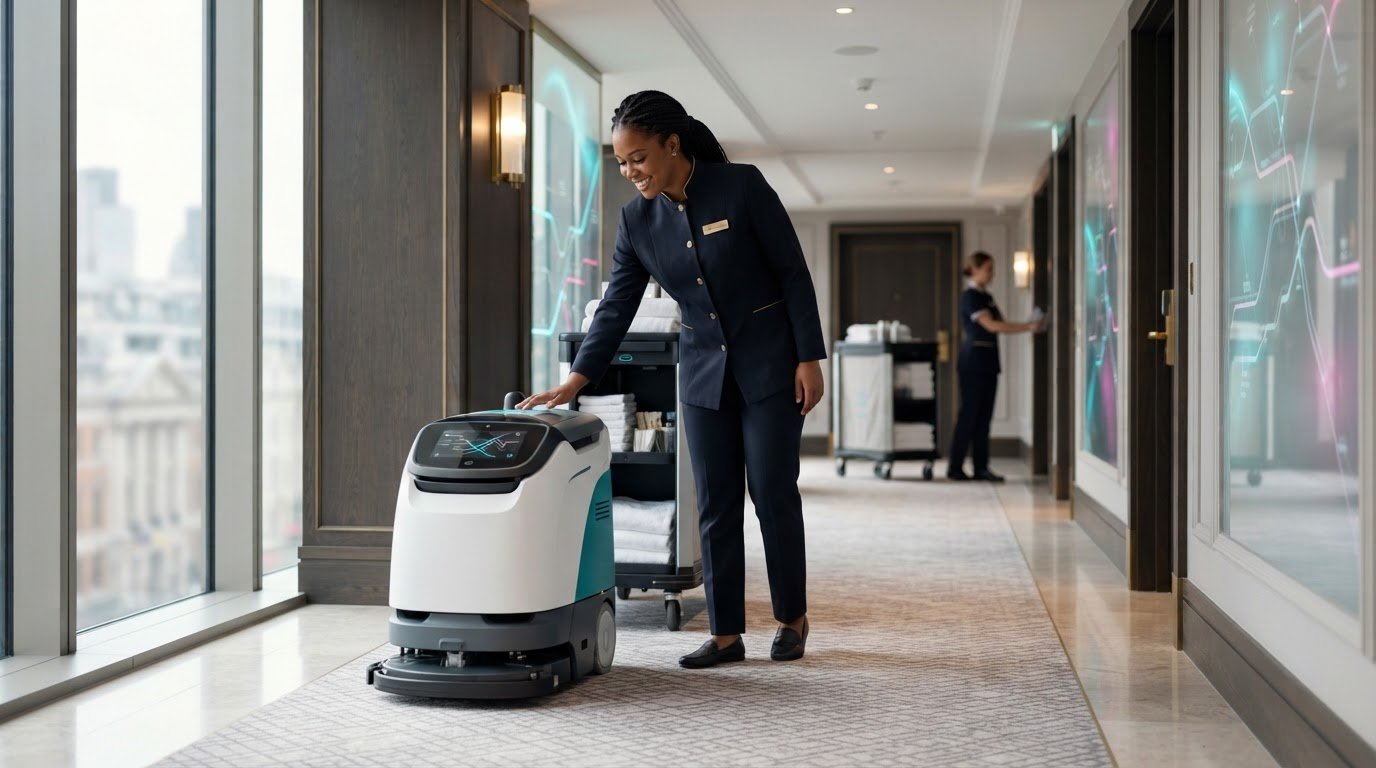
Automation can assist staff when it takes on a clearly defined, repetitive task. Commercial service robots can help with routine delivery or cleaning work, while people remain responsible for guest care, judgement and exceptions. A robot may move items or carry out floor-care tasks, but staff still oversee service and respond to situations that call for a human decision.
That distinction matters. If technology is introduced to remove roles or simply make the same team cover more work, it can add anxiety rather than ease pressure. To use automation as part of preventing staff burnout in hospitality, first decide whether it would address a real source of friction in the shift. Involve the people who do that work in the decision.
Choose a task that fits the workflow
Start with the task, not the machine. Consider where routine delivery or cleaning fits into the working day, who currently handles it and what happens when guest needs interrupt it. A site assessment can help determine whether a robot suits the venue’s layout and working practices. If staff would still have to repeat the same steps around it, automation may simply move the pressure elsewhere.
Set clear boundaries before adoption. Agree which tasks the robot will assist with, who oversees them and when a staff member should step in. Keep human judgement central for guest requests, unexpected situations and decisions that depend on context.
Prepare and support the team
Explain the purpose before introducing a robot. Invite staff to raise practical concerns, including how it may affect shared spaces, handovers and busy service periods. Their input can reveal issues that are easy to miss when planning away from the floor.
Provide hands-on training so staff know how to work alongside the robot, understand its task boundaries and report problems. Installation and ongoing technical support also matter. The team should know how to raise an issue that affects the workflow. Then review whether the change has reduced friction or created extra steps. If staff repeatedly have to work around the system, reconsider how it is being used.
Explore the commercial hospitality robot range to consider how delivery and cleaning robots could assist with routine tasks in your venue.
Make staff wellbeing an ongoing part of hospitality operations
Work patterns change as service demands, venue use and team responsibilities shift. A practice that worked during a quieter period may no longer fit a busy service. Make staff wellbeing part of routine operations by reviewing how work is going, listening to the people doing it and adjusting where pressure keeps returning. Preventing staff burnout in hospitality calls for steady attention, not a one-off initiative.
Keep prevention practical over time
Assign a manager to gather feedback and review recurring pressure points, such as delayed breaks, repeated bottlenecks or unclear handovers. Use a straightforward cycle: collect staff views and observations from shifts, agree a change, see how it affects the work, then adjust if needed. There’s no need to set an arbitrary target. Pay attention to staff feedback and whether the same problems keep appearing.
Close the loop with the team. Explain what changed in response to their input and be honest about what remains unresolved. Revisit task allocation when service patterns, venue use or responsibilities change, rather than assuming an old rota or process still fits.
Support responsible technology adoption
Include technology in the same review process. Before introducing a robot, assess the site and the task it will support. Involve staff, explain its purpose and provide training so people know how it fits into their work. Installation and ongoing technical support can help the team put the system into practice and raise issues as they arise.
GO Robotics supplies, installs and supports commercial service robots for hospitality across the UK, with site assessment and staff training as part of deployment. Venues can purchase a robot or use Robots-as-a-Service (RaaS), a monthly subscription model. Neither option guarantees a particular effect on workload. Review whether the robot assists with repetitive tasks without creating extra steps for staff.
That approach reflects “Where Humans Lead & Robots Assist”: people remain central to guest care and decisions that need judgement, while technology can assist with routine tasks. If you’re considering automation as part of your staff-support plan, assess how a service robot could fit your venue’s work patterns and team needs.
Build a more supportive way of working
Preventing staff burnout in hospitality starts with how work is designed. Notice recurring pressure points, listen to the people doing the work, then agree practical changes and review their effect on the shift. Clear priorities, fair task allocation and useful handovers can help teams manage demanding periods, while regular check-ins keep staff feedback part of everyday operations.
Technology can play a part when it assists with repetitive tasks, not when it shifts pressure elsewhere. Keep people at the centre of guest care and decisions that need judgement, and involve the team in assessing whether automation fits their work.
GO Robotics supplies, installs and supports commercial service robots across the UK. Site assessment and staff training are part of deployment support, helping you assess how a robot could fit your venue and team. Explore how GO Robotics can support your hospitality team and discuss whether a service robot suits your working patterns. A considered approach can help keep practical improvements focused on staff and guests.
Frequently Asked Questions
What are the common signs of burnout in hospitality staff?
Possible warning signs include changes in attendance, engagement or communication, but none proves that someone is experiencing burnout. Look at the wider work pattern too: breaks repeatedly missed, duties regularly piling up or handovers leaving staff unclear about priorities. Treat these signs as reasons to check in supportively and review working conditions. Don’t use them as a diagnosis or assume that one difficult shift tells the whole story.
How can hospitality managers help prevent staff burnout?
Ask staff which parts of the working day feel hardest to manage, then look for recurring causes such as unclear priorities or uneven task allocation. Agree a practical change with the team and review whether it helps. Make break arrangements visible, support clear handovers and give staff a way to raise concerns. Preventing staff burnout in hospitality is an ongoing management responsibility, not a test of individual resilience.
Can better shift planning reduce burnout in hospitality?
Better shift planning can help address avoidable pressure, although it can’t guarantee that burnout will be prevented. Match staffing plans and service expectations to the work teams actually perform, including preparation, cleaning and handovers. Consider how duties are shared and whether staff can take planned breaks during service. Review the plan with employees after busy periods, since actual demand may differ from what was expected.
What should I do if a hospitality employee says they feel burnt out?
Listen calmly and take what they say seriously. Arrange a private conversation, ask what aspects of work feel most difficult and discuss practical support or adjustments. Don’t try to diagnose them or promise confidentiality beyond your organisation’s established process. Explain honestly who may need to be involved, follow the relevant support procedures and agree when you’ll check in again. Also consider whether the same work pressures are affecting others.
Can robots help prevent staff burnout in hospitality?
Robots may assist with repetitive service or cleaning tasks, leaving staff more time to focus on guest care and decisions that need human judgement. They don’t replace staff, and they won’t address every source of pressure. Before adopting one, assess whether it fits the venue and work pattern, involve the team, and provide training and ongoing support. Check that it removes friction rather than adding steps or shifting tasks elsewhere.
How can managers discuss burnout without blaming staff?
Speak privately and focus on working conditions rather than personal shortcomings. Ask neutral questions such as, “Which tasks are hardest to fit into the shift?” or “Are priorities clear when demands build up?” Listen without making assumptions, then explain what action you can take and what needs further support. Be clear about confidentiality and follow your organisation’s established processes. A constructive conversation should make it easier to raise concerns early.
Should hospitality businesses focus on wellbeing or operational changes?
Both matter, and they work best together. Wellbeing support gives staff a way to raise concerns and access help, while operational changes can address pressures such as repeated bottlenecks, unclear duties or breaks that are hard to take. Review feedback alongside what happens during shifts, then make and assess practical adjustments. Focusing only on individual wellbeing can leave workplace causes untouched; changing processes without listening to staff can miss what they need.