Supermarket cleaning robot for autonomous floor care
Supermarket floors need cleaning that fits around trading, deliveries and changing shop-floor activity. A supermarket cleaning robot can support routine floor care while operating during trading hours, with the right tasks and routes determined by the store layout and daily priorities.
For retail managers, the decision is not simply whether to automate. It is which tasks a robot should handle, how its routes fit around shoppers and staff, and where employees remain responsible. A practical assessment of these points helps you decide whether a robot suits your supermarket and what to plan before deployment.
This article looks at floor-care functions and the wider retail role robots can take, then considers store-specific challenges, cleaning quality and workload. It also covers what to think about when planning access between floors, including lifts and gates. The aim is to give you a grounded basis for discussing autonomous floor care in the context of your own site and team.
Key Takeaways
- Understand how automated sweeping, vacuuming and mopping can support routine floor care alongside your cleaning team.
- Check with the manufacturer whether cleaning reports, maintenance data and task reservations can be accessed remotely through an app.
- Ask the manufacturer whether product guidance, promotions and advertising broadcasts are available for the in-store experience.
- Identify the retail conditions that affect where and when cleaning can take place around customers, staff and deliveries.
- Learn what to consider when planning integration with lifts and gates to support cleaning across floors.
Automated sweeping, vacuuming and mopping
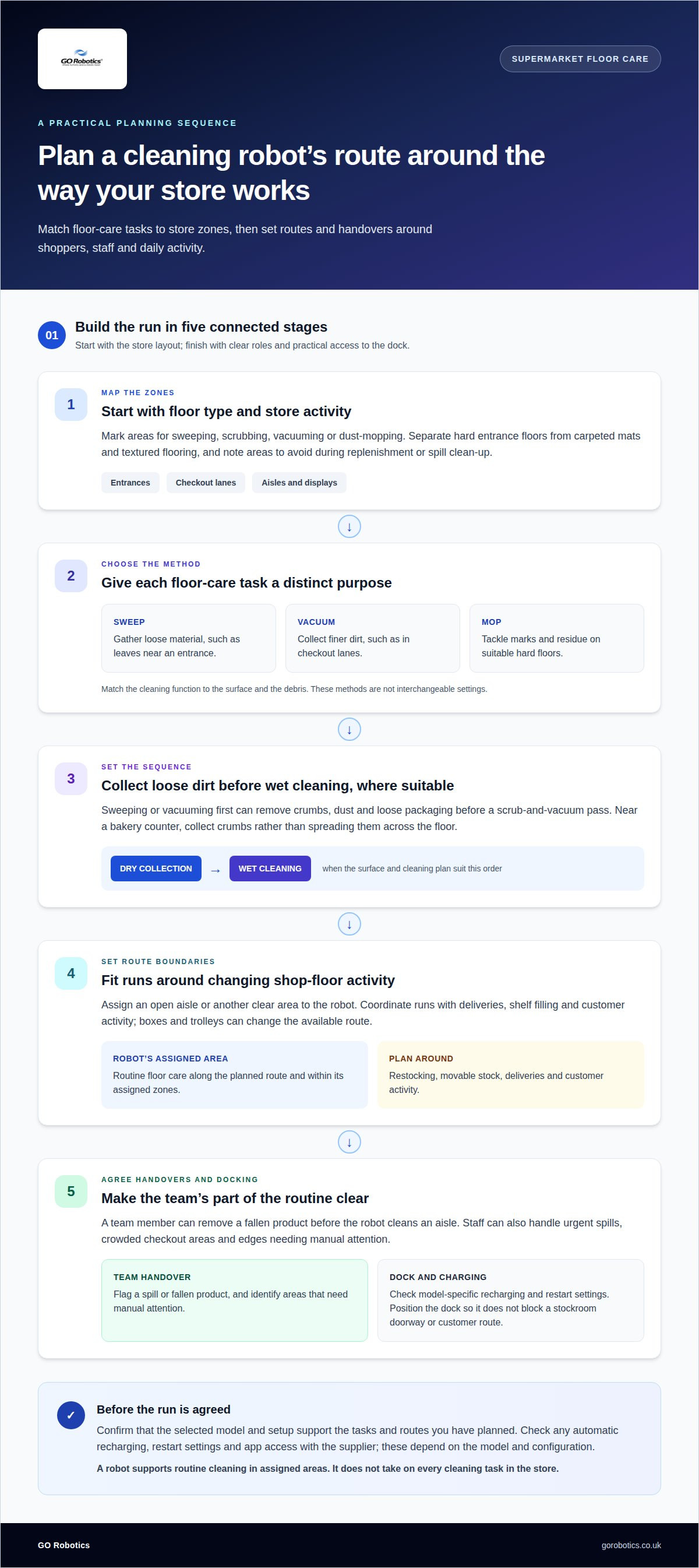
A cleaning robot can combine dry and wet floor care. Depending on its configuration, tasks may include sweeping, vacuuming and mopping. Each method handles different debris. Sweeping gathers loose material, such as leaves near an entrance. Vacuuming collects finer dirt from checkout lanes. Mopping tackles marks and residue on suitable hard floors. Treat these as distinct tasks, not interchangeable settings. The right sequence depends on the surface, debris and cleaning plan.
Dry collection can come before wet cleaning. Sweeping or vacuuming first removes crumbs, dust and loose packaging before a scrub-and-vacuum pass. Around a bakery counter, for example, crumbs should be collected rather than spread across the floor. Plan dry cleaning before wet cleaning where that sequence suits the surface. Staff can handle urgent spills while the robot follows its assigned route elsewhere.
Floor type matters when assigning tasks. A hard entrance floor may need a different approach from carpeted mats or textured flooring. Match the cleaning function to suitable surfaces, and divide the store into clear zones for sweeping, scrubbing, vacuuming or dust-mopping. A site plan can also identify areas to avoid during replenishment or spill clean-up, helping routes fit the layout.
Give each run a practical boundary. The robot can be assigned an open aisle, while staff handle areas beneath displays or around movable stock. Restocking boxes and trolleys can alter the available route, so coordinate runs with deliveries, shelf filling and customer activity. This planning helps routine floor care fit around work already happening in the store.
Some models may support automatic recharging, but check this with the supplier for the model you are considering. The dock’s position matters: it should not block a stockroom doorway or customer route. Account for the route between cleaning zones and the dock. Charging arrangements and restart settings depend on the selected model and setup.
Agree clear handover points. A team member can remove a fallen product before the machine cleans that aisle. Staff can also handle sticky spills, crowded checkout areas and edges needing manual attention. Routine cleaning within assigned areas is the robot’s role, not every cleaning task in the store. Map the floors, choose suitable methods for each zone, then set routes and docking arrangements around daily activity. This helps floor-care automation fit into the team’s existing routine.
Cleaning and product guidance
In a supermarket, a mobile robot can have a retail role alongside floor care. The retail function may include cleaning and product guidance, product promotions and advertising broadcasts, depending on the model and configuration. Plan these tasks separately. Cleaning concerns where and when floor work takes place. Product guidance shares information with shoppers. Promotions and broadcasts support store communications. Defining each purpose helps managers decide what the robot should do in different areas.
Wayfinding can help shoppers locate a product area or department, if the model supports it. Check with the supplier whether the Retail Special Edition’s screen can display wayfinding messages alongside promotional content. Decide which departments need guidance and keep the information current as displays and store priorities change. For example, a seasonal promotion may need an updated message when the display changes.
Promotions and advertising broadcasts may provide another way to share store messages, depending on the model and its configuration. A promotion might feature a product, while an advertisement could carry broader campaign information. These communication tasks remain distinct from floor cleaning, even when one robot supports both. Decide who prepares and updates the content. A clear process helps prevent an old promotion from continuing after its display or offer has changed.
Check with the supplier whether the robot and its app provide remote access to cleaning reports, maintenance data and task reservations. If available, managers can use these records to review activity and coordinate planned tasks. For example, a supervisor could reserve a cleaning task around a scheduled store activity. Reports provide a record for later review, while maintenance data can help the team keep track of the robot’s condition.
Give each function a clear owner. Cleaning staff may need task details, while a retail manager may manage product messages. Agree who can create reservations, review reports and update promotional content. A shift handover can note a planned clean and flag a message requiring an update. This makes responsibilities clearer when teams change during the day.
For UK supermarkets, the applicable safety requirements depend on the robot’s design and how it is used. Consider relevant UK product-safety requirements for the equipment, alongside workplace health-and-safety duties and a site-specific risk assessment covering people, routes, cleaning tasks and access to store equipment.
Before deployment, match the proposed tasks to store routines. Decide which areas need cleaning, what information shoppers should receive and who manages updates. Then consider how app records and reservations fit existing handovers. These decisions help set a practical role for the equipment and clarify what the store team needs to manage.
If you’re planning retail automation, discuss robot deployment in the context of your store’s layout and daily routines.
Cleaning challenges in retail outlets and supermarkets
Retail floor cleaning must fit around shoppers, staff and changing store activity. A suitable robot’s role depends on the areas, floor conditions and routines involved.
Retail cleaning challenges
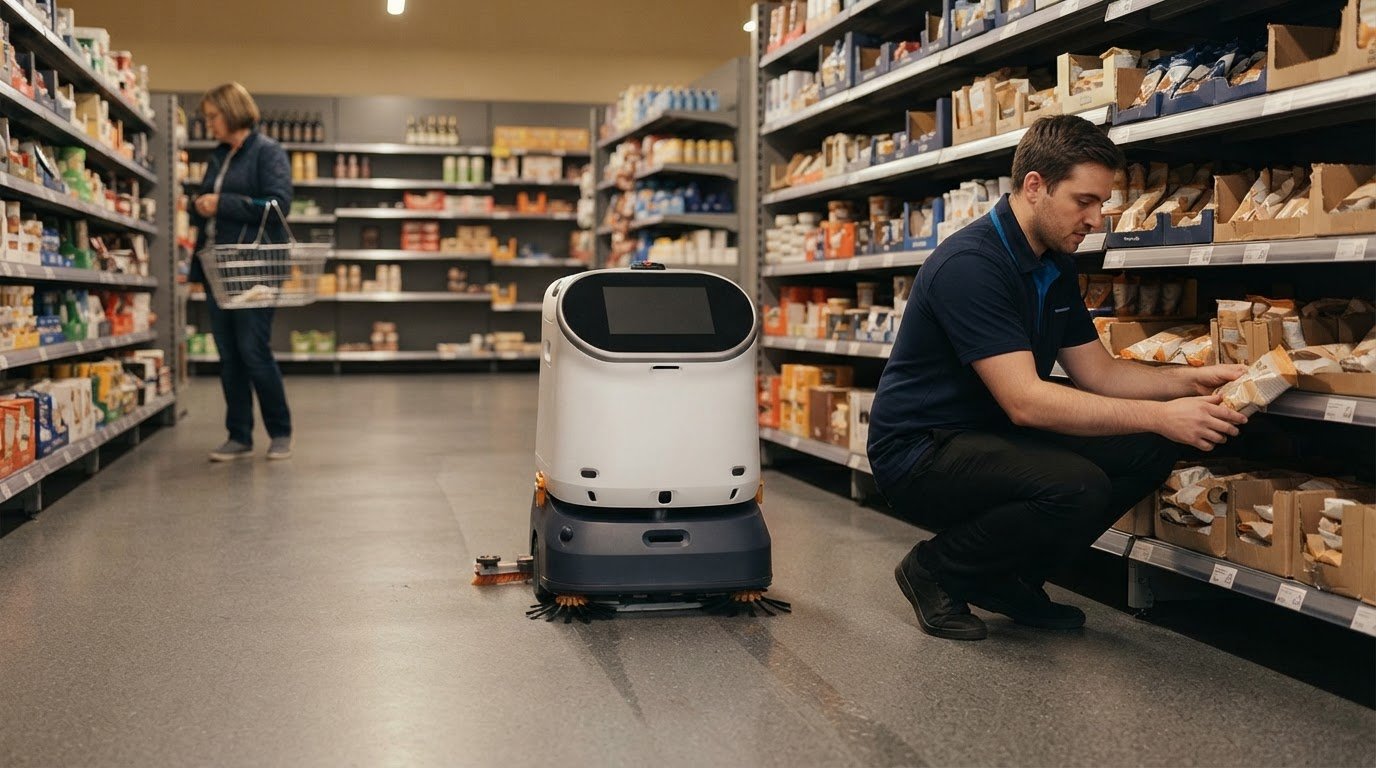
Entrances collect rainwater, grit and leaves, while produce aisles may see dropped food. Checkout queues, delivery cages and restocking trolleys can also affect routes. Plan for changing conditions, not just the store layout. Identify areas that need routine attention, when access is clearest, and where staff must handle spills or move stock before a run.
Which supermarket cleaning robots are available in the UK? Retailers can consider autonomous floor-care robots designed for tasks such as sweeping, vacuuming or mopping. The suitable type depends on floor surfaces, store layout and the cleaning work required.
Safe operation around shoppers and staff
Yes, these robots can operate around shoppers and staff when their use suits the site and its risk controls. A manager should consider shared routes, busy checkout areas, wet floors and changing obstacles. For example, a run through a clear aisle differs from one beside a queue. Plan routes and timings around people, and keep staff involved in responding to spills or blocked areas.
Store activity changes throughout the day. An aisle that is clear during replenishment may become busy around a promotion. Delivery cages can appear near back-of-store routes, while temporary displays can alter access. These conditions affect where and when cleaning is practical. Map recurring obstructions and changing zones before assigning tasks.
Wet cleaning needs particular attention in customer areas. A freshly mopped section can create a different walking surface from a dry aisle. Plan where the robot works, how staff handle nearby footfall, and how routes avoid crossing active cleaning areas. If a spill appears during a run, staff should manage it using the store’s normal cleaning procedures.
Operational planning also includes communication. Cleaning staff need to know assigned areas and scheduled tasks. Shop-floor colleagues can report blocked routes, moved displays or urgent spills. For example, a team member can pause a routine aisle task while restocking takes place. Clear responsibilities help prevent a scheduled run from clashing with activity on the shop floor.
Assess the whole route, not only the open sales floor. Doorways, stockroom access and transitions between floor types can affect movement. Note where the robot must turn, wait or avoid work in progress. This assessment helps managers set practical boundaries and identify cleaning jobs that remain with staff.
Cleaning quality and workload
Judge cleaning quality by the floor after each assigned run. Look for visible debris, missed edges and marks left behind. For example, inspect a produce aisle after sweeping, then check whether wet cleaning leaves residue. These observations show whether the selected method suits that floor. They also help separate route issues from cleaning-method issues. A robot can cover assigned areas, but staff still assess results and handle exceptions.
Use repeatable checks rather than general impressions. A supervisor can inspect the same aisle before opening and after a scheduled clean. Note where crumbs remain near shelving or marks persist beside a display. If one section repeatedly needs attention, review its floor type, route and assigned cleaning function before changing the wider programme.
Keep workload planning focused on tasks, not assumed staff reductions. A robot may take on routine floor-care runs, while employees manage spills, edges and areas blocked by stock. For example, a cleaner could deal with a dropped yoghurt pot, then return to checking a recently cleaned aisle. The team remains responsible for deciding which jobs need human attention.
Define who handles exceptions during each shift. Shop-floor staff may spot a spill, while cleaning staff manage the clean-up and reassess the affected area. A handover can record a blocked route or a display moved into an aisle. This helps ensure the next run reflects current store conditions.
Workload also depends on how well assigned tasks match store conditions. A broad, clear aisle differs from a narrow space beside promotional stands. If teams repeatedly move stock before cleaning, adjust the task timing or boundary. If the same corners remain dirty, review the route and arrange manual attention where needed.
Compare planned work with the jobs staff still complete. For example, note whether a cleaner spends time collecting loose packaging, treating sticky marks or cleaning around shelf edges. This does not require an assumed saving figure. It gives managers a practical picture of how routine automation changes task allocation and where manual work remains necessary.
Consistency matters across shifts. Use the same inspection points, such as the entrance mat, checkout approach and produce aisle. Record visible outcomes plainly, including missed debris or a wet patch needing attention. Staff can then distinguish a one-off obstruction from a recurring problem and make targeted adjustments rather than changing every route.
Review the cleaning plan when store conditions change. A seasonal display, a new checkout layout or regular deliveries can alter access and debris patterns. Reassess the assigned areas and staff responsibilities after each change. A supermarket cleaning robot works best as part of a managed routine, with clear quality checks and people responsible for exceptions.
Integration with elevators and gates
Supermarkets with multiple floors may be able to link cleaning routes across levels. Whether a robot can travel between areas using elevators and gates depends on the specific robot and site setup.
Installation starts with a site survey, followed by mapping the relevant floors and routes. The survey should check whether lift access, gate controls and cleaning tasks can be accommodated, as well as how ongoing maintenance will be handled.
For a multi-floor store, the mapped route needs to include more than aisles. It should show where the robot would approach a lift, enter or exit, and continue cleaning on another level. Gates may form another access point between zones. Planning the full route helps teams assess whether floor-care tasks connect across departments rather than ending at a doorway.
Whether a robot can use a lift or pass through a gate depends on the specific robot, building systems and site configuration. Check these requirements during the site survey. A route might connect a ground-floor entrance area with an upper-floor sales space, while avoiding staff-only zones, if the robot and site can support that arrangement.
Mapping should reflect how the supermarket operates. Mark cleaning areas, access points and connecting routes. Include places where the robot may need to wait or where staff need clear access, such as a stockroom entrance. Review the route during normal activity. A delivery trolley parked near a lift, for example, may affect access even when the mapped path is clear.
Test each transition as part of commissioning, if the robot and site are set up to support it. Check whether the robot can reach the lift, use the intended access sequence, exit on the correct floor and continue along its assigned route. Repeat the checks at gates and between different floor areas. This practical walk-through can reveal route gaps, access conflicts or changes needed before regular cleaning runs begin.
Maintenance planning includes keeping the route map aligned with changes to displays, access controls and store layouts. A temporary barrier near a lift, for example, may require a route adjustment. Check with the supplier what information, if any, the robot’s cloud platform makes available to managers. Staff also need a clear process for reporting blocked routes or access faults.
Plan who handles each interruption. A store colleague might clear a trolley from a lift approach, while the cleaning team checks the assigned route. If a gate is closed or access changes, staff need to know whether to pause the run or use another mapped path. These decisions should match the store’s procedures and the robot’s configured operation.
Assessing lift and gate access early helps define a workable multi-floor plan. Plan your supermarket robot integration around the building’s access points, mapped routes and maintenance responsibilities.
GO Robotics
GO Robotics can help you assess how autonomous robots could fit your supermarket’s daily workflows. A site survey provides a practical starting point for discussing store layout, access between areas and how robot tasks would fit around staff and shoppers. That context matters when you’re weighing floor-care automation alongside other retail priorities.
GO Robotics offers the Pudu BellaBot, Pudu KettyBot and Pudu HolaBot for other commercial robot roles. Discussing your requirements can help clarify which tasks you want to automate and what the site needs from a robot deployment, without treating floor cleaning as the only consideration.
If you’re planning automation for your supermarket, contact GO Robotics to discuss your requirements.
Plan the next step for your store
Your next decision is how floor-care automation should fit the way your supermarket runs. Before selecting a model, define the outcome you need: more consistent routine cleaning, better coordination between teams, or a clearer plan for busy areas. A supermarket cleaning robot should be assessed against those priorities and the practical demands of your site, not chosen on features alone.
Consider how the proposed role fits your existing routines, who will oversee tasks, and how the team will respond when conditions change. GO Robotics offers the Pudu CC1 alongside other commercial robots. A conversation about your requirements can help establish whether it suits the role you have in mind, and what matters most in planning a deployment.
Contact GO Robotics to discuss your supermarket’s requirements and take a considered next step.
Frequently Asked Questions
What is a supermarket cleaning robot and how does it work?
A supermarket cleaning robot is an autonomous machine that follows assigned routes to clean retail floors. Sensors support navigation around people and obstacles, while the selected cleaning mode handles tasks such as sweeping or scrubbing. For example, a manager might schedule an aisle clean between replenishment tasks. Staff remain responsible for spills, blocked routes and work needing manual attention.
What are the main features to compare in commercial floor-cleaning robots?
When assessing a supermarket cleaning robot, compare its cleaning modes, rated coverage, cleaning width, noise levels and operating time. Also consider obstacle detection, task records and whether it suits your floor surfaces and trading hours. For example, a quiet sweeping mode may matter during busy periods, while a scrubbing route needs to suit the store’s access and floor conditions.
How much floor area can it clean per hour?
Coverage depends on the model and cleaning mode. GO Robotics’ J36 retail specifications list a sweeping rate of > 1,400 m²/h and a scrubbing / vacuuming rate of > 1,100 m²/h. These are rated figures, not guaranteed results for every store. Route length, interruptions and cleaning conditions affect how much floor the machine covers during a shift.
How much can a supermarket save on cleaning labour with a robot?
There is no single saving that applies to every supermarket. The effect depends on which routine tasks the robot takes on and how staff time is reassigned. For example, a team might spend less time on scheduled floor passes and more time handling spills or areas needing manual attention. Assessing current tasks and the proposed cleaning schedule gives a more useful picture than assuming a fixed saving.
What are the limitations and risks of using cleaning robots in supermarkets?
A supermarket cleaning robot may encounter blocked routes, changing displays or spills needing staff attention. GO Robotics’ J36 retail specifications describe identifying debris and spills, then reporting their location for human follow-up. A robot may also leave edges or awkward areas for manual cleaning. Set clear procedures for interruptions, spill response and checking areas where shoppers or stock obstruct the planned route.
What UK safety standards and regulations apply to autonomous cleaning robots?
Requirements depend on the robot’s design and how it is used. Consider relevant UK product-safety requirements, workplace health-and-safety duties and a site-specific risk assessment covering people, routes, cleaning tasks and access to store equipment.