Robot installation and training UK: 2026 costs and programs
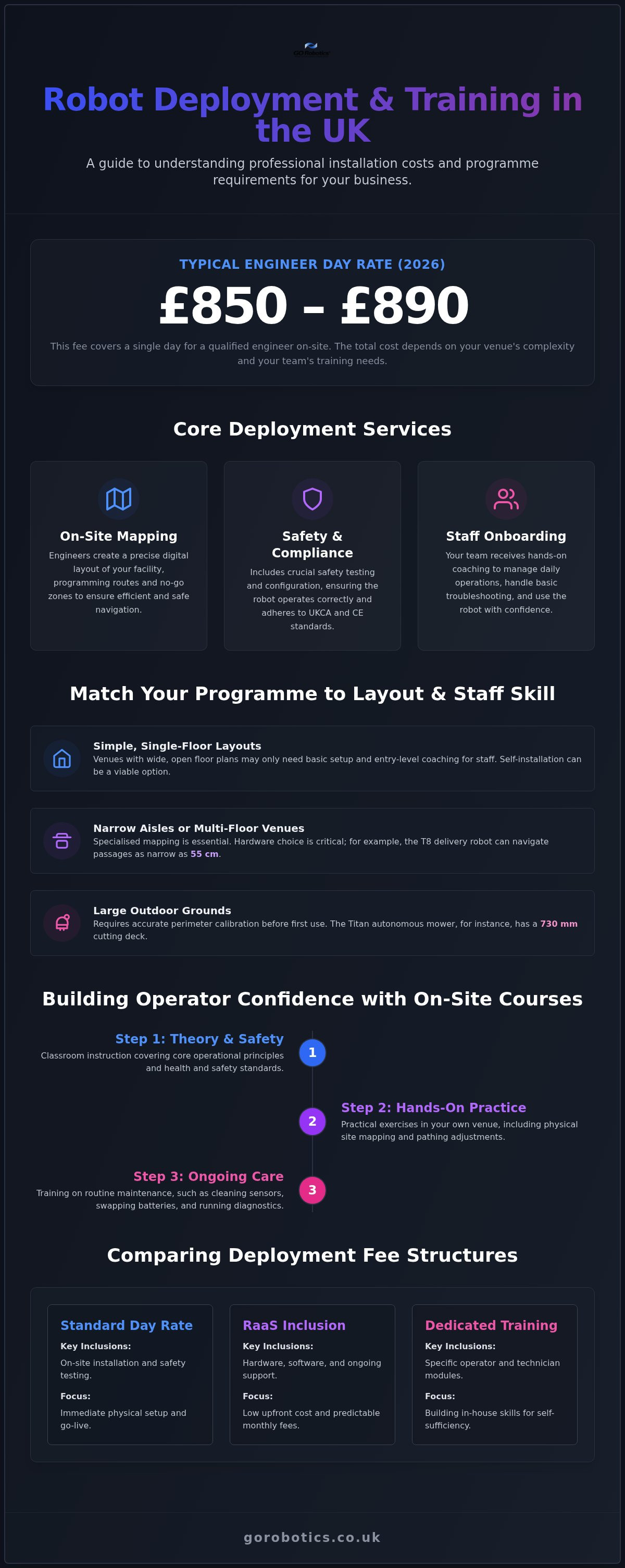
Commercial robot installation and training in the UK typically costs between £850 and £890 per engineer day, according to 2026 market research across four leading automation providers. Total deployment costs depend on site preparation, sensor integration, and whether your team requires basic operational coaching or advanced programming certification. The exact overall fee varies based on your venue setup, so requesting a tailored quote remains the best way to plan your budget. The decision you face is practical: match hardware and coaching depth to your floor plan and staff skill, or pay later in downtime when the fit is wrong.
Key Takeaways: Professional robot installation and training in the UK costs between £850 and £890 per engineer day, covering on-site mapping, safety certification, and staff onboarding.
- Budget for £850 to £890 per day for engineering and on-site technical coaching.
- Expect 55 cm minimum passage width for T8 units or 730mm for Titan mowers.
- Avoid generic video tutorials unless your facility is a simple, single-level, wide-open floor plan.
- Request a tailored quote to determine if your staff require basic or advanced certification.
Match your automation programme to layout and staff skill
Matching robot deployment to venue complexity and staff skill levels prevents operational bottlenecks. Technical readiness varies widely across commercial sites, so assessing internal capabilities first helps you select the support package that keeps units reliable over time.
Three situations you will recognise:
- A simple, wide single-floor layout: basic self-installation with entry-level coaching is usually enough.
- Narrow aisles or multi-floor hospitality: specialised site mapping and compact hardware (for example the T8 at 55 cm minimum passage width) reduce stoppages.
- Large outdoor grounds: the Titan autonomous mower’s 730mm cutting deck needs accurate perimeter calibration before first cut.
Deploying service units means pairing hardware with your physical environment. Simple floor plans fit entry-level models; multi-floor sites need advanced setup. For hospitality and business environments, reviewing professional service robots helps you clarify layout needs before you order.
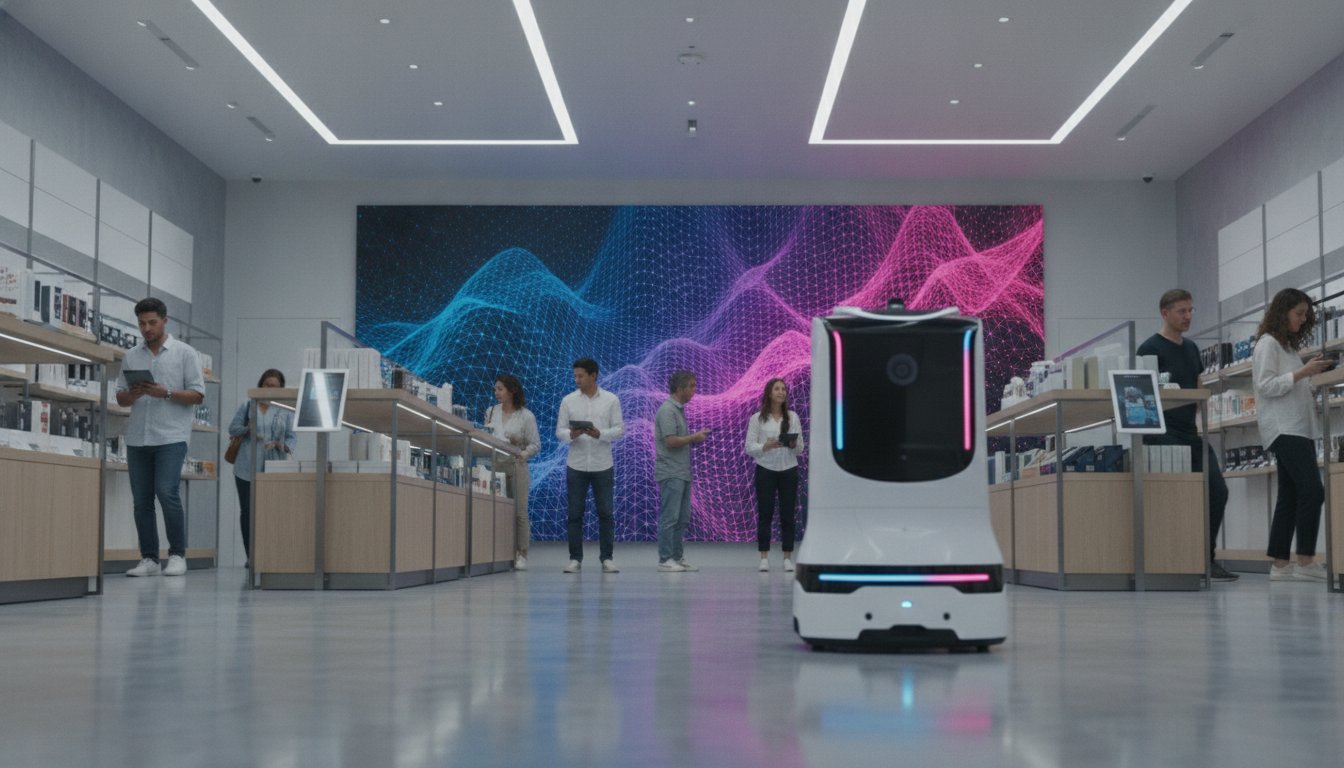
At MazalaDosa in Gloucester, UK, the restaurant needed to manage repetitive food delivery tasks efficiently. GO Robotics provided two delivery units to handle these runner duties, allowing floor staff to dedicate their time to guest hospitality. The client shared that they were proud to be the first restaurant in Gloucestershire to welcome robots to their team, noting that having two units supporting their staff enabled faster service and a memorable dining experience. Selecting hardware that matches your floor space delivers immediate productivity gains: efficiency doubled and service sped up once both units were live.
Floor navigation limits depend heavily on passage clearances. The T8 delivery robot navigates minimum passage widths down to 55 cm, making it a strong choice for narrow aisles. Compact units fit tight tables; larger units suit wide corridors. Matching physical dimensions to your site layout avoids costly operational pauses.
Hardware alone is not enough: proper onboarding makes the difference between a demo and daily use. Ask for a tailored quote so deployment costs reflect your actual floor plate.
Tip: Check access points before ordering compact units; the T8 delivery robot navigates minimum passage widths down to 55 cm.
Build operator confidence with structured on-site courses
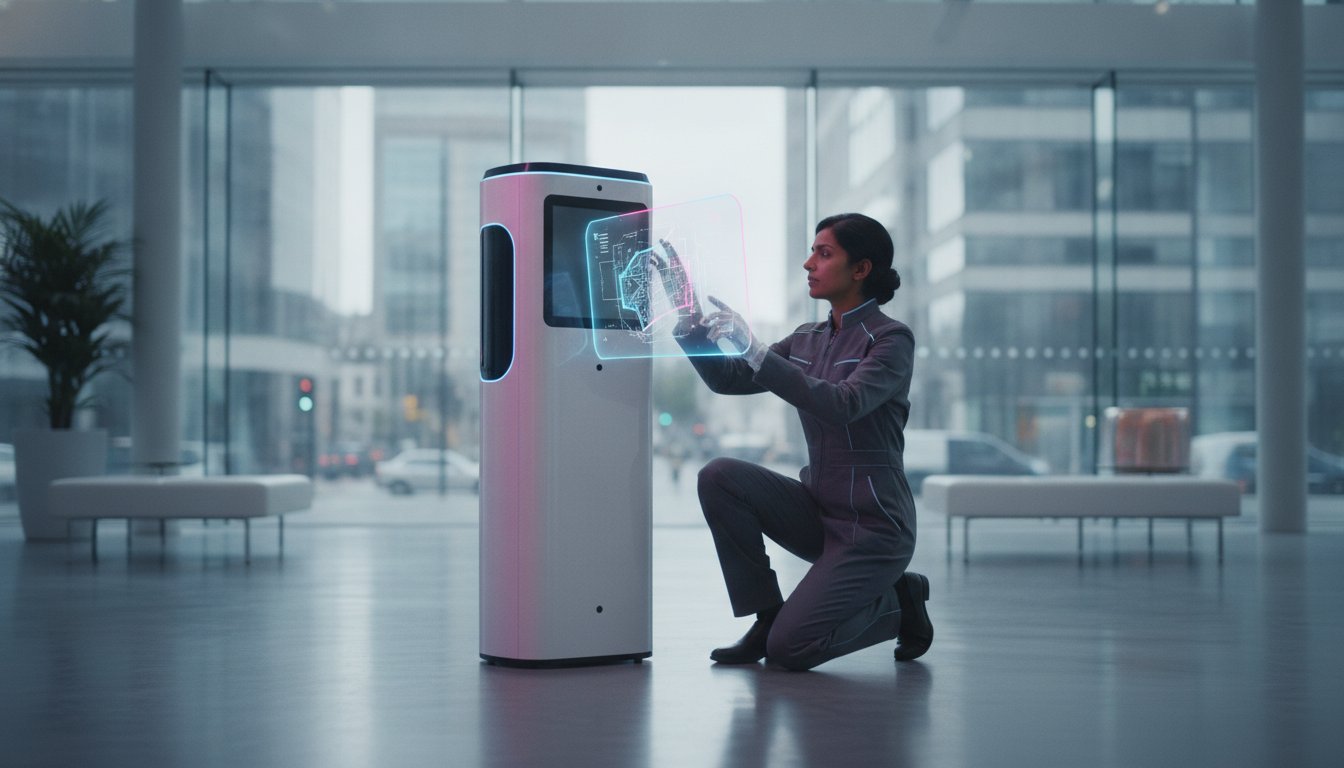
A robotics training curriculum that pairs classroom instruction with hands-on practice prepares your staff to manage autonomous hardware safely. Practical field experience builds operator confidence faster than theory alone, which is why sessions move quickly from core operational theory and health standards into physical site mapping and ongoing care.
Operators learn how to plot precise boundary lines and maintain sensor hardware on outdoor units. Managing heavy turf machinery demands specific technical skills: the Titan cutting deck width equals 730mm, so accurate perimeter calibration prevents missed grass patches or accidental collisions. Staff practice cleaning optical lenses, swapping battery modules, and running daily pre-start diagnostics.
You can select specialised pathways through our hire and purchase programmes to match your venue’s equipment. Hands-on exercises show staff how to adjust real-time pathing when temporary obstacles block established routes. Dedicated maintenance training means your internal team handles routine servicing and relies less on external technician visits.
Investing in thorough instruction turns hesitant staff into confident technology owners and turns complex hardware into a reliable daily asset. Book on-site coaching when you plan installation so mapping and training share one engineer visit.
Compare 2026 deployment fees before you commit capital
Deployment fees split into fixed setup costs and ongoing training commitments. Standard day rates cover initial engineering, while flexible subscription models bundle hardware with long-term support. Site preparation is the line item teams underestimate: floor levels or wireless fixes can double baseline setup costs if you discover them after mapping starts. £850–£890 £890 You can evaluate modular tooling such as industrial grippers and hands to keep mechanical integration straightforward. Course structures range from intensive operator sessions to full technician certifications.
| Structure Option | Key Inclusions | Deployment Focus |
|---|---|---|
| Standard Day Rate | On-site installation, safety testing | Immediate physical setup |
| RaaS Inclusion | Hardware, software, ongoing support | Low upfront commitment |
| Dedicated Training | Operator and technician modules | Workforce skill building |
Robots-as-a-Service (RaaS) fits expanding facilities that want no upfront costs and predictable maintenance over several years, whereas direct purchase suits established plants seeking long-term hardware ownership. Training your internal team protects daily operations and the automation investment itself. Request a personalised quote to calculate exact implementation figures for your facility.
Demand written UKCA and CE proof before go-live
You should demand written proof of UKCA and CE markings before any machine works near your workforce. Buying uncertified units exposes operators to legal liabilities if an incident occurs. Each unit supplied is fully UKCA and CE compliant for public-facing environments, and the same builds meet FCC, TÜV SÜD, GDPR and PCI DSS requirements, so your contacts see the paperwork before installation day.
A customer running DosaPark in Cirencester needed a way to deliver food orders directly to tables. GO Robotics supplied a delivery unit that takes meals to guests, which freed up the waitstaff. The change let the team spend significantly more time engaging with customers while keeping table service fast and friendly. Safety standards matter in that setting: basic automated units need proper operational boundaries to run safely alongside humans, and accredited setup enforces those boundaries on day one.
Confirm compliance certificates early, then align sensors and docks to your layout so staff and guests share the floor without conflict.
Tip: Verify that each robot holds full UKCA and CE compliance to meet safety standards in public-facing environments.
Five venue prep steps that stop mapping failures
Preparing your UK commercial site for autonomous service hardware needs a structured sequence before software mapping begins. Physical prep prevents total mapping failures later: floor transitions and door clear widths ruin maps faster than network drops.
- Conduct an initial site survey. Engineers map your floor space, assess narrow corridors, check Wi-Fi stability and identify steep ramps.
- Clear physical path obstacles. Staff remove stray furniture, level high thresholds and clear minimum passage widths for smooth movement.
- Set up docking stations. Technicians install charging bases near grounded wall outlets, ensuring clear clearance around the dock.
- Train your internal team. Staff learn how to load trays, manage basic routines and override controls during operational rushes.
- Complete staff sign-off and final operation. Management verifies team readiness and signs off the installation before full daily service starts.
As shown in the MazalaDosa case study from Gloucester, UK, integrating two service units allowed staff to double their efficiency while delivering quicker service and a stronger guest experience. Proper setup turns raw machinery into reliable workplace assistance under the model Where Humans Lead & Robots Assist.
Contact our engineers for a personalised quote built around your venue layout.
When generic robotics courses leave gaps on your floor
Standardised video tutorials fail the moment your operational layout creates custom physical constraints or unique workflow bottlenecks. Generic courses teach button pushes on a clean floor and skip narrow corridors, complex lift integrations, or custom tray configurations. Pre-made training assumes employees adapt to the equipment; reliable service depends on paths that reflect how your workplace actually moves.
"I am teaching a robotics class for 7th-10 grade students." (source)
"My school has been looking into buying Arduino robotics kits but I know from
When off-the-shelf options fall short, you need bespoke engineering support to align automated software mapping (source) with your physical environment. Fixed modules often produce expensive downtime when real conditions trigger unexpected faults. Custom technical guidance keeps hardware, software, and staff routines aligned.
Generic courses suit simple, single-level deployments. Complex multi-floor operations need custom engineering assistance. Targeted training under Where Humans Lead & Robots Assist builds lasting staff confidence and bridges the gap between a basic delivery and dependable daily service. Reach out for site-specific engineering support shaped around your facility.
Frequently asked questions
What training courses are offered?
We deliver hands-on operational and maintenance training tailored to your team during site setup. Under Where Humans Lead & Robots Assist, your staff learn to control mapping systems, manage daily cleaning routes, and handle delivery workflows safely.
Where are the training facilities located?
Training takes place directly at your business premises across the UK following a comprehensive site survey. On-site instruction ensures your staff practice in their actual working environment, whether navigating tight spaces or managing public areas.
How long is the course?
Most operational onboarding finishes within a single day during hardware installation. We adapt the instruction duration based on your operational layout, fleet size, and workflow complexity.
What does installation and training typically cost?
2026 market research across four leading automation providers places engineer-day rates in the £850–£890 band. Your final figure depends on fleet configuration, software integration, support coverage, and whether you choose outright purchase or monthly rental through Robotics as a Service.
What compliance standards do supplied robots meet?
Supplied units are built to UKCA, CE, FCC, TÜV SÜD, GDPR and PCI DSS compliance standards. You receive written markings and safety certification assurance before public-facing go-live.
Professional Robot Installation and Training UK
Full-service deployment helps your business put its automation investment to work quickly, on the same decision line you started with: fit the programme to your layout and staff, prove compliance, and coach operators on the live floor.
Our technical team, including Geoff Stillman, delivers full-service deployment, site mapping, and technical coaching across the UK with national support. Proper site mapping forms the foundation of reliable autonomous navigation. You receive UKCA and CE compliance assurance alongside adherence to the safety certifications listed above. Where Humans Lead & Robots Assist. Recognised with a Red Dot Design Award, our systems bring proven design quality to your facility in 2026.
Ready to begin? Contact our team today through our contact page to request a site evaluation and tailored quote.