Agency Staff vs Service Robots: Comparing Total Costs
A sound agency staff vs service robots cost comparison looks beyond the headline payment. It weighs the work each option contributes, the people still needed and the commitments that continue over time. Neither option is automatically cheaper: the answer depends on the task, how often it occurs and what good service requires at your site. Compare the same work pattern and service expectations before drawing a conclusion.
It’s understandable to start with the visible charge for an agency shift or robot rental, but that is only part of the picture. Consider how each option fits into daily routines, who handles exceptions and whether the work can be delivered consistently. A robot may suit a defined, repeatable task, while staff remain essential for judgement, personal service and changing situations.
This article explains how to assess leasing and rental arrangements, staff-related overheads, payback, purchase decisions and ongoing robot ownership. It also considers how the comparison changes across different workplace tasks, so you can identify which questions matter for your operation. Use those points to build a practical assessment around your own workflow, rather than relying on a headline figure alone.
Key Takeaways
- Compare agency staffing and robot leasing over the same period, including setup and ongoing support rather than looking only at the headline charge.
- Include recruitment, training, shift cover and absence when estimating the full cost of agency staff.
- Assess payback against the work a robot can reliably take on, how often it will be used and the people still needed to supervise operations.
- Separate a robot’s purchase and installation costs from recurring expenses such as maintenance, software and repairs.
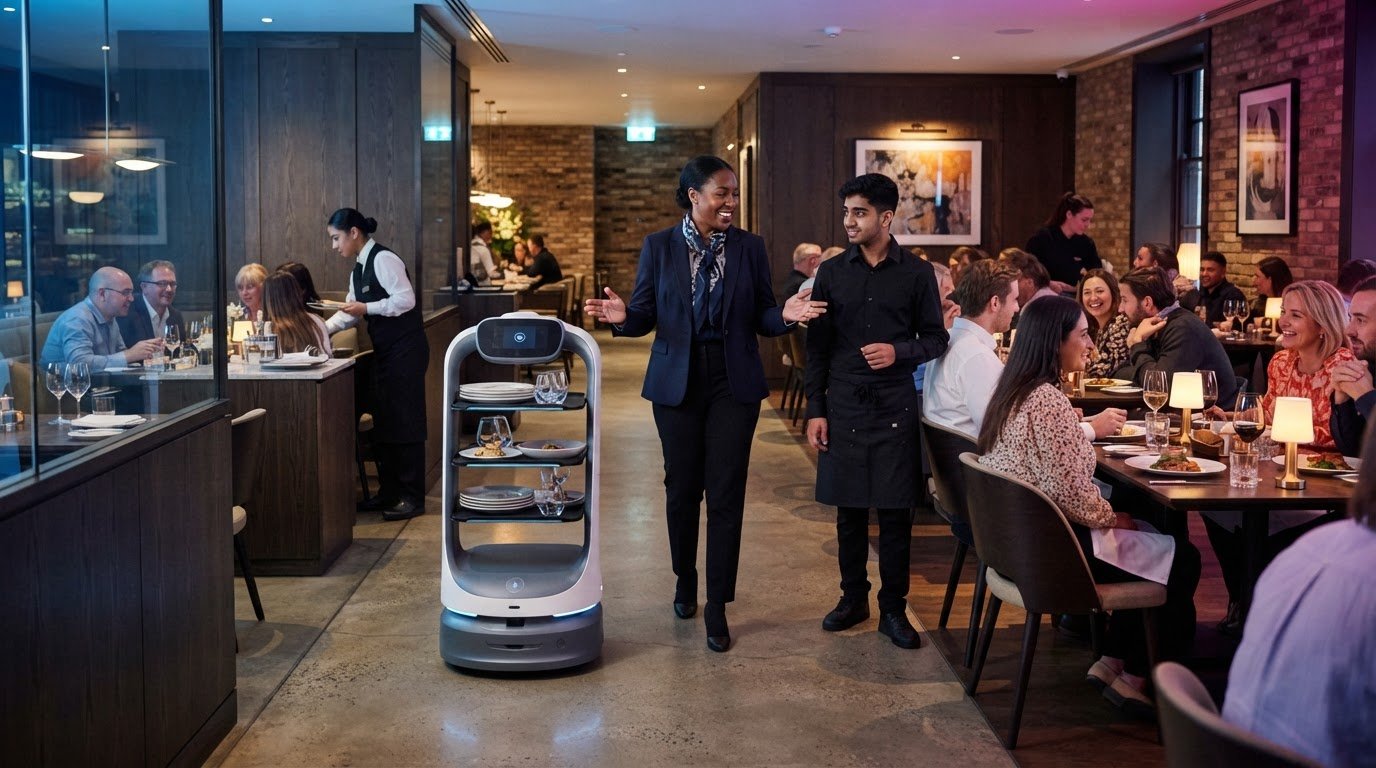
- For hospitality delivery tasks, Pudu BellaBot may be worth considering as part of a staffing plan that keeps people focused on work requiring human judgement.
Robot leasing and Robot-as-a-Service pricing
Leasing and robots-as-a-service (RaaS) spread a robot’s payment across an agreed term. RaaS is a monthly rental arrangement that can include the robot, software and support. Leasing may focus on equipment finance, with servicing arranged separately. The contract sets out what you receive, who handles maintenance and what happens when the term ends. Compare those details before weighing headline payments.
An agency staff vs service robots cost comparison works best when you compare the lease with the full staffing arrangement. Map recurring and one-off commitments, including installation, site mapping, staff training, software access, repairs and replacement equipment. A low monthly payment may leave some items outside the agreement. For example, a hotel should account for setup and support before comparing robot rental with agency cover.
RaaS can suit a venue seeking predictable monthly payments instead of a large upfront purchase. It can also make a pilot easier to plan when the robot, maintenance and support sit within one arrangement. Leasing may suit a business financing a particular model, with servicing arranged separately. Neither option removes the need to check whether the robot’s tasks match the site. Contract length and end-of-term conditions affect the commitment.
UK employment protections continue to apply to agency workers. Workplace health and safety responsibilities still matter, and UK data protection rules apply if a robot system processes identifiable personal data, such as video footage. If a system uses cameras, consider how captured information is handled as part of the operating arrangements.
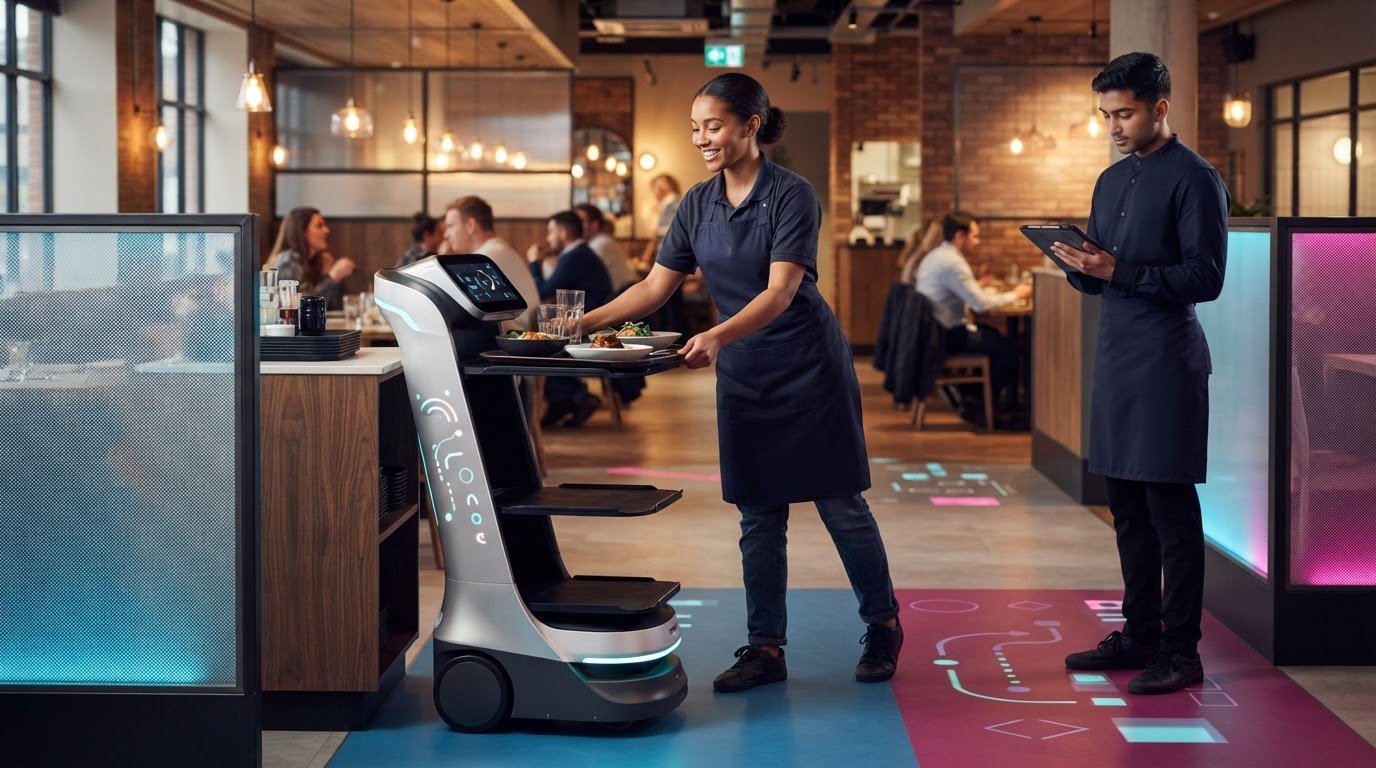
A robot’s contribution depends on its task and operating schedule, not a fixed number of staff hours. For example, a delivery robot may carry items between service points while a team member handles customer requests and exceptions. Record the time currently spent on that task, then account for staff loading, supervision and interruptions during a trial.
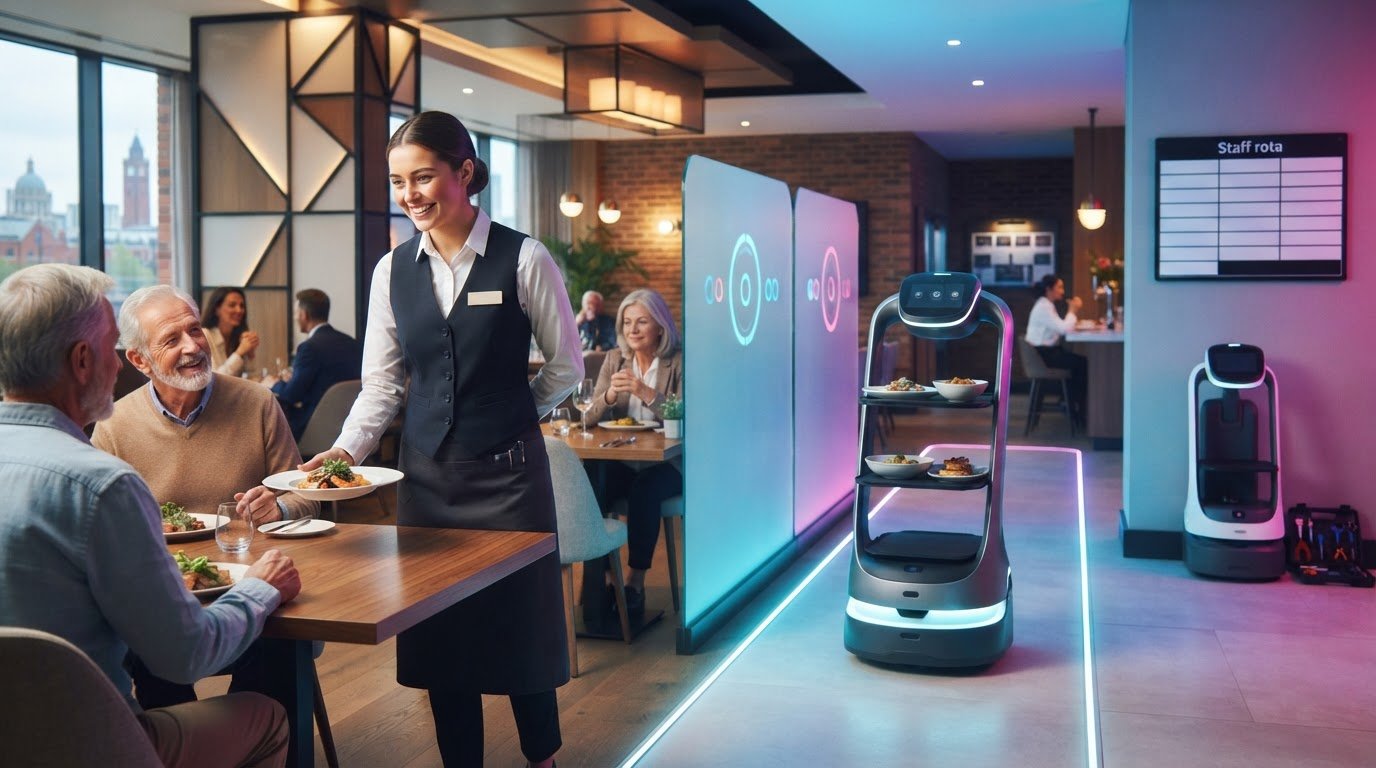
Hotels, restaurants, healthcare, retail, cleaning and warehousing use service robots alongside staff. A hotel might use a delivery robot for internal item runs while reception staff assist guests. A healthcare site might automate supply movements while clinical staff retain patient-facing responsibilities. The suitable role depends on the work and the site’s layout.
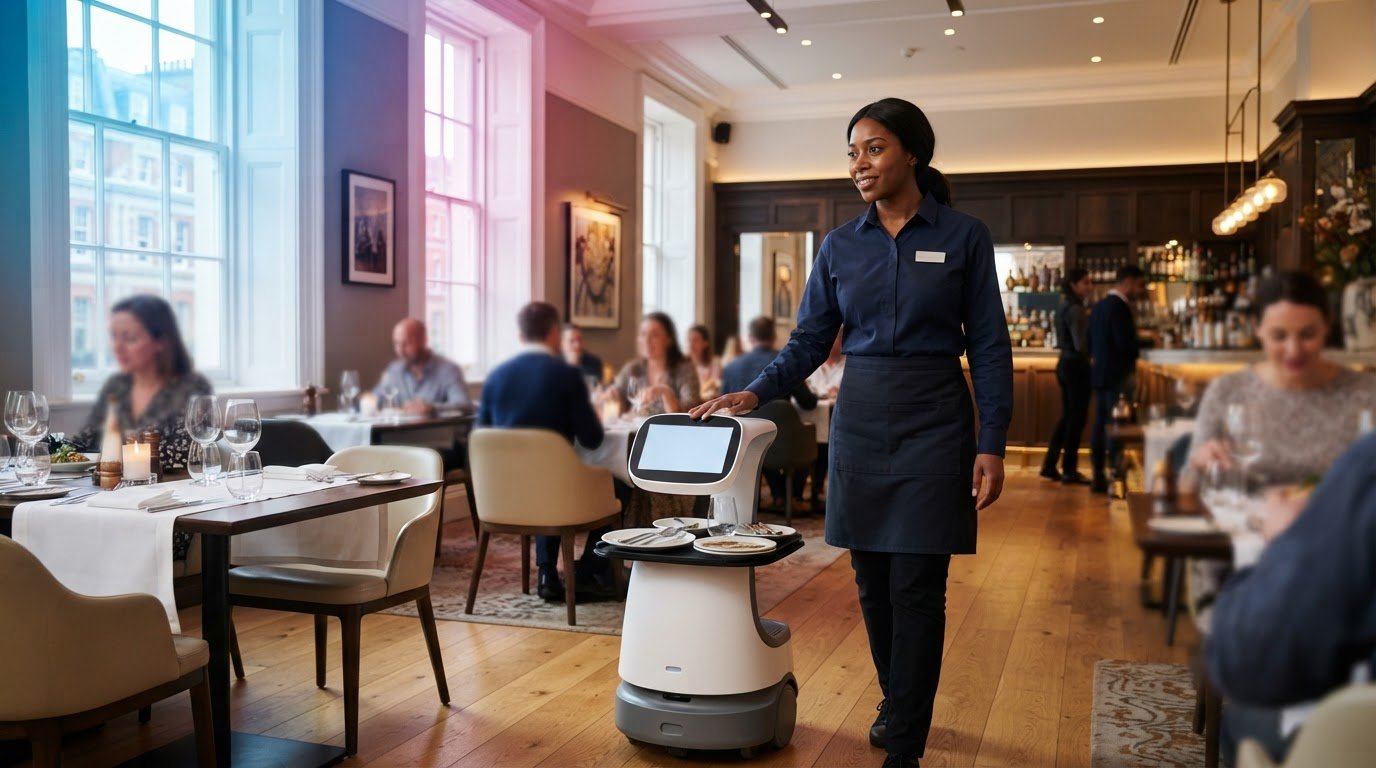
Robots are not a like-for-like replacement for agency staff. They need charging, upkeep, suitable routes and people to manage exceptions. A blocked corridor can interrupt a delivery, while customer care still calls for human judgement. Treat automation as support for defined, repeatable tasks, not a replacement for an entire shift.
For an agency staff vs service robots cost comparison, list the tasks, payment schedule, support terms and exclusions together. Then assess the proposed arrangement against a real shift, including busy periods and route interruptions. This helps you see whether leasing or RaaS fits the work and the way your site operates.
Recruitment, training and other staff overheads
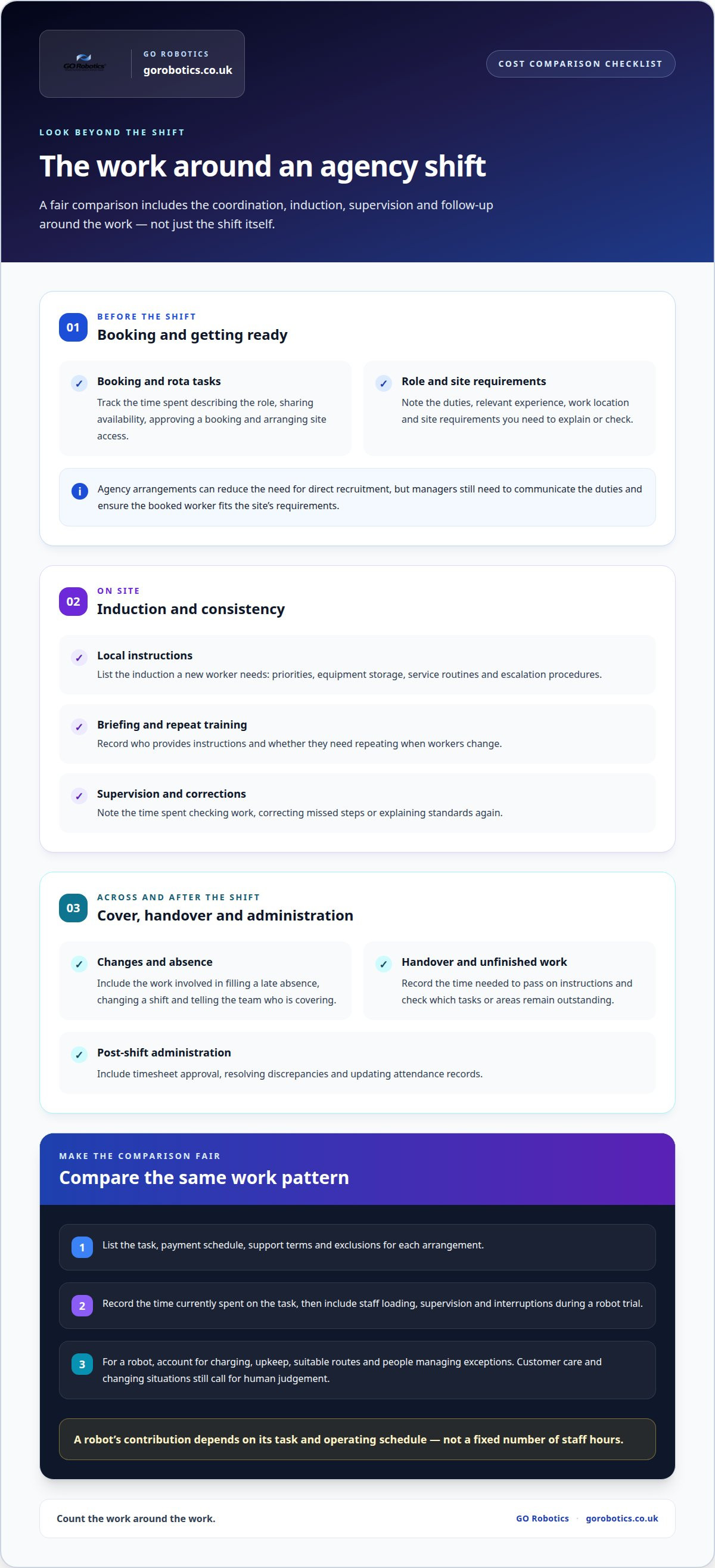
An agency shift can require management work before anyone reaches the floor. A hotel manager may describe the role, share availability, approve a booking and arrange site access. If a worker changes, some of those tasks may need repeating. Track the time spent coordinating cover alongside the hours the worker performs the job.
Start with the recruitment steps for one role. For a warehouse operative, these might include explaining the shift, checking relevant experience and confirming the work location. Agency arrangements can reduce the need for direct recruitment, but managers still need to communicate the duties and ensure the booked worker fits the site’s requirements.
Then map the induction for a first shift. A temporary cleaner may need to learn room priorities, equipment storage and which areas need attention first. A restaurant worker needs to understand service routines, table layouts and escalation procedures. Record who provides each briefing and whether the information must be repeated when workers change.
Training also affects consistency. If agency workers follow different methods, a supervisor may need to correct missed steps or explain standards again. In a care home, for example, a manager must make sure temporary staff understand their assigned duties and how to report an issue. The work may be familiar, but local procedures still matter.
Rota coordination creates another workload. A facilities manager may need to fill a late absence, change a shift and tell the team who is covering. Afterward, someone may approve timesheets, resolve discrepancies and update attendance records. List these activities separately; otherwise, the comparison captures the shift but overlooks the administration around it.
Handover quality matters when work crosses shifts. In a hotel, the incoming team needs to know which rooms or service areas remain outstanding. In retail, a floor team may need a clear record of completed cleaning tasks before trading begins. Include the time spent passing on instructions and checking unfinished work.
Use a simple role-based review:
- Record the booking and rota tasks for each agency shift.
- List the induction and local instructions a new worker receives.
- Note any supervision, corrections and handovers during the work.
- Identify administration completed after the shift, including timesheets.
This review helps separate task time from the management effort supporting it. A commercial service robot may support a defined routine, but staff still manage service standards and exceptions. Compare the responsibilities that remain with the work currently coordinated around agency shifts, and you’ll have a clearer picture of how the role could change.
Service robot payback periods
Payback is the time needed for a robot’s financial contribution to cover its investment. Most service robots achieve return on investment within 12-24 months. Treat that as a broad reference, not a promise for every workplace. The result depends on the task, how regularly the robot is used and which staffing or service needs change.
Start with a specific job, such as carrying supplies between a hotel storeroom and service areas. Record how the job is currently done and what a robot could take on. Separate the task from the rest of the role: a robot might move items, while staff still load it, respond to guests and handle urgent requests.
Next, work out what counts as a benefit for your operation. It might be less reliance on agency cover for a defined task, more time for existing staff or extra work completed within the same shift. These outcomes have different financial effects. Count only benefits your business can link to the robot’s actual use; released staff time is not automatically a cash saving.
Security robots have a reported return on investment period of 12-18 months. That figure relates to security applications and should not be applied directly to a hotel delivery robot or a floorcare machine. The tasks, staffing arrangements and operating conditions differ. Use evidence from the relevant job when estimating payback for another category.
Manufacturing offers another distinct reference: many manufacturers see a full return on investment within 12 months of deploying cobots. Cobots work alongside people in manufacturing, so their payback reflects a different setting and task. It is useful context, but not a substitute for assessing a service robot in hospitality, healthcare, retail or warehousing.
Utilisation can change the calculation. A robot assigned to a recurring route may complete useful work regularly; one with long idle periods contributes less. Record completed tasks, interruptions, staff involvement and periods when demand is low. Compare a typical operating schedule with a busy period, then check whether the proposed role remains useful across both.
Also test the assumptions behind any projected benefit. If staff must remain available to perform the same task whenever the robot is charging or blocked, staffing needs may not change as expected. Conversely, a robot that handles a defined routine may let staff focus on work that needs judgement. Keep these operational effects separate in your calculation.
The exact price depends on the model, configuration, installation, contract length and support arrangement; a quote gives the figure for your case. Use it with your task records and expected use to assess the payback period for your site.
What is the purchase price of a service robot in the UK by type?
There isn’t one purchase figure that applies to every service robot in the UK. A delivery robot, floor-cleaning machine and reception robot perform different tasks, so their configurations differ. Start by matching the robot type to a defined job. Then compare models built for that work, rather than treating all service robots as equivalent equipment.
Configuration affects the quote. For example, a hospitality robot may need different options from a floor-cleaning robot. Sensors, software, site mapping and integration requirements can all affect what you are buying. Ask for the proposed configuration to be itemised, so you can see which elements relate to your intended tasks and site.
Installation can also shape the purchase figure. Delivery, setup, staff training and integration with lifts or doors may need to be considered for your venue. A robot travelling between floors, for instance, may require different planning from one working on a single level. Include these requirements when comparing purchase proposals, rather than reviewing the equipment alone.
Robot type helps frame the comparison:
- Delivery robots carry items along planned routes in hospitality or healthcare settings.
- Cleaning robots handle specified floorcare tasks within a building.
- Reception robots support defined visitor-facing functions.
- Security robots are assessed against the patrol tasks and site conditions involved.
These categories are starting points, not interchangeable choices. A restaurant assessing tray delivery should compare suitable hospitality models, while a facilities manager should focus on the cleaning task, floor type and operating environment. Check what the proposed unit is configured to do and whether that matches the work staff currently complete.
Compare like with like across purchase proposals. Record the model, configuration, VAT treatment, delivery, installation, training, support cover and any required lift or door integration. If one proposal includes setup and another separates it, the headline figures won’t describe the same purchase. Contract length also matters when comparing outright purchase with leasing or monthly rental.
Finally, separate the acquisition decision from the total cost of ownership. The purchase figure covers the initial acquisition, while maintenance, software, repairs and staff time affect the longer-term calculation. A UK buyer can request a tailored quote based on the robot type, site requirements, configuration and support arrangement. That gives you a clearer basis for assessing the purchase against the task it must perform.
What are the ongoing costs of service robots, including maintenance, software, training and repairs?
A robot’s purchase or rental commitment is only part of its ongoing financial picture. Maintenance, software access, connectivity, staff training and repairs can each affect the total cost of ownership. For a floor-cleaning robot, for example, the operating plan should account for cleaning schedules, routine care and what happens if the unit stops during a shift.
Maintenance depends on the model and how your team uses it. Regular checks can identify worn parts, sensor obstructions or damage before they disrupt a route. Keep a record of faults, service visits and parts replaced. A delivery robot working around busy tables faces different day-to-day conditions from a floor-cleaning robot operating in a quieter corridor.
Software and connectivity also need a place in your assessment. Depending on the model and service arrangement, a robot may rely on software for routes, task settings or remote support. Check which software access and support are included. For instance, a venue using mapped delivery routes should understand how route changes are handled after refurbishment.
Training takes staff time, even when a robot is straightforward to operate. Someone needs to learn basic start-up, task assignment, safe use and what to do when a route is blocked. Include new starters and handovers in your plan. In a hotel, training should cover who loads a delivery robot and who responds when it cannot complete a run.
Repairs can affect both expenditure and service continuity. Clarify how faults are reported, which repairs fall within the support arrangement and whether replacement parts are included. Then consider the operational effect of downtime: a restaurant may need staff to resume tray runs, while a cleaning team may need to change its floor schedule.
Battery replacement is another lifecycle item. Service robot batteries may need replacement every 2-3 years. Track charging behaviour and battery performance in your maintenance records, and include the eventual replacement in your ownership plan rather than treating it as an unexpected repair.
- Maintenance: record inspections, faults, parts and service activity.
- Software: identify which updates, connectivity and support are covered.
- Training: account for staff induction, handovers and refresher instruction.
- Repairs: understand reporting steps, repair responsibilities and downtime cover.
For a useful comparison, place each item beside its equivalent staffing requirement. A robot may need servicing and software support; agency cover may involve induction, rota coordination and management time. List recurring commitments separately from occasional repairs, then assess the same operating period for both options. This makes the comparison more useful than looking at a single payment or repair event.
GO Robotics: Pudu BellaBot
GO Robotics can help you assess whether Pudu BellaBot suits your hospitality delivery tasks. Consider it where staff regularly carry items between service points, while retaining people for guest care and work needing judgement. The useful comparison is not robot against a whole role; it’s whether this specific task fits your venue and operating routine.
Think through the routes, handovers and staff involvement needed in your restaurant or hotel. GO Robotics can discuss Pudu BellaBot alongside Pudu KettyBot and Pudu HolaBot, helping you relate the robot choice to the work you want supported.
To discuss whether Pudu BellaBot fits your venue, contact GO Robotics.
Choose the task before choosing the technology
The next step is to identify one repeatable task where automation could support your team. An agency staff vs service robots cost comparison becomes more useful when it reflects your venue’s actual workflow, rather than an assumed headcount reduction. Decide what staff should continue handling and where a robot could fit into the service routine.
GO Robotics offers Pudu BellaBot, Pudu KettyBot and Pudu CC1. These models give you options to discuss for hospitality delivery and floorcare tasks. The right conversation starts with the work you want supported and the conditions at your site, then considers which model suits that role.
Discuss your options with GO Robotics and take the next step towards a practical plan for your venue.
Frequently Asked Questions
What is the average UK hourly cost of agency staff, including agency fees and employer on-costs?
There isn’t one hourly average that applies across UK agency roles. The quoted rate varies with the job, shift pattern and cover arrangement. Compare the agency charge with relevant employer costs, then account for overtime, shift premiums, holiday pay, sickness cover, induction and rota administration. For example, a weekend hotel reception shift may require different cover from a weekday warehouse shift. Use the same role and shift assumptions in both estimates.
How much does it cost to lease or rent a service robot in the UK?
The rental figure depends on the robot, configuration, contract term, installation and support included. Robots-as-a-service (RaaS) is a monthly rental arrangement that can cover hardware, software and support. Compare the agreement’s inclusions, servicing responsibilities, exclusions and end-of-term conditions, not just its recurring payment. For a restaurant assessing a delivery robot, the proposed setup and the work it will handle help determine which arrangement fits.
How does the return on investment and payback period compare for agency staff and service robots?
A robot’s payback comes from the value of work it completes, weighed against its purchase or rental and running commitments. Agency staffing is tied to the shifts and tasks covered. For a hotel, compare the robot’s contribution to routine deliveries with the staff time still needed for guest requests, loading and exceptions. Include ongoing maintenance and training, then assess both options against the same service needs and operating schedule.
How do service robot costs compare with agency staffing across cleaning, hospitality, healthcare and warehousing?
The comparison changes with the task. In cleaning, assess repeatable floor work alongside supervision and maintenance. In hospitality, compare routine item delivery while retaining staff for guest care. In healthcare, distinguish internal supply movements from work requiring clinical judgement. In warehousing, consider repeatable movement between work areas and the people needed to manage exceptions. Across all four sectors, utilisation, site layout and task suitability shape the financial case.