Technical Guide to the Advertising Robot with Screen
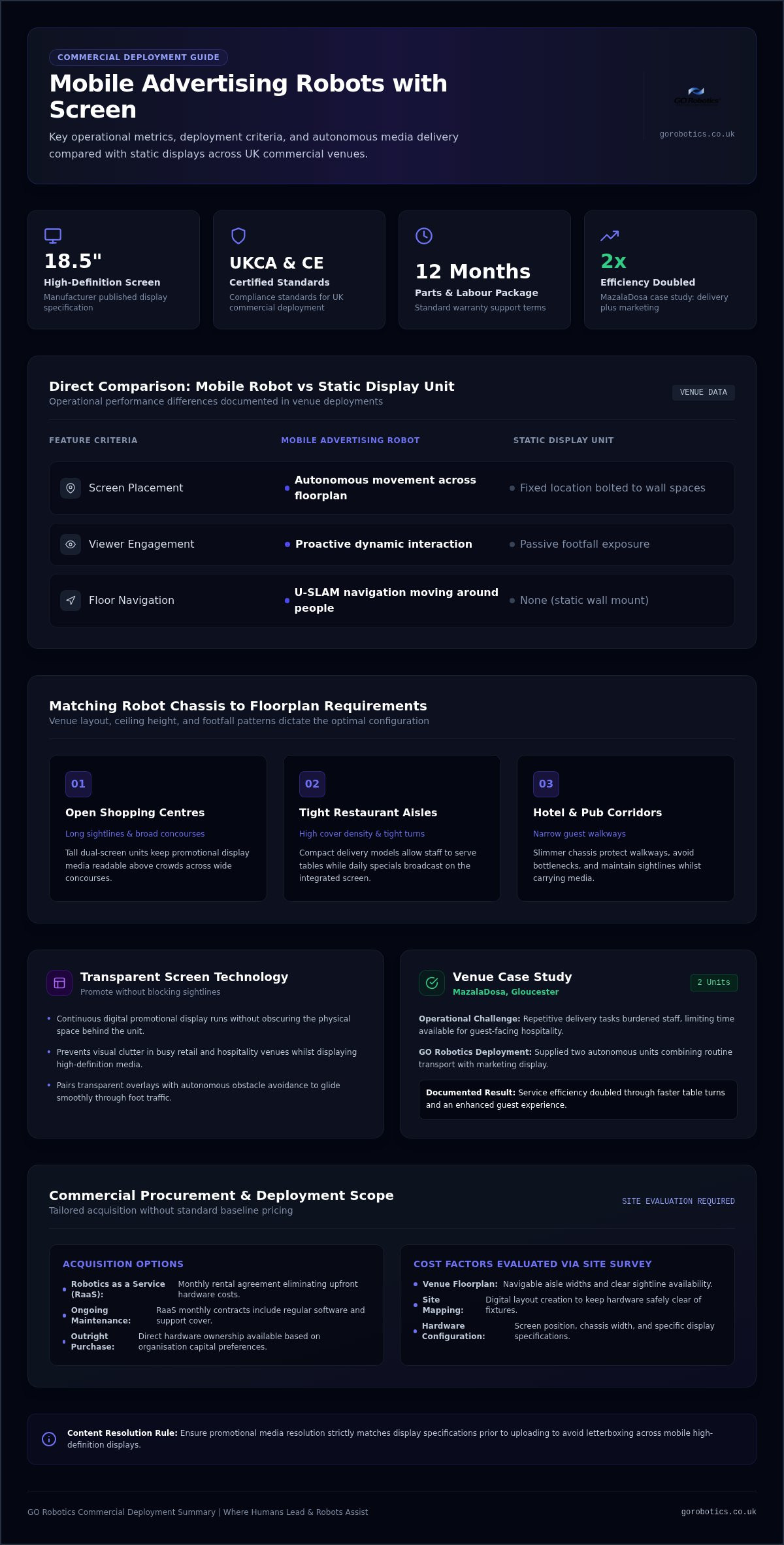
The overall cost of an advertising robot with screen is determined by compliance standards including UKCA and CE certifications, alongside software support and warranty options such as a standard 12-month parts and labour package. Because final deployment costs depend on site layout, hardware configuration, and acquisition terms, GO Robotics quotes tailored pricing following a direct site survey rather than publishing standard baseline rates.
Key Takeaways: Mobile advertising robots use autonomous navigation to bring high-definition promotional media directly to customers, significantly increasing engagement compared to static, wall-mounted digital displays.
- Commercial units feature 18.5-inch high-definition screens and comply with UKCA and CE safety standards.
- Except when floorplans are too narrow, as robots require clear sightlines and navigable aisles.
- Choose Robotics as a Service (RaaS) to eliminate upfront costs and include ongoing maintenance.
- Case study data from MazalaDosa shows efficiency doubled by combining automated delivery with marketing.
Choosing an Advertising Robot with Screen for Your Venue
Your floorplan, footfall pattern and ceiling height decide which advertising robot with screen will actually earn its keep. Screen position matters as much as mobility, so match the chassis to how guests move through the space.
Typical situations and a concrete pick from the hardware already used on UK sites:
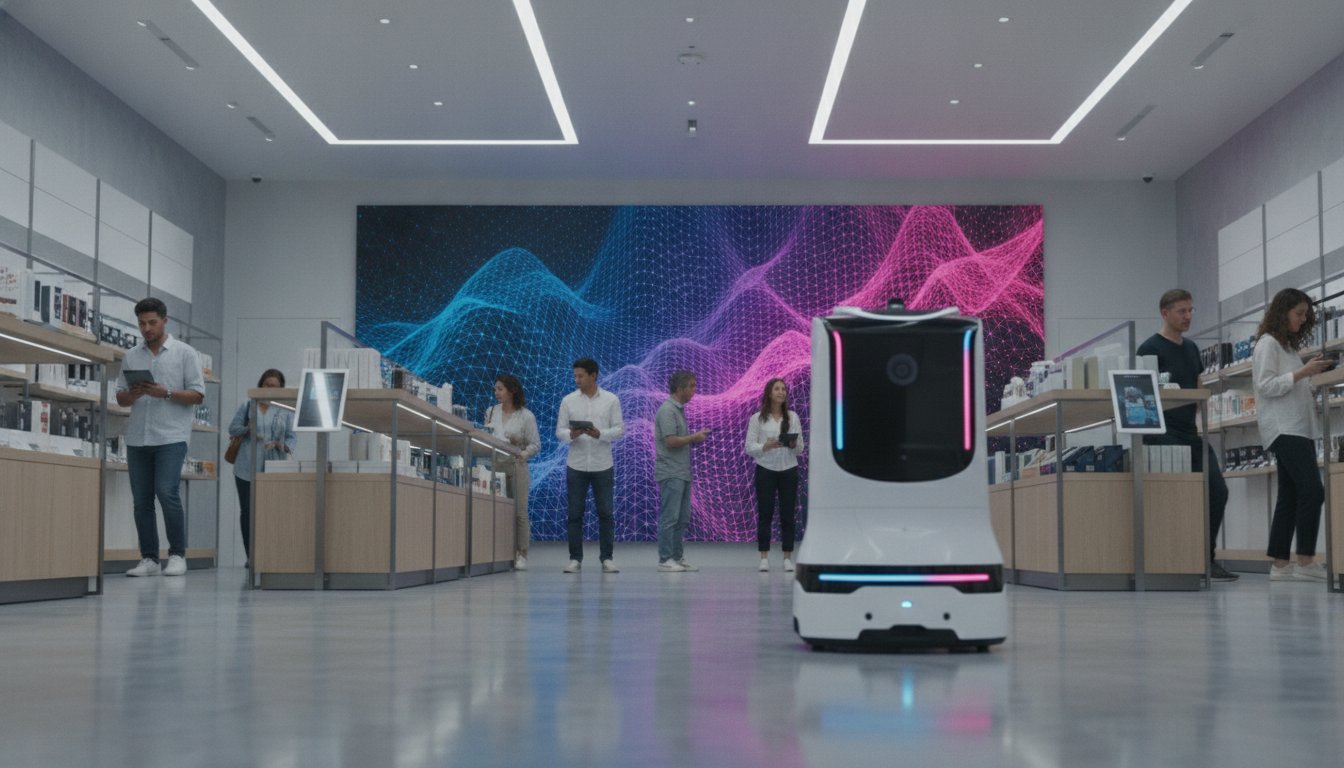
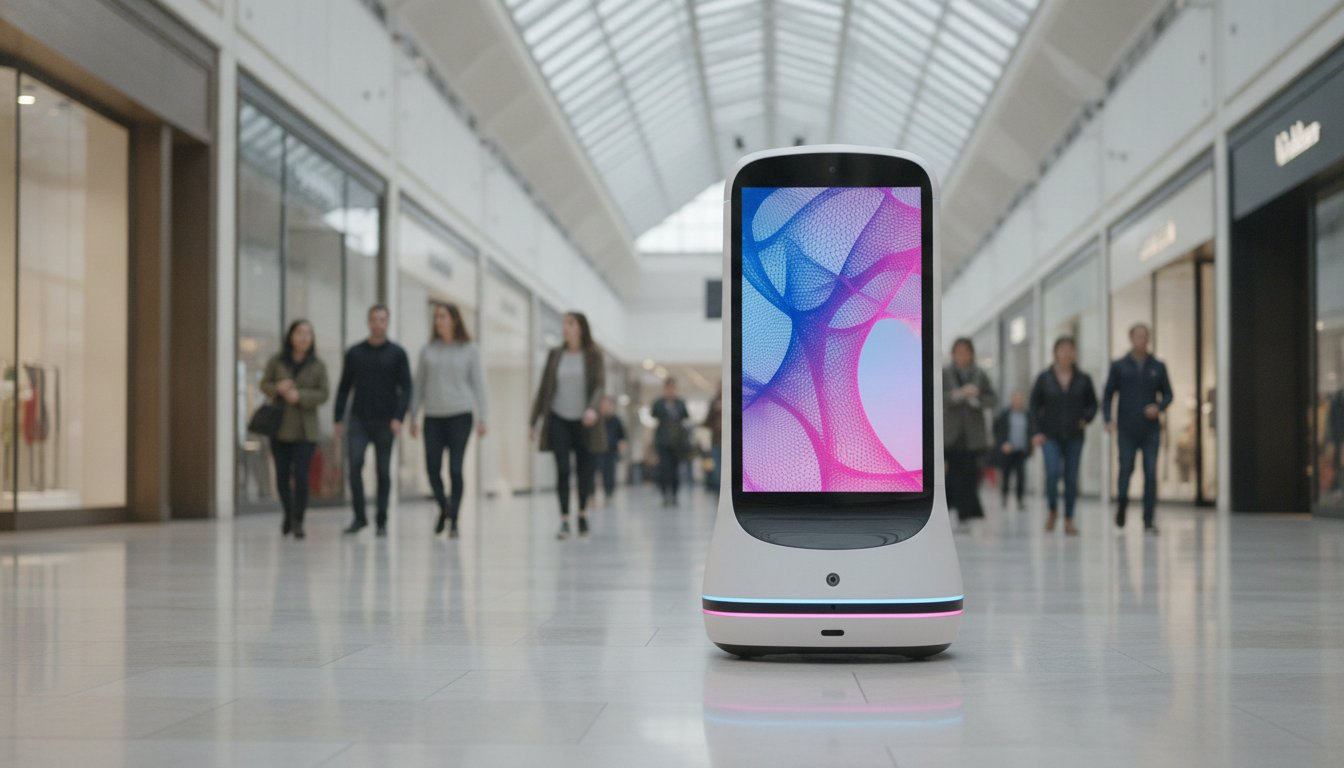
- Open shopping centres with long sightlines: tall dual-screen units keep the display readable above the crowd.
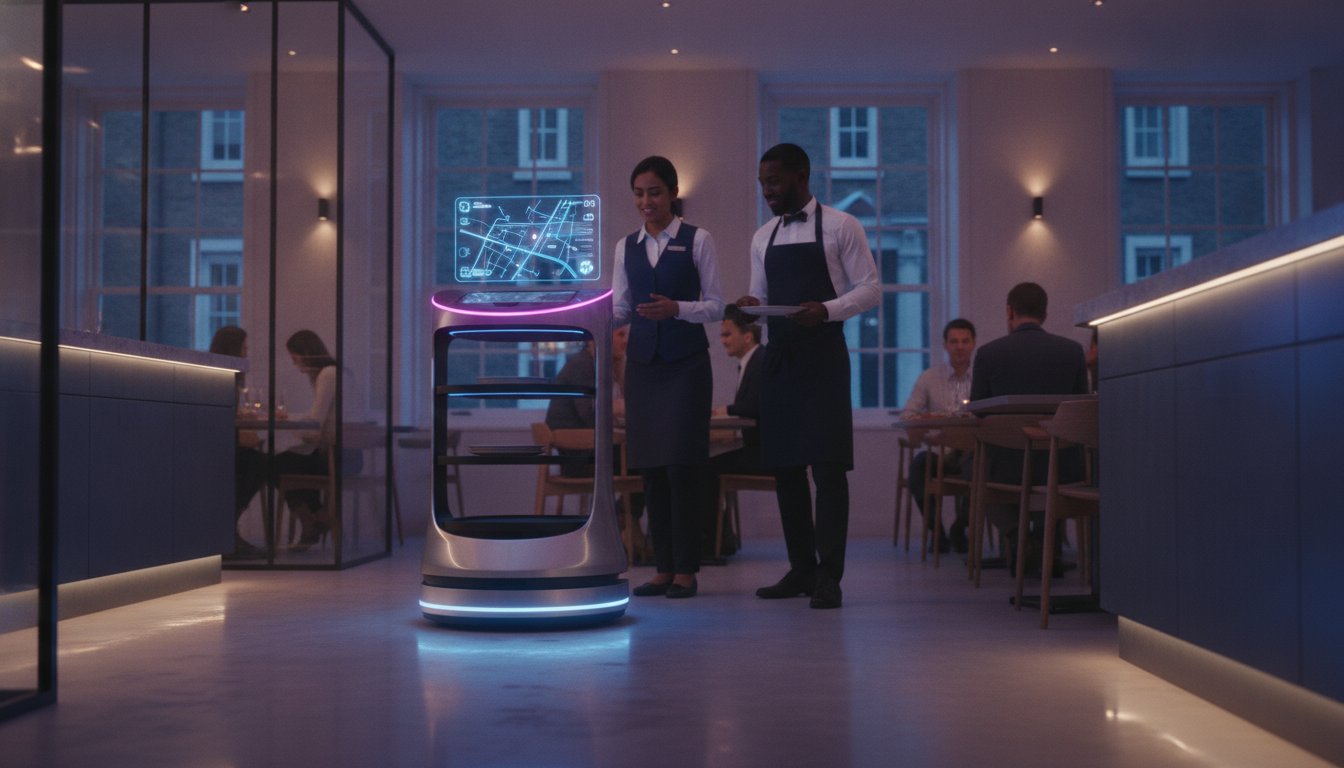
- Tight restaurant aisles: compact delivery models with promotional screens let staff serve tables while daily specials run on the integrated display.
- Narrow hotel or pub corridors: slimmer chassis protect guest walkways and still carry your media.
Matching the hardware to your floorplan prevents bottlenecks. In busy retail spaces, moving around people (U‑SLAM navigation) needs clear sightlines so the digital display stays visible above the crowd. Compact units help staff serve tables while broadcasting daily specials on their integrated screens.
Floor space also dictates screen size. Large shopping malls benefit from wide displays that draw attention across long concourses; narrow corridors need a smaller footprint that will not block walkways.
Before you deploy any unit, mapping the room (site mapping) keeps the robot clear of fixtures. A mobile display screen behaves like a self-driving digital sandwich board: it goes where the crowd gathers rather than waiting for footfall to pass a fixed wall monitor.
You can buy hardware outright or choose a monthly rental agreement through GO Robotics. Reach out to our specialists to schedule a complimentary site evaluation for your property.
Why Mobile Screen Robots Beat Fixed Wall Displays
Mobile advertising robots actively approach visitors, whereas static displays rely entirely on passing foot traffic for visual attention. Fixed screens stay bolted to wall spaces; autonomous displays travel directly through high-footfall areas.
From site deployments, mobile units capture more engagement because movement draws the human eye. A mobile unit operates like a digital sign on wheels and navigates around obstacles on its own. Sci-fi media long popularised autonomous machines, yet commercial units now deliver practical utility on real venue floors.
| Feature | Mobile Advertising Robot | Static Display Unit |
|---|---|---|
| Placement | Autonomous movement | Fixed location |
| Viewer Engagement | Proactive dynamic interaction | Passive footfall exposure |
| Navigation | Moving around people | None |
Static screens suit permanent orientation points, while autonomous units serve busy hospitality or retail venues that need flexible promotion. According to the manufacturer's specification sheet, the unit features an 18.5-inch high-definition screen that turns routine delivery tasks into marketing opportunities. Mobility creates strategic value: moving displays bring high-definition media right to your customers.
When you manage staff schedules, deploying autonomous hardware helps you cut labour costs. These machines handle simple venue transport while displaying targeted promotional media. Dynamic models let clients combine marketing with everyday service delivery, so promotional content gets noticed across the full floor plan.
Tip: Match your visual content resolution strictly to the display specifications to avoid letterboxing on mobile media units.
A commenter in the forum.arduino.cc thread "Recommendations for Arduino Robotics Kit, Education":
"The great deal with the new technic LEGO is that prototyping is really fast, the new motors and big frames make conceptual building an awesome experience." (source)
Fast prototyping capabilities allow you to test interactive screen layouts quickly before full deployment, so dynamic display content lines up with daily customer traffic patterns.
Transparent Screens That Promote Without Blocking Sightlines
Transparent display screens run digital advertisements continuously without blocking the physical space behind the unit. They combine clear visual overlays with moving around people to draw attention in busy commercial environments. Static posters cannot match the engagement of a dynamic display gliding through footfall.
MazalaDosa, Gloucester: the restaurant needed to handle repetitive delivery tasks and free staff for hospitality. GO Robotics supplied two delivery units. Combining automated support with human service produced faster table turns and an enhanced guest experience, with case study data showing efficiency doubled. Technology works best when it supports your team rather than replacing them.
Transparent screens also keep sightlines open across your venue, so you avoid visual clutter while still serving promotional content. You can explore hire and purchase options to find flexible display models for your floor layout.
If you want high-impact video marketing that respects physical space, a transparent display is a strong fit. Ask our team for a configuration that matches your aisles and peak covers.
Lease ROI: What a Site Survey Changes in Your Figures
Online price lists rarely reflect what you will actually spend, because hardware configuration, software licensing and site layout shift the total. Venue operators often struggle to compare deployment costs against labour expenditure without transparent figures, so a tailored quote after survey is the practical starting point.
Outright purchase suits venues with capital budget, whereas leasing (including Robots-as-a-Service / RaaS) spreads outlay and includes ongoing software maintenance, with no upfront costs on RaaS terms. Calculating return on investment involves tracking screen view time against minimum wage impact (national living wage).
A commenter in the forum.arduino.cc thread "Recommendations for Arduino Robotics Kit, Education":
"My school has been looking into buying Arduino robotics kits but I know from my own experience in buying these kits on amazon that most of them are just junk boxes with missing/broken parts." (source)
Buyers often worry about unreliable hardware when investing in robotics. Working with an established commercial provider gives you full support and professional-grade equipment rather than incomplete kits.
Budgeting for automation means checking hardware reliability before you commit. Request a detailed site survey so contract figures reflect your real floor, not a generic baseline.
Safety Vetting and Installation Before You Go Live
Deploying an advertising robot with screen means you evaluate site layout, network stability, safety compliance and ongoing local technical support before the first live shift. Moving from planning to execution works best as a short, clear sequence.
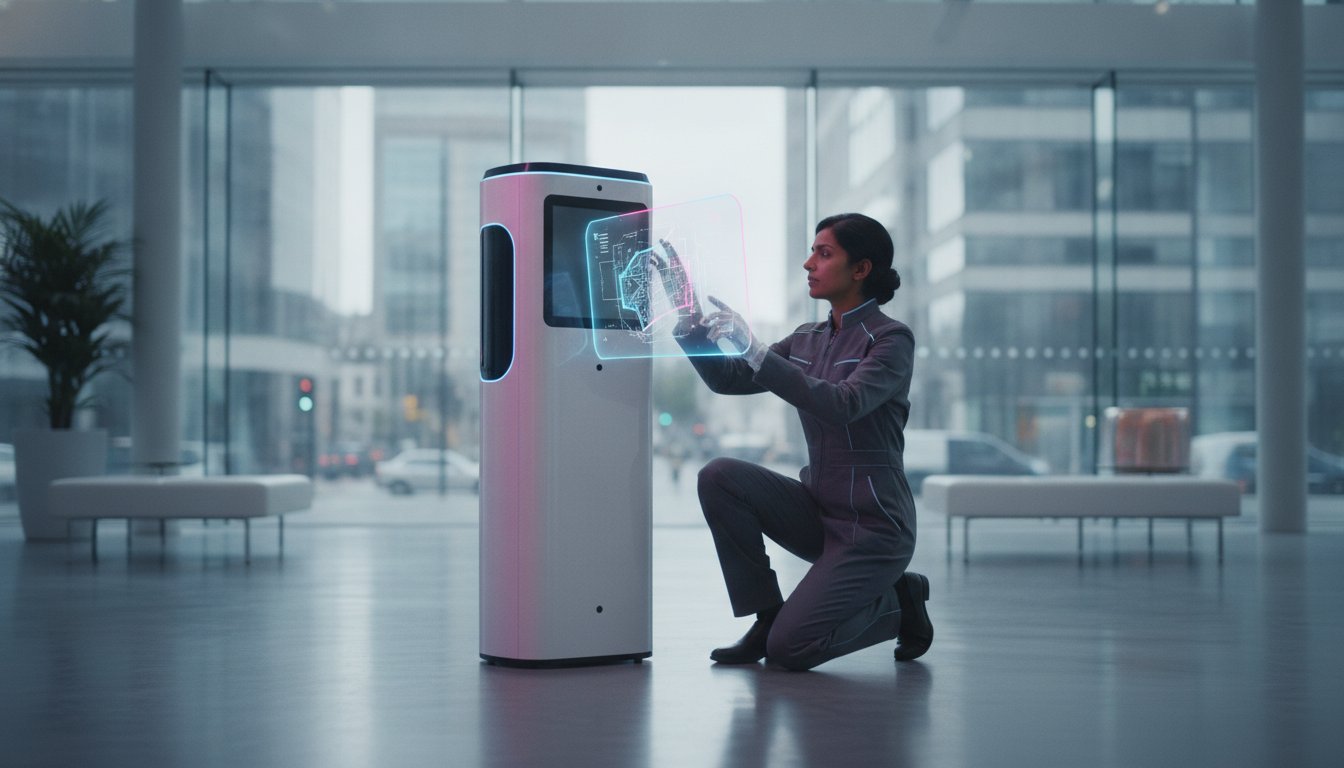
- Conduct site survey: Engineers inspect your floor layout for mapping the room and check Wi-Fi stability across the venue.
- Review safety credentials: Verify compliance documents so hardware meets standards for public-facing environments (UKCA and CE for crowded spaces).
- Set up navigation: Technicians programme pathing for moving around people and test obstacle avoidance sensors on-site.
- Deploy and train: Configure scheduled screen content, run trial passes, and train your venue staff on basic maintenance routines.
Tip: Verify that your hardware provider presents certified UKCA and CE documentation prior to signing deployment contracts for public venues.
National support after install keeps daily operations steady once the unit is live. Book the survey early so pathing and content schedules are proven before peak service.
Frequently asked questions
What is the mobile dual‑screen advertising robot?
A mobile dual-screen advertising robot is an autonomous commercial unit equipped with digital displays that shows video or graphic promotions while navigating venue spaces. According to the manufacturer's specification sheet, it features an 18.5-inch high-definition screen to display marketing messages while completing delivery runs. This mobile format captures far more attention than a fixed display on a wall.
How much does an advertising robot with screen cost in the UK?
Final cost depends on compliance requirements (including UKCA and CE), software support, warranty cover such as a standard 12-month parts and labour package, site layout, hardware configuration and whether you buy or take a RaaS lease. GO Robotics issues tailored pricing after a direct site survey rather than publishing a single baseline rate. Contact the team when you want figures built around your floorplan.
Should you hire or purchase the hardware?
Outright purchase suits venues with available capital. A monthly rental or Robotics as a Service agreement spreads outlay, can mean no upfront costs, and typically bundles ongoing software maintenance. Your choice should follow footfall, how many hours the screen must run, and whether you prefer capex or opex. A site survey clarifies which route fits your venue.
Does it have voice and facial recognition features?
Specific feature sets depend on the exact model and software configuration chosen for your venue. Modern service robots use multiple sensors to recognise surroundings and assist staff safely. We can recommend a model tailored to your operational requirements.
How does a mobile advertising robot differ from static screens?
A mobile robot moves through public areas autonomously instead of remaining fixed to a wall or floor stand. By moving around people, these dynamic units bring promotional messages directly into the line of sight of your visitors. Units supplied for UK public spaces are built to UKCA, CE, FCC, TÜV SÜD and GDPR compliance standards, giving you a clear safety and data baseline for busy customer areas.
Next steps for your venue
Choosing an advertising robot with screen comes back to the same questions you started with: Will the chassis fit your aisles? Will the screen stay visible in real footfall? Do UKCA and CE credentials and local support cover public use? Real-world performance depends heavily on physical floor layouts, so a full site survey prevents navigation issues before deployment.
Advisers can evaluate your facility and recommend suitable purchasing or RaaS leasing options in 2026. Units meet UKCA and CE compliance for public environments; the range also holds external design recognition, including a Red Dot Design Award. Where Humans Lead & Robots Assist: you keep hospitality personal while the robot carries the media and the simple runs.
To discuss your layout or request a tailored quote, contact our technical team via our contact page. More on this: Industrial Automation Grippers & Hands.