Automated cleaning solutions for businesses: how to assess a trial
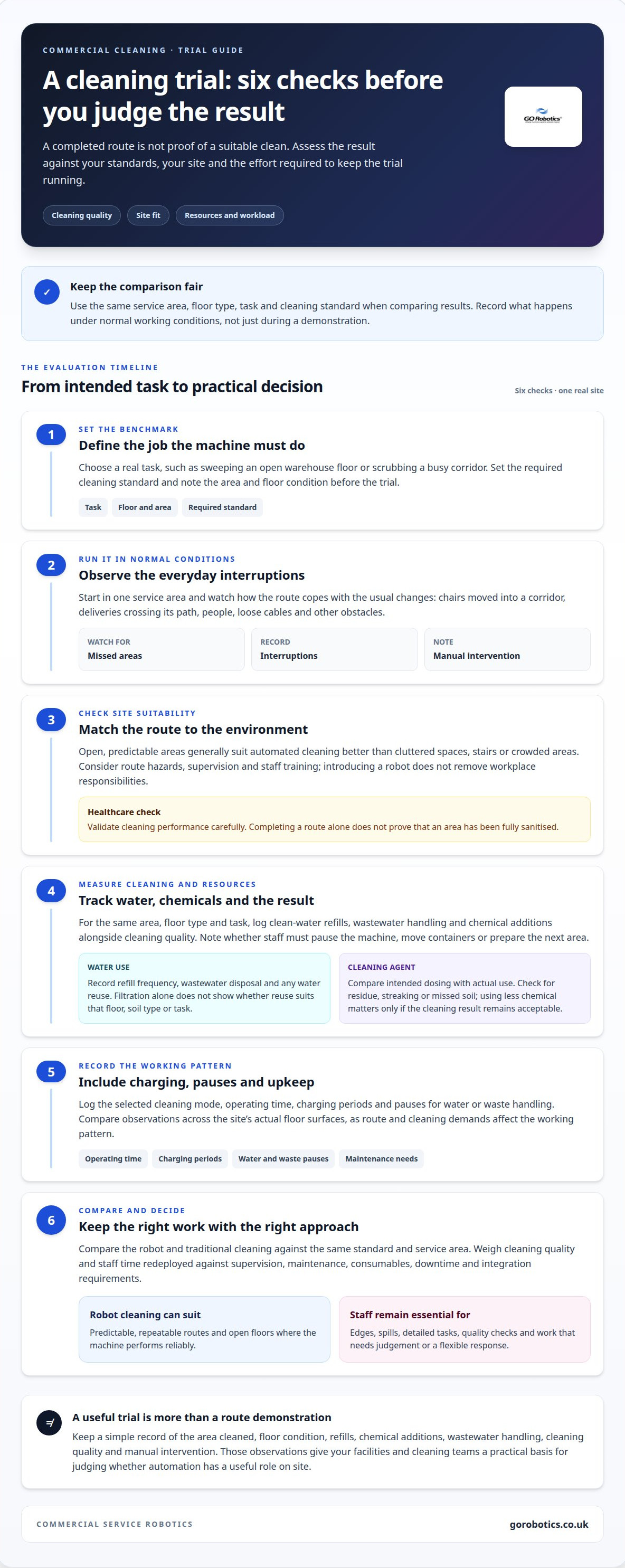
A cleaning trial can look successful when a machine completes its route, but route completion alone does not show whether it suits your operation. Judge the result against your team’s expectations, site conditions and the effort needed to keep the trial running. This helps you decide whether automation has a useful role, rather than treating a demonstration as proof.
Assessing automated cleaning equipment for businesses means looking beyond the equipment. A trial shows how a system fits existing routines, what information can guide decisions and where staff judgement remains essential. It also gives colleagues responsible for cleaning, facilities and site operations a practical basis for evaluating the results.
This article explains how to evaluate a trial, compare water and chemical use, and account for different site requirements. It also covers combined floor-cleaning functions and the role of data in planning work. Use these criteria to identify what matters at your premises and define a useful next step.
Key Takeaways
- Judge a cleaning trial in normal site conditions, including the time and supervision needed to achieve the required result.
- Compare water and cleaning-agent use alongside cleaning quality, and look for dosing or reuse features that could reduce waste.
- Match equipment to the layout and workload: predictable open areas suit different cleaning approaches from busy, cluttered spaces.
- Check whether sweeping, scrubbing, vacuuming and mopping in one machine fits your floors and cleaning routine.
- Use cleaning data to review routes, schedules and maintenance needs, while considering how information is collected and accessed.
How should an FM team evaluate an automated-cleaning trial?
Judge the trial against your site’s cleaning standards and daily demands. Record cleaning results, supervision, interruptions and resource use under normal working conditions.
Robot Types and Applications
Commercial cleaning robots include floor scrubbers, sweepers and vacuuming machines, each suited to different surfaces and tasks. Sensor-controlled devices follow programmed routes, detect obstacles and adjust their movement. Their value depends on how well the task matches your facilities, not simply on whether the robot completes a demonstration route.
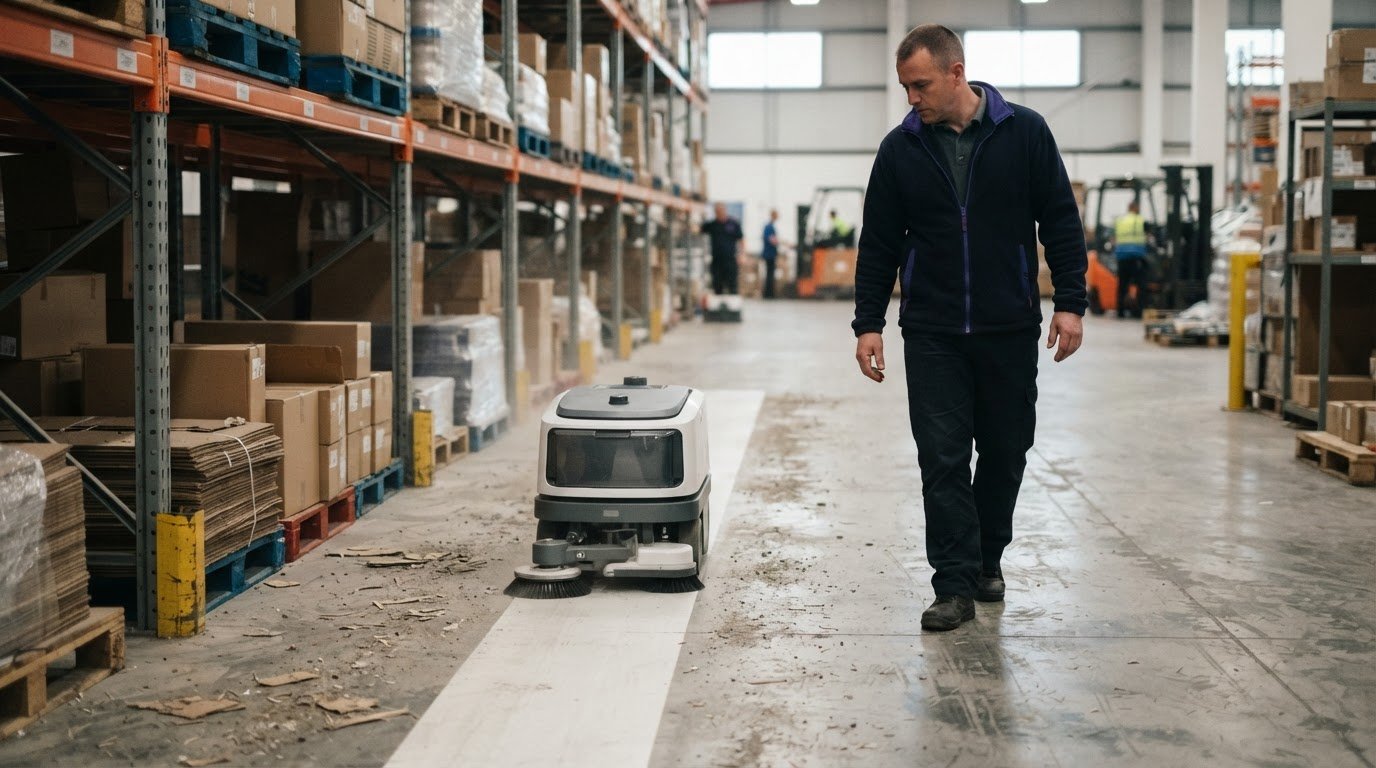
Test the intended job in its actual setting, such as sweeping an open warehouse floor or scrubbing a busy corridor. Record missed areas, interruptions and manual intervention.
Workplace Integration and Suitability
Integration means fitting the robot’s route and routine around staff, equipment and site activity. Start in one service area and observe how it handles everyday changes, such as chairs moved into a corridor or deliveries crossing its route. Open, predictable environments generally suit automated cleaning better than cluttered spaces, stairs or crowded areas.
In UK workplaces, facilities teams should assess work-equipment risks and staff competence when planning automation. Consider route hazards, supervision and training. Introducing a robot does not remove these responsibilities.
Key risks include missed areas, obstacles, changing layouts and interruptions from people or loose cables. Healthcare teams should also validate cleaning performance carefully. A completed route alone does not prove that an area has been fully sanitised.
Energy Efficiency and Battery Technology
Battery performance affects when a machine can work and how charging fits the cleaning schedule. During a trial, record the selected cleaning mode, operating time, charging periods and pauses for water or waste handling. Compare results across the site’s actual floor surfaces, as route and cleaning demands affect the working pattern.
There is no standard return on investment for every site. Compare cleaning quality and staff time redeployed against supervision, maintenance, consumables, downtime and integration requirements.
Robotic and Traditional Cleaning
Robotic floor cleaners handle predictable, repeatable routes, while cleaning staff can respond to detailed tasks, exceptions and changing conditions. Assess the two as complementary approaches, not as direct replacements for an entire cleaning service. A robot might cover an open floor while staff handle edges, spills and quality checks.
Compare both approaches using the same cleaning standard and service area. Throughout the trial, track missed surfaces, interruptions, staff supervision and maintenance needs. Keep automation on tasks it completes reliably, while retaining people for work that requires judgement or a flexible response.
Water and chemical use
Measure water and cleaning-agent use alongside cleaning quality during a trial. Compare the amount used for the same floor area, surface type and task, then check whether the result meets your site’s standard. This makes waste reduction measurable, rather than an assumption based on a machine’s features. When assessing automated cleaning equipment for businesses, track resource use under consistent conditions.
Record clean-water refills, wastewater disposal and chemical additions for each run. Some cleaning systems can empty wastewater and refill with clean water automatically, potentially reducing manual handling between tasks. Observe the whole process, including whether staff must pause the machine, move containers or prepare the next area.
A water or chemical supply station can store supplies and help replenish a machine between runs. Its value depends on the site layout, water access, drainage and cleaning schedule. A large facility with separate floor zones, for example, may need a different refill routine from a compact retail floor.
Check how detergent is added during cleaning. A dosing system measures and dispenses cleaning agent, helping prevent overdosing and unnecessary chemical use. During the trial, compare the intended dose with actual use, then inspect for residue, streaking or missed soil. Using less chemical is useful only if cleaning quality remains acceptable.
Water filtration can affect how often a machine needs fresh water. Some systems filter used water for reuse while maintaining cleaning performance. Record refill frequency alongside cleaning results. Filtration alone does not show whether reuse benefits a particular floor, soil type or task.
High-pressure water hydroblasting is distinct from routine robotic floor cleaning. It directs pressurised water at stubborn deposits on suitable industrial surfaces, such as equipment or production areas. It does not replace a floor robot’s regular route. Assess whether a surface and task call for targeted pressure cleaning instead.
Industrial sites can have different water demands across production floors, loading areas and machinery zones. Match the task to the surface: a wide floor route may call for controlled scrubbing, while localised residue may need another process. Include wastewater collection and refill-point locations in the integration review.
Keep trial conditions consistent. Log the area cleaned, floor condition, water refills, chemical additions, wastewater handling and manual intervention. Review these records alongside cleaning quality and staff workload. This helps show whether changes to dosing, filtration or supply arrangements reduce resource use without compromising the required result. Together, these measures provide a practical basis for comparing automated cleaning equipment for businesses at your site.
Applications across commercial, healthcare and industrial sites
Cleaning automation can suit repeatable floor tasks, but priorities differ by site. An office may need cleaning around desks and meeting rooms, while a shopping centre must keep public walkways clear during opening hours. Match the machine to the floor surface, foot traffic and working routine. This helps facilities teams determine where robotic cleaning can support daily operations without disrupting staff or visitors.
In commercial environments, autonomous machines can clean large spaces such as airports, offices and warehouses. Open routes can make regular floorcare easier to plan, while queues, displays and temporary furniture may interrupt movement. During a trial, observe the machine during normal operations, including busy periods and routine changes. Record where it pauses, misses an area or needs staff assistance.
Healthcare requires careful assessment. Completing a corridor route does not establish that a clinical area has been fully sanitised. Facilities teams should validate cleaning performance in the specific environment, including the surfaces and rooms assigned to the machine. Keep specialist cleaning and quality checks within the team’s process, and assess how the route fits around patients, staff and equipment.
Industrial sites can use autonomous cleaning for predictable, open floors in production areas and logistics facilities. Dust, debris, spills, cables and movable equipment can affect a route or its results. Separate routine floorcare from specialist tasks, then observe whether the machine completes its assigned area without obstructing people or equipment. Include downtime and staff intervention in the review, not just route completion.
Site layout matters as much as sector. A clear warehouse aisle differs from a canteen with tables, chairs and regular foot traffic. Stairs, clutter, changing layouts and complex edges can limit where autonomous machines work well. Plan the intended route around fixed obstacles and shared access points, then observe how everyday activity affects the cleaning pattern.
For a practical trial, choose a defined area with a clear cleaning requirement. This could be a public floor route in an airport concourse, a specified non-clinical area in a care setting, or an open production floor in a factory. Apply the same surface and quality expectations used by the facilities team. This creates a useful comparison without assuming every environment needs the same machine.
Automation is most useful when it supports predictable work and leaves people free to manage exceptions. Review the task, surface, traffic and supervision needs together. If the layout changes frequently or cleaning depends on detailed judgement, those factors should shape the machine’s role. The right application fits your actual operations, rather than imposing a generic plan across every site.
Combined sweeping, scrubbing, vacuuming and mopping
A combined machine may perform several floor-cleaning tasks, but functions vary by model. Assess each method against the floor, debris and required result.
Sweeping and Scrubbing
Sweeping collects loose debris, while scrubbing uses water and cleaning action to remove marks from suitable hard floors. Combining these tasks can reduce separate passes across an open area, such as a warehouse aisle. It does not remove the need for manual cleaning around edges, corners or obstacles.
Check the cleaning sequence during a trial. If grit remains before wet cleaning starts, it may spread across the surface instead of being collected. Inspect the finished floor under normal lighting and record missed patches, visible residue and manual follow-up. A loading area with tracked-in dirt may need a different routine from a polished office corridor.
Confirm which functions the specific machine can perform together instead of assuming every model sweeps and scrubs in one pass. Some equipment may need a setting change or a separate run for each task. That difference affects route planning, staff involvement and how long spaces remain in use.
Vacuuming and Mopping
Vacuuming removes dry dust and debris; mopping applies moisture to suitable hard surfaces. When a machine combines both, sequence matters: collect dry material before damp cleaning begins. In a hotel corridor, for example, visible dust and tracked-in marks call for different cleaning actions.
Assess carpeted and hard-floor areas separately during a trial. Vacuuming may suit carpet, while mopping is intended for compatible hard surfaces. Check whether transitions between surfaces interrupt the route, and note any areas employees must finish manually. Do not assume one setting works equally well on every floor type.
Review practical operation as well as the visible result. Record the route, cleaning mode, water handling and staff interventions for each task. If the machine needs separate runs for vacuuming and mopping, include both in the schedule. This helps facilities teams judge whether combined functions simplify cleaning or add steps to the routine.
For a fair comparison, test one defined area against the same cleaning standard throughout. A reception space, for instance, may combine hard flooring, mats and furniture that limit access. Compare the cleaned surfaces, missed edges and manual finishing required. The key measure is whether the machine’s particular combination of functions suits the space and its daily cleaning needs.
Internet of Things (IoT) and data-driven cleaning plans
Connected cleaning robots collect information that can help facilities teams review routes, schedules and machine use. A scrubber’s route records, for example, may show which corridors it covered and where it stopped. Use those records alongside cleaning inspections so that a completed route is not mistaken for proof of a clean surface.
Cleaning schedules can reflect how a building is used, rather than relying only on fixed routines. Combining robot data with occupancy information may help teams prioritise busy entrances for more frequent cleaning and quiet rooms for less. A reception area and a rarely used meeting room, for example, may need different plans.
Some systems analyse dirt levels as they work and adjust cleaning intensity. This may direct more effort to visibly soiled areas instead of treating every section identically. During a trial, compare system records with staff observations and check whether changes in machine activity match actual floor conditions.
Connected sensors can also help identify wear or defects in cleaning equipment. Early maintenance may reduce the risk of unexpected stoppages and help extend equipment life. Review alerts alongside maintenance records: a sensor indication is useful when it prompts an inspection or planned repair, not simply another notification.
Where a site uses several autonomous machines, an app or fleet-management system can coordinate schedules and routes. Separate machines might cover different building zones, for example, while managers review activity through a desktop or smartphone interface. Confirm that the information helps staff plan work rather than creating a separate reporting task.
Digital twins model a building and its cleaning workflows. Facilities teams can use a model to consider route changes before applying them on site. For example, they might assess how a scrubber’s route changes when temporary shelving blocks an aisle. This offers a way to examine proposed plans against real site conditions.
Plan data handling before connecting cleaning equipment. Facilities and IT teams should consider what the robot collects, where information is stored, who can access it, image retention, cybersecurity and data-protection compliance. These questions are particularly relevant where cameras or occupancy sensors operate in shared spaces. Limit access to people who need the information for cleaning operations.
For a useful trial, link each data point to a practical decision: change a route, adjust a schedule, arrange maintenance or investigate a missed area. Discuss data-led cleaning options when you’re ready to assess equipment against your site’s needs.
GO Robotics
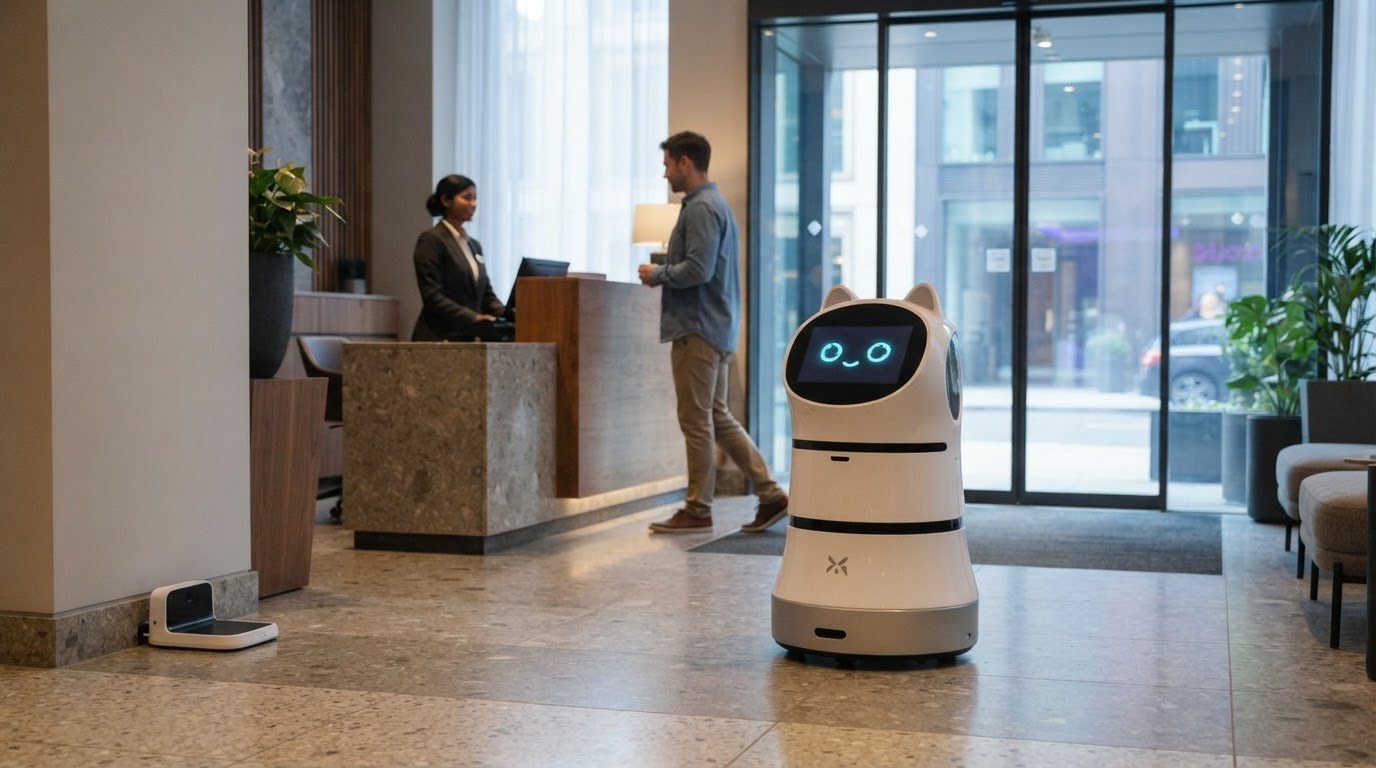
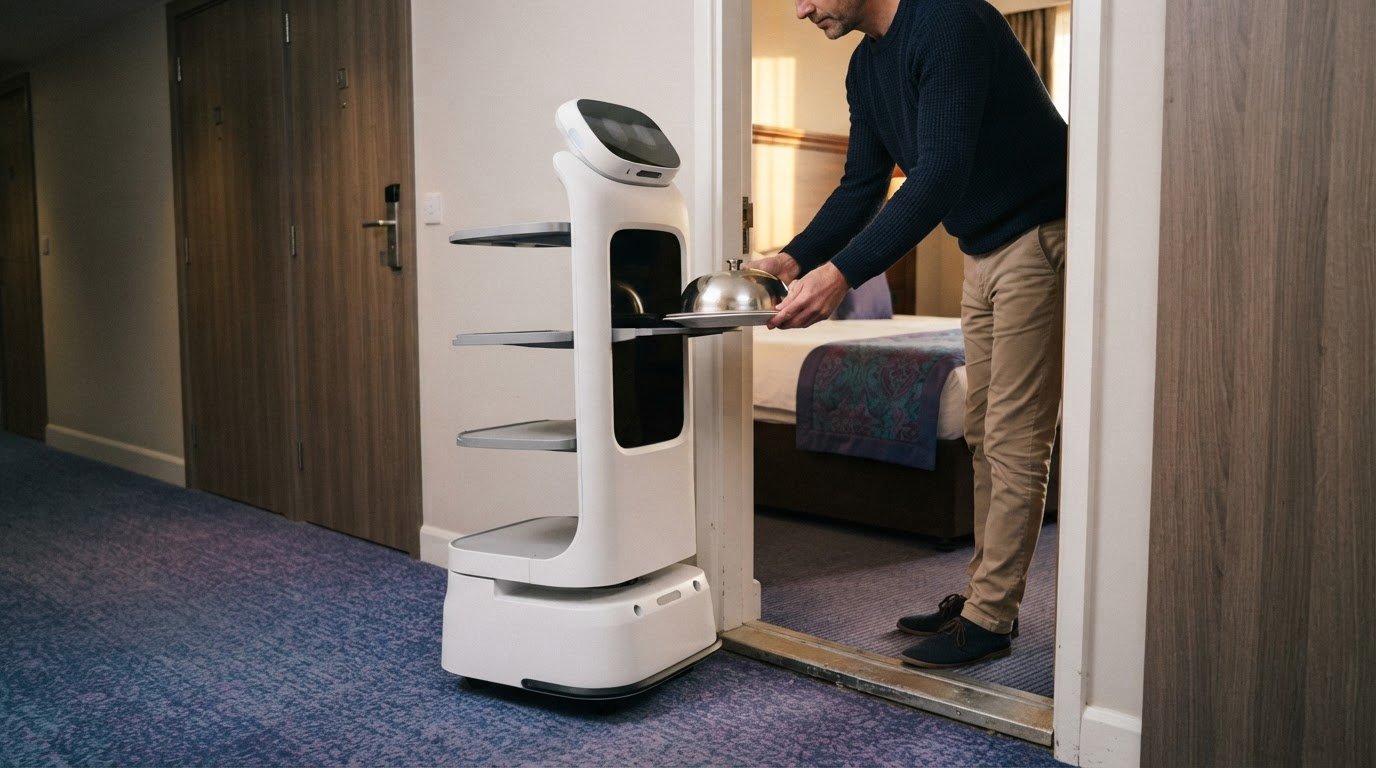
GO Robotics supplies service and delivery robots, including Pudu BellaBot, Pudu KettyBot and Pudu HolaBot, for hospitality and delivery tasks, rather than automated floor cleaning. If your trial is specifically about scrubbing, sweeping or mopping, assess floor-cleaning equipment against those requirements. Consider GO Robotics’ models when service or delivery tasks are also relevant.
Turn to GO Robotics when you’re planning automation across a venue and want a site survey to inform model recommendations. Discuss your layout, workflows and intended tasks so the right role for each robot is clear. Contact GO Robotics to talk through your site and automation requirements.
Put your trial findings to work
A trial can help shape a practical plan for where automation belongs in your operation. Make the decision site-specific: identify tasks suited to a machine, work that remains with staff, and how you will review performance as conditions change. This gives your team a clear basis for refining the trial or extending it to another area.
Selecting automated cleaning equipment for businesses also means keeping floorcare distinct from other venue tasks. GO Robotics offers the Pudu CC1 for cleaning, while Pudu BellaBot and Pudu KettyBot serve hospitality and delivery roles. Each has a different place in a site plan, so base your choice on the work you need done.
When you’re ready to discuss how your site’s requirements fit available equipment, contact GO Robotics about cleaning automation. A clear next step can help you move forward with confidence.
Frequently Asked Questions
What is smart cleaning?
Smart cleaning uses equipment and information to organise work around a site’s needs. A manager might use room-use records to decide which spaces need attention before an event, for example, rather than treating every room alike. The term can refer to connected machines, digital task planning or both. The practical test is whether the information sets clearer priorities and helps staff follow the cleaning plan.
What types of automated cleaning equipment are available for businesses?
Businesses can choose autonomous machines for dry debris, hard-floor washing or vacuuming, as well as equipment that combines floorcare tasks. Some systems follow a set route, while others use sensors to respond to changing surroundings. Choose according to the surface, the soil to be removed and the finish required. A site with carpets and tiled entrances, for example, may need different equipment or routines in each area.
Which business cleaning robots are best for offices, warehouses, and retail spaces?
No single robot suits every office, warehouse or shop. In an office, consider how desks, meeting-room furniture and floor coverings affect access. A warehouse assessment should account for stored stock and vehicle movements, while a retailer may need cleaning to fit around displays and customer activity. Compare each option against the same site-specific requirements, then assess whether its role matches the work it can reliably complete.
How do businesses assess premises and choose the right automated cleaning equipment?
Assess each area separately, noting floor finishes, entrance matting, fixed furniture and any surfaces requiring a particular cleaning result. Include times when displays, stock or equipment move, as these changes can affect access after routes are planned. Define who will inspect the finished work and how staff should report missed areas. These details help distinguish suitable spaces from areas where manual methods remain more practical.
What installation, staff training, and maintenance do commercial cleaning robots require?
Requirements vary by machine and site. Installation may involve configuring the work area and operating routine; staff training should cover safe starting and stopping, responding to interruptions and recording faults. Following the manufacturer’s instructions, a maintenance plan can include routine machine cleaning, wear-part checks and consumables management. Assigning clear responsibility helps ensure routine care is not overlooked between cleaning shifts.
What UK health and safety rules apply to autonomous cleaning robots in workplaces?
Facilities teams should assess work-equipment risks and staff competence, including route hazards, supervision and training. Introducing a robot does not remove these responsibilities.
What is the typical return on investment for automated business cleaning?
There is no standard return on investment for every site. Compare cleaning quality and staff time redeployed against supervision, maintenance, consumables, downtime and integration requirements.