Automated Waste Collection Robots for Venues and Their Costs
A busy venue can fill its bins faster than routine collection rounds can keep up. An automated waste collection robot for venues may help move waste between designated points, but its value depends on more than the journey. Routes, staff hand-offs and how the building is used all influence whether automation fits the work.
It’s sensible to consider what happens when an event changes the usual flow or people and equipment crowd a service corridor. You also need to understand what litter detection can and cannot do, how a robot returns to base, and which tasks still require staff. These practical details matter more than a demonstration on an empty floor.
This guide explains how indoor robots transport waste, respond to event surges and support collection routines. It also covers detection limits and return-to-base workflows. You’ll see how venue layout, task design and equipment choice shape the case for automation, helping you decide whether it fits your operation and where staff oversight remains essential.
Key Takeaways
- Assess corridor space, floor conditions and busy crossing points to see whether an automated collection route can fit your venue.
- Plan event waste handling around changing hotspots and peak periods, rather than relying on a fixed routine.
- Understand what litter detection can contribute and where staff oversight still matters.
- Include the return journey and waste hand-off in the operating plan, not just the trip to the disposal area.
- Use the article’s business-case factors to assess whether automation suits your operation, and see where GO Robotics’ Pudu BellaBot, KettyBot, CC1 and HolaBot fit into broader venue automation.
Autonomous mobile robots for internal waste transport
An autonomous mobile robot (AMR) follows a mapped indoor route to move waste without a person pushing every cart. In a hotel, for example, it can carry a designated cart from a collection point towards the disposal area.
Navigation through crowds and tight spaces
Autonomous navigation combines a mapped route with sensors that detect people and obstacles, helping a mobile robot move through changing spaces. LiDAR uses laser light to detect nearby objects, while cameras can help interpret the surroundings. In a busy foyer, a robot may need to slow down, stop or take an available route around a group of guests.
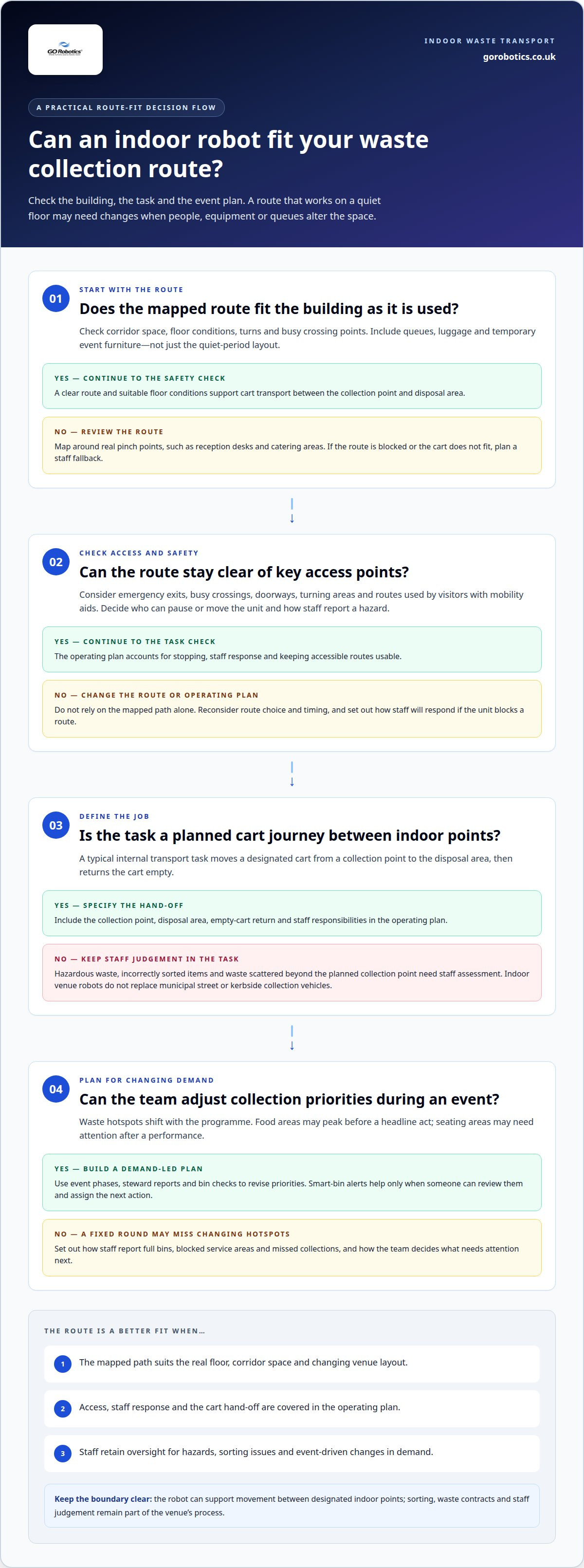
That matters when corridors serve both staff and visitors. A route that works during a quiet period may later be blocked by a queue, luggage or temporary event furniture. Smooth floors and clear passageways support transport, while narrow turns and crowded doorways can interrupt it. Map routes around real pinch points, such as reception desks and catering areas, rather than assuming the shortest path will always work.
Safety, accessibility and UK requirements
For UK public venues, deployment planning should cover applicable product and workplace safety requirements, alongside a site-specific risk assessment. Consider how the robot stops, how staff respond if it blocks a route, and whether its path avoids emergency exits and busy crossing points.
Accessibility should also shape the route. Keep walkways, doorways and turning areas usable for visitors with mobility aids. For example, a robot waiting outside a lift should not obstruct the entrance or accessible route past it. The venue’s operating plan should specify who can pause or move the unit and how staff report a hazard.
Use in UK venues
Potential UK settings include hotels, arenas, shopping centres, transport hubs, hospitals and university campuses. Each has different waste points, visitor flows and access arrangements, so routes must fit the building’s actual layout.
A shopping centre might plan a route from service corridors to a waste room, while a hotel could connect back-of-house collection points with a disposal area. These are possible use cases, not evidence that every venue type already operates such robots. Public areas with frequent crowd movement need particular attention to timing and route choice.
Risks and limitations
The main constraints are physical access, changing conditions and carrying capacity. A blocked corridor, uneven floor or cart that does not fit the route can disrupt a collection run. Spills, temporary signs and event equipment may also change the safe path after mapping.
Robots cannot replace staff judgement when waste is hazardous, incorrectly sorted or scattered beyond the planned collection point. Experienced commercial providers such as Advance Cleaning Services Inc. demonstrate how facility operations continue to depend on skilled teams for thorough hygiene, spill management and handling irregular materials. Establish a clear fallback: staff should know when to pause the robot, clear an obstruction or take over a task. These limits matter because an interrupted route can leave waste waiting instead of reaching disposal.
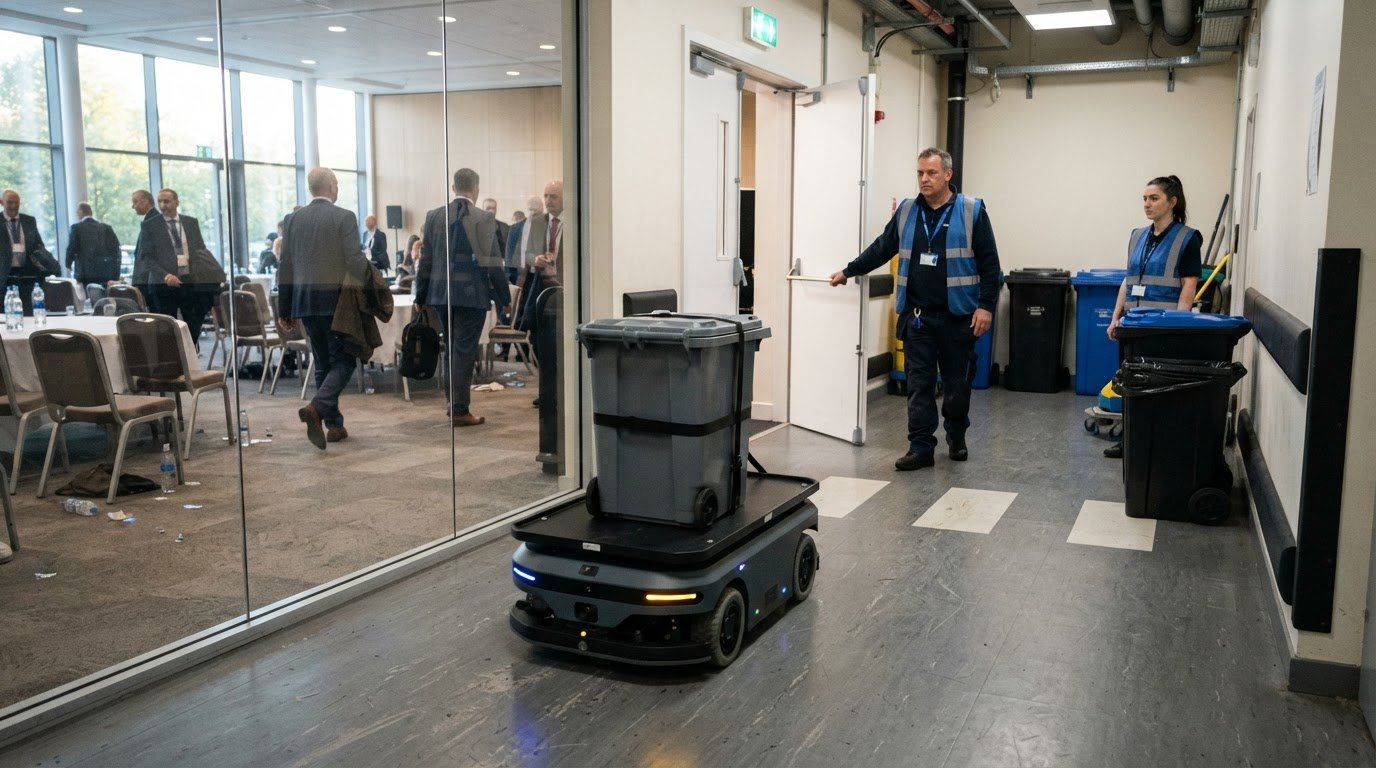
Internal transport typically uses a dedicated cart at a chute room or collection point. The robot takes the loaded cart to the disposal area, then returns it empty, keeping the collection journey within the building.
This differs from autonomous municipal waste collection vehicles, which collect waste from outdoor public routes. Indoor venue robots move waste between building collection points and disposal areas; they do not replace municipal vehicles that collect from streets or kerbsides. Keeping these tasks distinct helps define routes, hand-off points and staff responsibilities.
Event and festival waste surge management
At a concert or food festival, waste volumes change with the programme. Food stalls may peak before a headline act, while seating areas need attention after a performance. An automated waste collection robot for venues can support planned internal collection when its assigned tasks match the event’s service arrangements.
Build the collection plan around event phases. Before opening, identify high-use areas, waste streams and access restrictions. During the event, use steward reports and bin checks to adjust priorities. After a match, for example, the concourse may need attention before a hospitality suite. This demand-led approach gives the operations team a clearer basis for changing collection priorities.
Smart-bin sensors can report when containers need attention, helping teams avoid rounds based only on fixed times. When planning a Bin Robot’s operating schedule, consider whether peak hours are the right time for collection. For an automated waste collection robot for venues, sensor alerts are useful only when someone can review them and assign the next action. A full-bin report might prompt collection, while a damaged container needs staff attention.
Fleet management software can help an event-control team coordinate schedules and task priorities. Integrate it with existing waste management processes so stewards know how to report a full bin, blocked service area or missed collection. At a stadium, for example, a steward’s location report could help update priorities near an exit instead of sending staff to every bin on the same fixed round.
Sustainable waste management also depends on what happens after collection. Keep recycling streams separate, label containers clearly and ensure staff know which materials belong in each stream. Automation can support movement between designated points, but it cannot remove the need for correct sorting or suitable waste contracts. These processes remain the venue’s responsibility.
Separate hazardous or unsuitable items from ordinary waste. Broken glass near a bar, a leaking container or discarded event equipment may need a person to assess and handle it. Give stewards a simple escalation route, such as notifying the cleaning supervisor, so an automated collection task does not continue with an unsuitable load.
For a multi-day festival, review operations at every handover. Record which areas generated extra requests, where access changed and which scheduled tasks were missed. If a temporary food court closes, revise collection priorities before the next operating period. Consider the event programme when planning the Bin Robot’s operating timetable.
After the event, compare collection records with steward reports and waste-stream checks. A recurring build-up beside a food outlet may indicate a need to reposition bins or provide clearer visitor instructions. Use these findings to refine the next event plan, while keeping staff available to handle unusual materials and changing site conditions.
Detecting litter and passengers needing a bin
Litter detection identifies visible waste and determines whether it needs attention. Where a system includes visual detection, its task may be limited to recognised items in a defined area, such as cups beside a café table. This differs from obstacle detection, which helps a robot avoid furniture, people and other objects as it travels through a venue.
Recognition can be affected by the scene. A wrapper partly hidden beneath a chair may be harder to spot than a cardboard box on a clear floor. Reflections, shadows and similar-looking items can also complicate classification. In a shopping centre, a paper bag beside a bench could be rubbish or a customer’s belongings, so an image alone may not establish the right action.
Set a clear response process for each type of alert. A cleaner could review a report from the food court and decide whether to collect the item, while a steward handles a spill near a stadium entrance. Alerts should direct staff to the location and task, not replace their judgement about ownership, safe handling or the correct waste stream.
A robot cannot reliably know that a passenger needs a bin just by observing them. Someone carrying a takeaway cup may be looking for a bin, but movement alone does not reveal their intention. Instead, a visitor could ask at a staffed information point, where an employee can direct them to the nearest bin or report an overflowing one.
Keep visitor requests separate from litter reports. At a railway station, a passenger asking where to recycle a bottle needs information, not an automated collection task. A report of a full recycling point needs an operational response. Clear categories help a central facilities team send the right instruction to a cleaner, steward or collection operator.
Define boundaries before using detection in a public area. Specify which items count as ordinary litter, who reviews uncertain reports and how staff handle broken glass or food waste. A paper cup in a seating area, for instance, may fit a routine collection task, while a leaking container should follow the venue’s established safety process.
Records can help managers improve the process over time. A venue could note where reports occur, whether staff confirmed them and how each task was resolved. If reports repeatedly concern the same seating zone, the team might reposition a bin or change cleaning rounds. Review false alerts, such as reusable cups mistaken for discarded items, before changing procedures.
Use human intervention for ambiguous or sensitive cases. A camera or sensor may indicate an object, but staff decide whether it is waste and what happens next. This allows facilities teams to use detection as a prompt for attention while leaving decisions about visitors, personal belongings and unusual materials to people.
Automated waste collection and return to a base
A complete collection run includes the loaded journey, waste hand-off and return. In this workflow, a dedicated cart waits at a chute room or collection point. The robot transports it to the disposal area, then returns it empty. Planning the full circuit matters: a one-way route can leave the next collection point without its cart. An automated waste collection robot for venues needs a process for both legs.
The usable load depends on the robot’s rated payload and cart configuration. Battery endurance depends on the load, route distance, stops and charging schedule. A cart serving several floors in a hotel may create a different workload from one travelling between nearby back-of-house rooms. Consider the robot’s specifications alongside the venue’s actual route.
Start by defining the hand-off. Staff need to know where the robot leaves a full cart and where an empty one should go next. For example, a venue might position a cart at a chute room and designate a bay near the disposal area for full carts. Account for doors, junctions and busy service crossings when planning the route.
Plan the return leg as carefully as the outward trip. Depending on its configuration and workflow, a robot may travel back along its mapped route or continue to another collection point. Either way, staff need a clear place for the empty cart. This helps prevent workers from searching for equipment during a busy shift.
The base location affects the whole process. A central service area can reduce unnecessary travel between collection rounds, while a poorly placed base may add distance. In a large arena, waste points at opposite ends may require separate routes or a planned sequence. The right arrangement depends on the building layout and demand.
Allow for interruptions. A closed service door, queue or misplaced trolley can make a planned route difficult to complete. The operating procedure should explain how staff pause the task, clear the obstruction and restart the run. Human support remains necessary when a cart is overloaded or waste needs separate handling.
Return-to-base automation should support workers, not suggest they are being replaced. Staff still classify waste, inspect collection points and deal with exceptions. An automated waste collection robot for venues is best suited to repeated transport between defined locations, where staff can complete a clear hand-off.
For your business case, assess the complete cycle, not just the loaded trip. Include time spent positioning carts, waiting at disposal and returning equipment. Compare that cycle with the manual process during a normal shift and a busy event period. This helps show whether the route can meet demand without leaving collection points short of carts.
GO Robotics
GO Robotics can help assess whether robotics has a practical role in your venue’s waste and service routines. If you’re considering an automated collection system, start by understanding your routes, collection points, staffing processes and disposal arrangements. This helps distinguish tasks suited to automation from those requiring staff judgement.
A site survey examines how work moves through your building. A hotel, for example, may need to move supplies through back-of-house corridors while keeping guest areas clear. An arena may have separate service routes and busy event periods. These details shape which tasks are suitable for robots and how equipment could fit into daily operations.
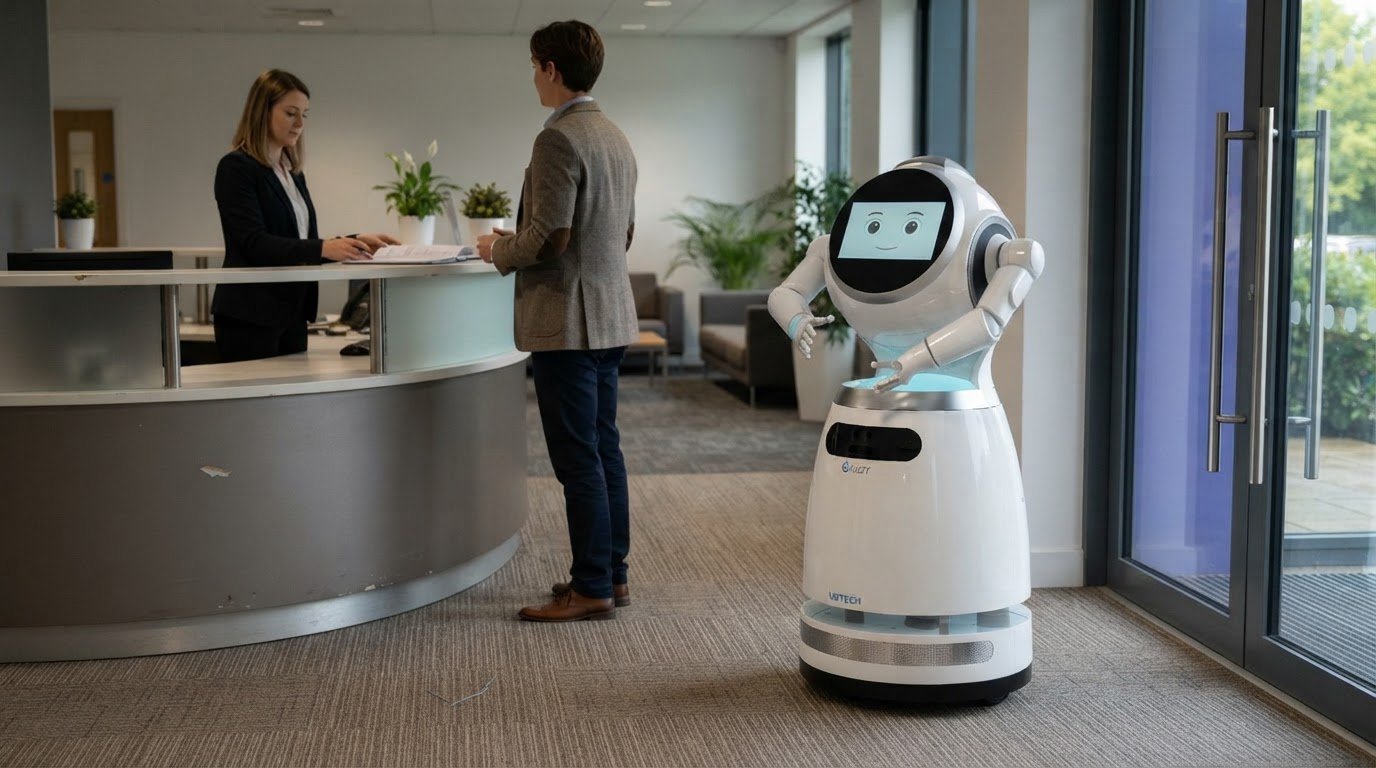
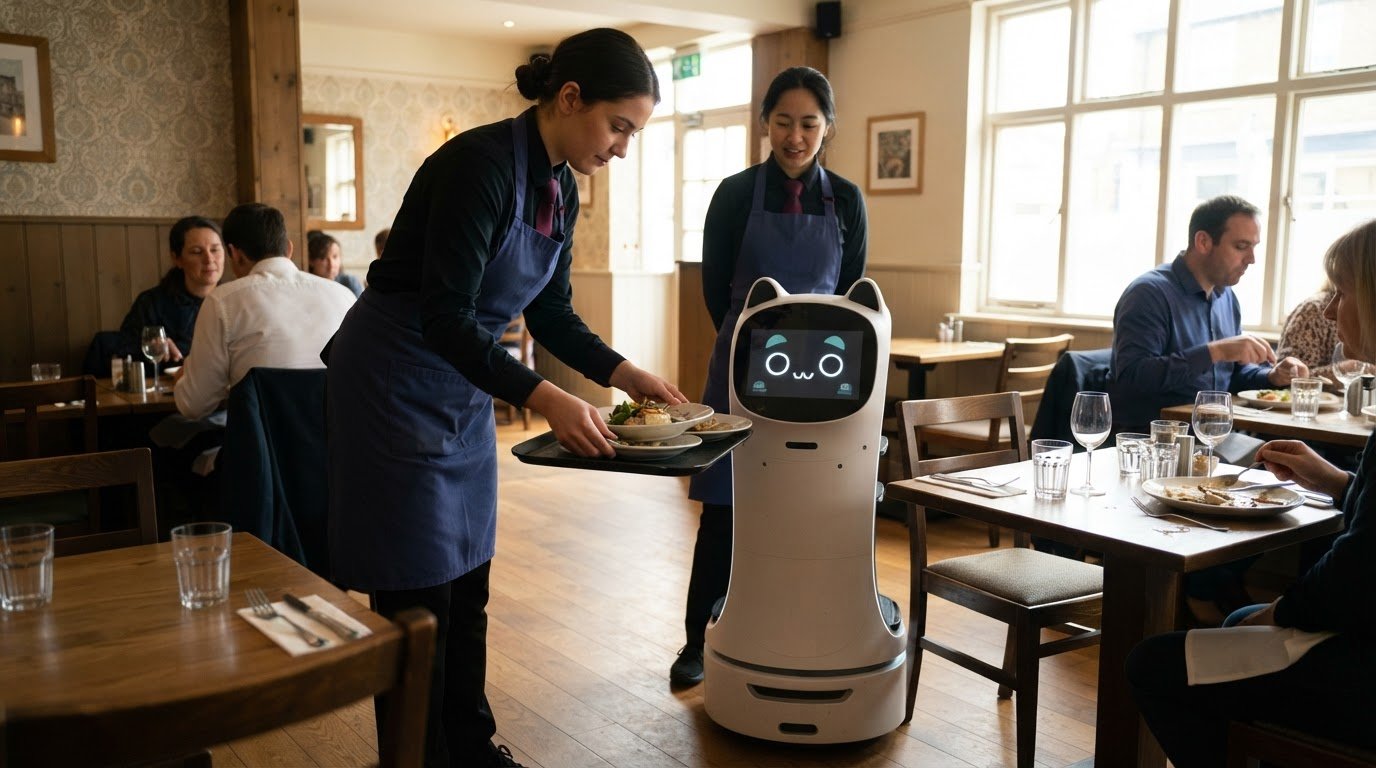
GO Robotics supplies, installs, integrates and supports commercial service robots. Its venue-related Pudu offerings include Pudu BellaBot, Pudu KettyBot and Pudu HolaBot. These may be considered as part of a wider service-robot discussion, but that does not mean a hospitality robot performs specialist waste collection. Match the intended task to the robot’s role.
That distinction matters if your priority is moving waste carts from collection points to disposal. A suitable assessment should map the hand-off, route and return process, then consider where a service robot may assist elsewhere. A venue could treat waste transport and guest-facing service as separate operational needs, rather than assuming one machine covers both.
GO Robotics offers purchasing, leasing and robots-as-a-service (RaaS), a monthly rental arrangement that can include the robot, software and support. The right option depends on how you plan to use and manage the equipment over time. A site survey grounds the discussion in practical details, including the building layout and the tasks you want to address.
Bring operational details into the discussion: where waste is collected, where it goes, which areas get busy and what staff currently do when a route is blocked. These points help establish whether automation fits the work or whether changing the collection process would be more useful. First, get a clear picture of the task.
If you’re exploring robotics for your venue, contact GO Robotics to discuss your requirements.
Frequently Asked Questions
How can I adopt this technology?
A robots-as-a-service (RaaS) arrangement provides access through monthly rental rather than an outright purchase. Depending on the agreement, a subscription may include the robot, maintenance or support; check which services are included before signing. Consider the contract terms and site integration needs, then choose the option that suits your venue’s operating pattern.
How do robots automate the trash route?
These robots automate repeated transport between defined collection points and disposal areas. Staff place a suitable cart at a collection point, then the robot follows its assigned route and returns equipment according to the venue’s process. A manager can set priorities around service schedules, such as clearing a restaurant area after lunch. Staff still manage unusual waste, blocked access and tasks outside the robot’s assigned route.
What are the real-world benefits for property managers?
The practical benefit is a more organised way to move waste through a building, allowing staff to focus on inspections, sorting and exceptions. For a property manager, collection records can help identify recurring service issues, such as a waste point regularly being missed during a shift change. That information can inform rota planning and bin placement, while safe handling remains the venue team’s responsibility.
What types of automated waste collection robots are available for venues?
Options depend on the task: indoor mobile robots can transport dedicated carts along set routes, while connected bins and sensors can help teams identify when collection is needed. These functions are different, not interchangeable. A cart-transport robot moves waste between points; a sensor reports bin status. For organisations exploring wider commercial and industrial robotic solutions, platforms such as ednexautomation.ai highlight how autonomous systems are integrated across modern operational facilities. Make sure the chosen approach matches your waste stream and workflow, rather than assuming a general service robot can collect or sort waste.
How do venue waste collection robots navigate and avoid people?
Indoor robots use navigation sensors and mapped routes to move through their working area, adjusting when people or obstacles appear. In a hotel corridor, a route may need to account for guests, housekeeping trolleys and temporary room-service equipment. A robot can pause or take an available path, but venue procedures should explain how staff handle a blocked route and keep busy access points clear.
What should venues consider when assessing a waste collection robot?
The business case depends on the robot configuration, route length, operating schedule, staff time, charging arrangements, installation and ongoing support. Consider how these factors fit your current collection process, including manual cart movements and interruptions. GO Robotics also offers RaaS, which you can assess alongside outright purchase.
What venue layouts and floor conditions are suitable for waste collection robots?
Suitable routes generally need smooth, flat floors and enough space for the robot and its cart to pass and turn. A service corridor with clear access may work better than a route through a crowded reception area. Door thresholds, narrow corners, changes in floor surface and temporary furniture can all affect movement. Assess the entire trip, from collection point to disposal area.
How can a venue choose, deploy and maintain a waste collection robot?
Start by defining the waste task, collection points, disposal hand-off and route constraints. GO Robotics can survey the site and recommend an appropriate model for the intended work; deployment can include installation, integration and staff support. Specify who checks equipment, clears obstructions and reports faults. If you choose RaaS, review which maintenance and support services are included in the subscription before agreeing to the arrangement.