Cleaning Robots UK: Smarter Automated Floor Care
A cleaning robot’s route matters, but so does how it handles grit, floor transitions and busy areas. For UK businesses considering cleaning robots, the key question is whether the model’s navigation and cleaning method suit the site, not simply whether it moves autonomously.
Automated floor care can reduce routine manual work, but robots differ in how they detect obstacles, collect dirt and clean hard floors or carpet. Some return to a dock for charging or other tasks, while others require more hands-on attention.
This guide explains how navigation and floor detection work, what affects cleaning performance across different surfaces, and what self-emptying or docking can mean in practice. It also sets out the factors to compare when assessing options for a UK workplace, so you can judge what fits your site and cleaning routine.
Key Takeaways
- Assess whether a robot’s navigation suits your layout, traffic and obstacles before focusing on its cleaning functions.
- Match the cleaning method to the dirt and floor surfaces on site, including edges and transitions between floor types.
- Build dock access and routine maintenance into your plan so the equipment fits the way your team works.
- Compare commercial cleaning robot types by the jobs they perform, then narrow the choice to your site’s needs.
- Explore whether the Pudu CC1 is relevant to your commercial floor-care requirements, with GO Robotics as a source of guidance.
LiDAR navigation and intelligent cleaning
LiDAR navigation helps a commercial cleaning robot map indoor spaces and plan routes. Its usefulness depends on how it responds to people, furniture and changes to the floor plan.
Obstacle Detection and Navigation
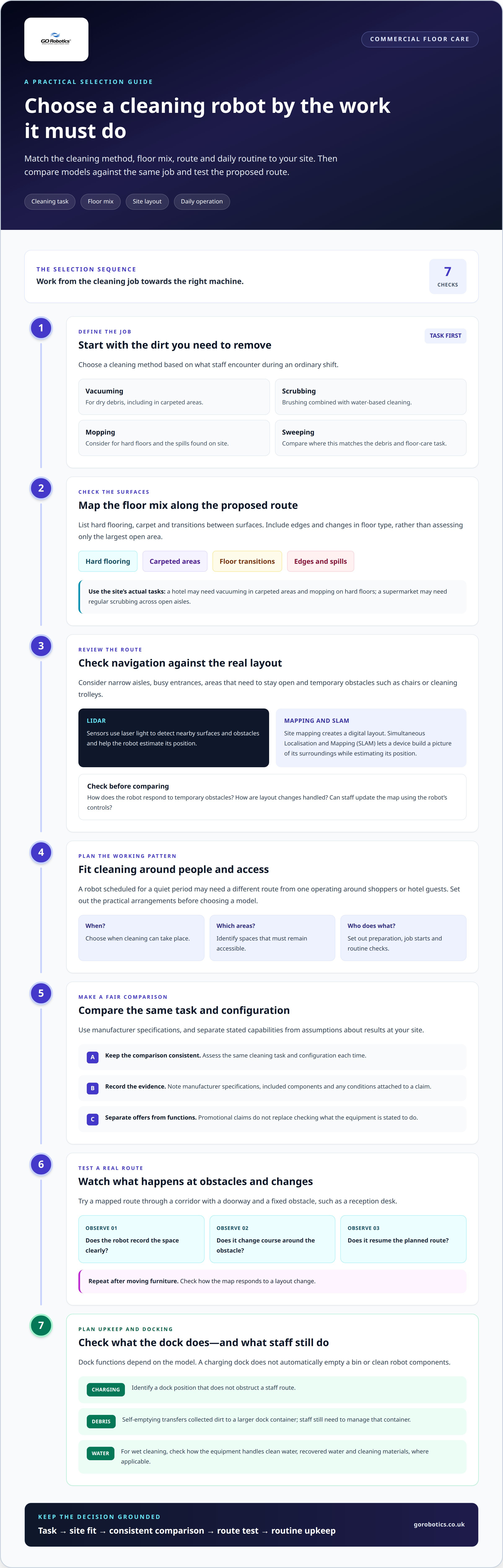
LiDAR sensors use laser light to detect nearby surfaces and obstacles, helping a robot estimate its position. Other sensors may contribute, but the combination varies by device. In a hotel corridor, for example, a robot needs to account for chairs or cleaning trolleys in its path. Check how it detects and responds to temporary obstacles, not just whether it can follow a mapped route.
Floor Mapping and Smart Navigation
Site mapping creates a digital layout that a robot can use to plan cleaning routes. Simultaneous Localisation and Mapping, or SLAM, allows a device to build a picture of its surroundings while estimating its position. A mapped route can help organise coverage across separate rooms. Check how the robot handles layout changes, such as a moved partition, and whether staff can update the map using its controls.
Alexa and Google Assistant compatibility depends on the robot and its supported app integrations. Don’t assume a commercial cleaning device can start a job by voice. Check its supported controls before planning that workflow.
Privacy and security considerations include what data a robot collects, where maps or images are stored, and who can access its account. If a model uses cameras or a connected app, review its permissions and account controls, especially if its map covers staff or customer areas.
To set up a robot vacuum or mop, follow the manufacturer’s instructions, position its dock as directed and complete the initial mapping run. Before each scheduled clean, remove loose cables and small objects from the route, and keep people clear of the device while it operates.
For a practical test, map a route through a corridor with a doorway and a fixed obstacle, such as a reception desk. Check whether the robot records the space clearly, changes course around the obstacle and resumes its planned route. Repeat the test after moving furniture to see how the map responds.
Choosing a cleaning robot
Choose commercial floor-care equipment by matching its cleaning method to your site’s daily tasks. A vacuum suits dry debris, while a scrubber combines brushing with water-based cleaning. For a mixed-use building, list the surfaces and spills staff encounter during an ordinary shift before comparing equipment.
If you’re comparing commercial cleaning robots in the UK, start with the task rather than a feature label. A supermarket may need regular scrubbing across open aisles; a hotel may need vacuuming in carpeted areas and mopping on hard floors. These examples help define the work, but the right configuration depends on the site and the machine.
Compare models using the same practical criteria. Check the manufacturer’s specifications and distinguish stated capabilities from assumptions about results at your site. A useful comparison includes:
- Cleaning task: vacuuming, sweeping, scrubbing or mopping, based on the dirt you see.
- Floor mix: hard flooring, carpet or transitions between surfaces in the proposed route.
- Site layout: narrow aisles, busy entrances and areas that need to stay open.
- Daily operation: who prepares the area, starts a job and handles routine checks.
Then consider the expected operating pattern. A device scheduled for a quiet period may suit a different route from one operating around shoppers or hotel guests. Set out when cleaning can take place, which areas must remain accessible and where staff may need to intervene. These details make comparisons between commercial cleaning robots in the UK more useful than a feature list alone.
Promotional claims can obscure whether a robot suits the work. Separate temporary offers from the equipment’s stated functions, and compare the same task and configuration each time. Keep a written record of manufacturer specifications, included components and any conditions attached to a claim.
Plan for the equipment’s end of use as well as its daily operation. Before choosing a model, establish how its battery and electronic parts should be handled when the robot is retired, and whether the supplier provides take-back information. Record the disposal route alongside routine maintenance responsibilities, so it is not overlooked.
Finally, test the proposed cleaning process on a real route, such as a lobby leading into a hard-floored corridor. Note where vacuuming, scrubbing or mopping is needed, then use those observations to compare suitable commercial equipment.
Cleaning docks and routine maintenance
A commercial cleaning dock can do more than provide a parking point. Depending on its design, it may charge a robot, transfer collected debris or support water handling. Treat each function as model-specific: a robot vacuum with a charging dock does not automatically empty itself or clean its components.
Self-emptying means the robot transfers collected dirt into a larger container at its dock. This can reduce how often staff handle the onboard bin, but the dock’s waste container still needs managing. For a site with dry dust, plan who will check and empty it as part of the cleaning routine.
Wet cleaning needs a different assessment. A dock designed for a scrubber may support water-related tasks, but its exact functions depend on the equipment. Check how the robot and dock handle clean water, recovered water and cleaning materials, where applicable. Don’t assume the dock performs these tasks just because it comes with a floor-cleaning robot.
- Charging: identify where the dock can sit without obstructing a staff route.
- Debris: establish who checks the dust container and removes collected waste.
- Water: follow the equipment’s instructions for any water tanks or recovery system.
- Access: keep the route to the dock clear during the robot’s working schedule.
Routine checks still matter, even with a docking station. After each cleaning run, follow the manufacturer’s instructions for inspecting brushes, filters, collection containers or mop components. Checks depend on whether the machine vacuums, sweeps or scrubs; a dry vacuuming setup does not involve all the same tasks as a wet floor scrubber.
Build responsibility into the site’s cleaning plan. For example, a facilities team can assign dock checks alongside the shift’s floor inspection, then record any debris build-up or visible wear. Use the model’s maintenance guidance to set the tasks and frequency, rather than applying one schedule to different machines.
A dock also needs a suitable location within the working area. Keep it accessible to staff, avoid blocking an entrance and consider how the robot will reach it from its cleaning route. These practical details help the equipment fit the site without confusing “hands-free” with “maintenance-free”.
Dirt, edges and different floor types
A robot’s cleaning result depends on the dirt, surface and route it encounters. Fine dust in a carpeted office calls for a different cleaning method from muddy marks near a UK venue’s entrance. Start by recording the common messes, then match each area to suitable commercial equipment. A single cleaning mode may not suit every surface.
Floor detection can mean different things across models. Some equipment may identify surface changes; other machines rely on a selected cleaning programme. Don’t assume a robot recognises carpet or adjusts its settings automatically. Check the manufacturer’s description, then consider a real route, such as tiled reception leading into carpeted meeting rooms.
Edges need separate attention. Dust and crumbs can collect along skirting boards, beneath furniture and beside shelving. A robot passing close to an edge does not prove its brushes or cleaning head reach the dirt there. During a site trial, check corners and wall lines after a pass, including areas beside a reception desk or shop display.
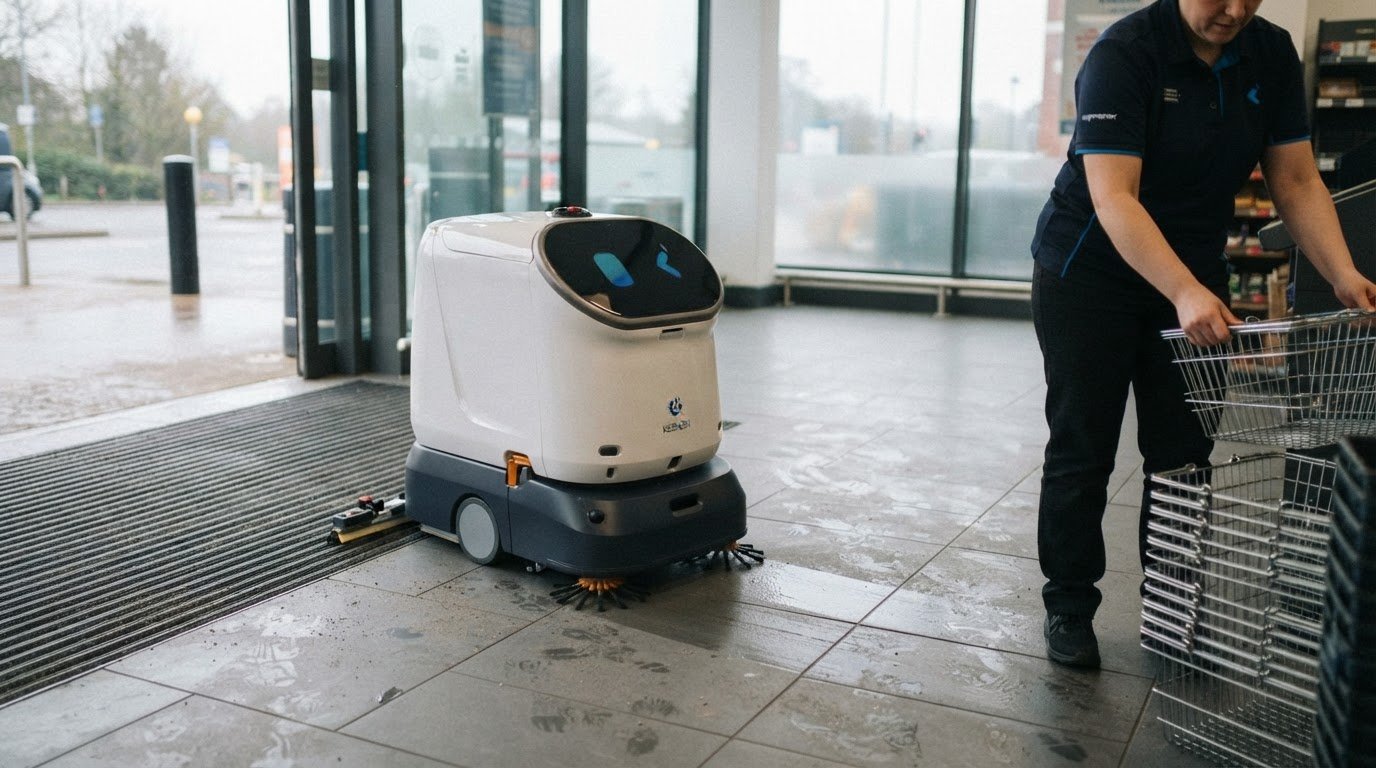
Different types of dirt call for different equipment. Dry grit may suit sweeping or vacuuming, while tracked-in wet marks may need a scrubber. A mop can handle some surface cleaning, but it serves a different purpose from collecting loose debris. Note the mess, floor material and location together, such as dry crumbs on a café floor or muddy marks on hard flooring near an entrance.
- Carpet: assess whether the proposed machine is designed for carpet and the type of debris present.
- Hard floors: identify whether the task is dry sweeping, vacuuming, scrubbing or mopping.
- Edges: inspect corners, skirting and furniture boundaries after a test pass.
- Transitions: observe what happens where a route changes from tile to carpet.
Use these checks to compare cleaning coverage, not just movement. For a corridor with mixed flooring, record where the surface changes and whether the machine needs a separate setting or cleaning method. Then inspect the same areas after each test. This gives facilities teams a practical basis for judging how well the equipment handles everyday dirt, rather than relying on a general claim about floor detection.
What types of commercial cleaning robots are available in the UK?
Commercial cleaning robots generally fall into several groups based on their floor-care task. In a warehouse, a sweeper may address loose dust and debris. In a hotel, a scrubber may suit hard floors that need wet cleaning. Choose according to the work required, not the robot’s label alone.
Scrubbing robots clean hard floors through a scrubbing process and, depending on the model, collect dirty water. They may suit open areas such as a shopping-centre concourse or supermarket aisle. Consider floor material, spills and access routes when assessing whether a scrubber suits your site.
Sweeping robots collect loose debris from suitable floor surfaces. A warehouse aisle or large retail floor presents a different task from a reception area with frequent foot traffic. Identify the debris and areas that need attention before comparing a sweeper with other equipment.
Vacuuming robots are designed for vacuuming tasks, including collecting dry debris from suitable surfaces. A carpeted office, for example, needs different floor care from a tiled entrance. Check the manufacturer’s stated floor compatibility and cleaning method before assuming a vacuuming robot suits every carpet or floor covering.
Combination floor-cleaning robots bring multiple cleaning functions together in one machine. A venue with hard flooring and carpet may consider this category, but combined functions do not mean every surface or type of dirt is covered. Check the specifications for each mode and how the machine switches between tasks.
- Scrubbing: assess hard-floor areas with marks or spills.
- Sweeping: consider dry debris on suitable commercial floors.
- Vacuuming: match the machine to carpet or other stated surfaces.
- Combination cleaning: check each function against the site’s actual tasks.
For UK buyers comparing commercial cleaning robots, start by listing the areas to clean, their floor types and the dirt they encounter. A school corridor may need a different approach from a warehouse loading area. Then compare the relevant cleaning method, route and operating conditions, using manufacturer information for claims about specific models.
Choosing among commercial cleaning robots in the UK also means considering how the site operates. A quiet office, busy hotel lobby and retail aisle have different traffic patterns and cleaning windows. Map the intended route and note where staff or visitors need access. These details help identify a robot type that fits the task, rather than one that merely looks suitable on paper.
GO Robotics
GO Robotics helps UK businesses assess commercial robots against their sites, routines and intended tasks. For floor care, start with the areas to clean, their floor types and the work staff need to manage around each cleaning run.
A site survey provides a practical starting point. The layout, entrances, furniture and working patterns all affect whether a proposed robot suits the job. For example, a hotel may need to consider public areas and quieter corridors, while a retail venue’s facilities team may focus on open floors and changing footfall.
GO Robotics supplies, installs, integrates and supports commercial service robots. It can also arrange outright purchase, lease or robots-as-a-service (RaaS), a monthly rental arrangement that can include the robot, software and support. The suitable route depends on the equipment and the requirements of your project.
GO Robotics’ named Pudu offerings include Pudu BellaBot, Pudu KettyBot and Pudu HolaBot. These are commercial service robots, not floor-cleaning models. That distinction matters: when selecting equipment for a cleaning task, discuss floor care specifically rather than assuming every commercial robot can sweep, vacuum or scrub.
When discussing a project with GO Robotics, useful starting details include:
- Areas: the rooms, corridors or open spaces that need cleaning.
- Surfaces: where the site has carpet, hard flooring or transitions.
- Routine: when cleaning takes place and how people use those areas.
- Current process: the cleaning tasks your team wants to assess for automation.
These details help focus the conversation on the actual task, including the cleaning method and site conditions. If you need commercial floor care, make that clear from the outset. GO Robotics can discuss the project in relation to your site and relevant equipment, without treating a delivery or hospitality robot as a floor cleaner.
Share your venue type, the areas involved and the cleaning tasks you want to review. This gives the discussion a clear operational focus and helps establish the next step for your site.
Contact GO Robotics to discuss your commercial cleaning robot requirements.
Frequently Asked Questions
How do you choose commercial cleaning equipment for different floor types and layouts?
This article covers commercial cleaning equipment. For a workplace, compare the cleaning task with the site’s floor surfaces and layout. A care facility, for example, may need different equipment for carpeted rooms and hard-floored shared areas. Treat stairs and changes between levels as site constraints, and follow each commercial model’s stated operating limits.
What maintenance do robot cleaners need, and which replacement parts are required?
Maintenance tasks and replacement parts vary by commercial model, so there is no single parts list for every machine. Check the manufacturer’s maintenance schedule and parts list for the specific equipment. A facilities team can use those documents to identify applicable consumables and components, then log inspections and replacements against the relevant machine. This keeps maintenance planning tied to the equipment used on site.
Are there UK energy efficiency, electrical safety or recycling rules for cleaning robots?
Requirements depend on the equipment and its intended use, so review the manufacturer’s product documentation before purchase. Look for the electrical and conformity information supplied for that model, along with any battery-handling instructions. For end-of-use planning, identify the manufacturer’s guidance for the robot, battery and electronic components. Keep those documents with the site’s equipment records so staff can refer to the relevant disposal information later.