Autonomous Floor Cleaning for Warehouses and Large Spaces
Autonomous floor cleaning for large venues works best on sizeable, repeatable routes, such as open warehouse floors and broad public areas. Machines use mapping, sensors and planned routes to cover defined areas and respond to obstacles, but performance depends on the layout and working conditions.
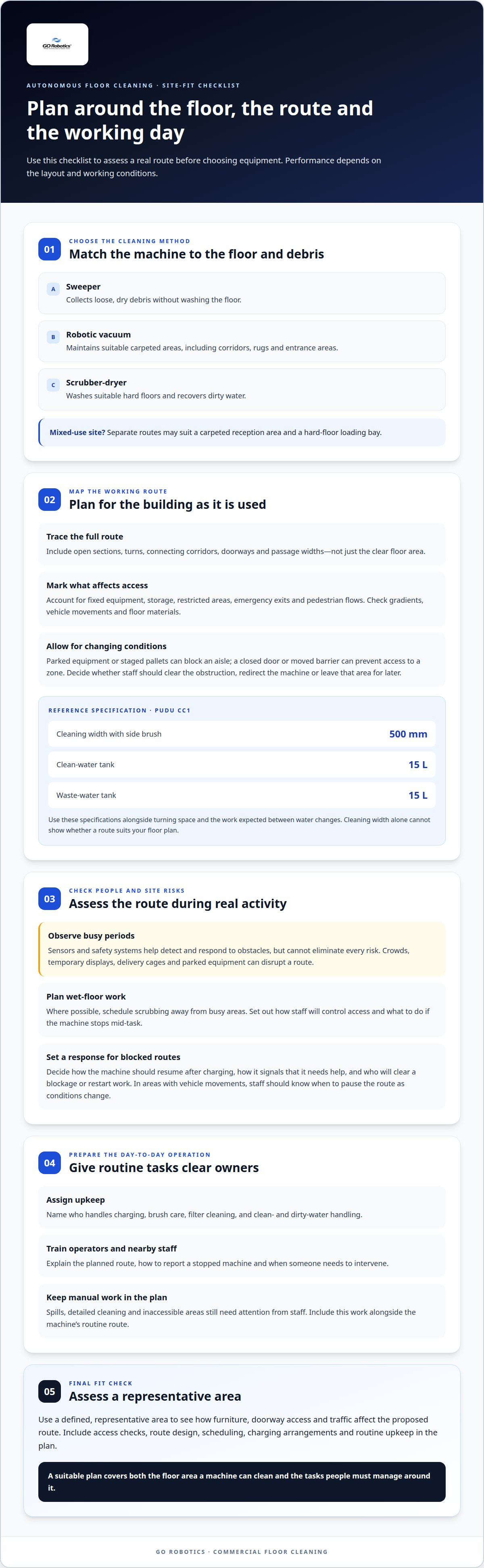
Choosing the right machine matters as much as deciding to automate. A sweeper collects loose debris, a vacuum handles suitable carpeted areas, and a scrubber-dryer washes hard floors while recovering dirty water.
If you manage a warehouse or large venue, you’ll want to know where these machines fit, how they navigate around people and equipment, and which tasks still need staff. Start with the floor type, debris and route, not just a machine’s headline cleaning figures.
This guide explains how autonomous cleaners work across large spaces, how mapping and obstacle detection support routine routes, and how sweeping, vacuuming, mopping and scrubbing differ. It also covers practical limitations, helping you assess whether automation suits your site and what to consider when selecting a machine.
Key Takeaways
- Match the cleaning method to the floor and debris: sweeping suits loose waste, while scrubbing is for routine hard-floor washing.
- Assess routes, passage widths, floor conditions and pedestrian or vehicle activity before selecting a machine.
- Understand how mapping, sensors and obstacle handling affect cleaning routes and staff involvement.
- Plan for routine upkeep and manual work, including spills, detailed cleaning and areas the machine cannot reach.
- Use a defined area to assess whether automated cleaning fits your site’s day-to-day operation.
Navigation and obstacle avoidance
Autonomous machines map defined areas, follow planned routes and use sensors to detect obstacles. Their performance depends on how well the route and safety settings fit your venue’s day-to-day activity.
Laser Navigation and Systematic Coverage
Laser navigation helps a cleaner map its surroundings and follow a planned path. This supports systematic coverage of the assigned floor area, without staff steering every pass. Check that the route covers open sections, turns and connecting corridors, while leaving practical access for people using the space.
Mapping should reflect how the building operates, not just its empty layout. For example, an industrial-site route may need to account for equipment temporarily parked beside an aisle. Identify fixed reference points and changing areas, then decide which changes call for a map update or route adjustment. Some machines record routes, cleaned areas or operating information, helping staff review completed work.
Before establishing a routine, decide what to do when the planned path is blocked. A closed doorway or moved barrier may prevent access to a zone, so staff need to know whether to clear the obstruction, redirect the machine or leave that area for later. Establish how the machine resumes after charging and signals that it needs help. These details influence whether a route works reliably across a full shift.
Obstacle Detection and Venue Risks
Sensors and safety systems help machines detect and respond to people and obstacles, but they cannot eliminate every risk. Crowds, temporary displays, delivery cages and parked equipment can disrupt a route. Assess how the cleaner behaves in the actual working area, including during busy periods, rather than relying solely on an empty-floor demonstration.
Wet floors require particular care. A scrubber-dryer recovers dirty water, but the route and timing must still account for nearby pedestrians and the surface being cleaned. Where possible, schedule work away from busy areas and establish how staff will control access during a pass. Include a procedure for what to do if the machine stops mid-task.
Downtime can leave a zone unfinished, so assign responsibility for responding to alerts, clearing blocked paths and restarting work. Charging, brush care, filter cleaning and water handling also need named owners. In warehouses with vehicle movements, staff should know how to pause the route when conditions change, rather than moving obstacles while the machine is operating.
Train the assigned operator and nearby staff. Explain the planned route, how to report a stopped machine and when intervention is needed. Routine automation does not cover spills, detailed cleaning or inaccessible areas, so include those tasks in the cleaning plan. Clear expectations help prevent confusion when a route is interrupted during a busy shift.
Where Are Autonomous Floor Cleaners Used?
Autonomous cleaners suit large spaces with repeatable routes, including warehouses, shopping centres and public buildings. Consider floor type, passage width, debris and traffic, then assess the layout before matching equipment to each zone.
Manual cleaning lets staff respond directly to spills and awkward corners. A conventional ride-on scrubber needs an operator, while an autonomous model follows a programmed route. The approaches can complement each other: a machine covers a planned area, while staff handle tasks requiring judgement or close attention. The right arrangement depends on the work, access and cleaning schedule.
Map the working route, not just the open floor. Include doorways, fixed equipment, storage, restricted areas, emergency exits and pedestrian flows. Check gradients, vehicle movements and floor materials. A warehouse aisle, for example, may look clear on a plan but become blocked by staged pallets during dispatch, affecting access and scheduled cleaning.
The Pudu CC1 has a cleaning width of 500 mm with its side brush, plus clean- and waste-water tanks holding 15 L each. Use these specifications as part of the fit assessment, alongside turning space and the work expected between water changes. A headline cleaning width alone cannot show whether a route suits a particular floor plan.
Match the machine to the task. A scrubber-dryer washes suitable hard floors and recovers dirty water; a robotic vacuum can maintain carpeted corridors, rugs and entrance areas. A vacuum sweeper collects loose dry debris without washing. In a mixed-use building, separate routes may suit a carpeted reception area and a hard-floor loading bay.
Deployment planning covers site mapping, route design, access checks and scheduling. A representative area can show how furniture, doorway access and traffic affect the proposed route. The plan should also set charging arrangements and identify who handles routine upkeep or interruptions. In the UK, GO Robotics provides site assessment, mapping, commissioning and staff training.
Operational planning matters in busy spaces. Assign staff to charging, brush and filter care, and clean- and dirty-water handling. Schedule around customer traffic or forklift movements, and explain the route to people working nearby. When comparing autonomous cleaning with manual routines, consider the work that remains for staff, not only the floor area a machine can cover.
UK public-building deployments should follow the machine’s operating instructions and the venue’s risk controls for public access and cleaning activity. Request no assumptions based solely on a machine category; the safety documentation and site assessment should address the specific equipment and environment. For machine selection, demonstration and service support, discuss commercial floor-cleaning options in relation to your site’s requirements.
Scrubbing, vacuuming and mopping capabilities
Choose a floor-care function based on the soil and finish. Dry dust on sealed concrete needs different treatment from tracked-in marks on vinyl or crumbs on carpet. In a venue with mixed surfaces, decide which cleaning action suits each zone. This avoids assigning a machine a task its cleaning method cannot perform.
An autonomous scrubber-dryer applies cleaning solution, agitates a hard floor and collects used water as it moves. This suits routine washing on appropriate surfaces, including tile, vinyl, sealed concrete and stone. It can help manage residue that dulls floors over time. Recovering the water also distinguishes scrubbing from damp mopping, where liquid may remain on the surface.
Consider the level and type of soiling before choosing a scrubber. Fine marks and general buildup call for a different response than a concentrated spill or debris that needs removing first. A scrubber-dryer is designed for scheduled floor washing, not every incident during a shift. Staff should address unexpected spills promptly and inspect the floor after an unusual clean.
Mopping is a damp-cleaning method for suitable hard floors. It can suit a routine of light, regular care, but it does not collect loose dry waste like a sweeper. If a floor needs washing and recovery of dirty liquid, a scrubber-dryer is the more relevant machine. Match the cleaning solution and method to the floor finish.
Vacuuming removes dry particles from carpeted corridors, rugs and entrance areas. A robotic vacuum can maintain these surfaces between deeper cleaning cycles, while a vacuum sweeper uses brushes and collection to remove loose debris without washing. For example, a carpeted hotel corridor may need vacuuming, while the adjacent tiled lobby needs damp care or scrubbing. Separate tasks help keep each surface on a suitable routine.
Some commercial cleaning machines combine functions, but the selected mode still matters. Collect dry debris before wet-floor cleaning when loose material could interfere with washing. Set the sequence according to the actual soil instead of using every available function by default. Facilities teams can assess the result by checking whether marks remain and the floor looks consistent across the treated area.
Automation does not eliminate detail work. Edges, corners, stairs, restrooms, spills and specialist surfaces may need staff attention. Assign responsibility for solution handling, tank care, brushes and filters, following the machine’s instructions. A clear division of work lets automated routes cover suitable routine tasks while staff remain responsible for inspection and exceptions.
Cleaning large and diverse environments
Autonomous cleaning suits sizeable sites with repeatable routes, such as warehouse aisles or shopping-centre corridors. Floor type, debris, layout and how often conditions change determine which areas machines can cover.
Suitable Large-Venue Environments
Look for broad, predictable routes in places such as distribution centres, retail centres and exhibition halls. These environments can suit routine floor coverage when access stays clear and cleaning needs are consistent. A warehouse with regular aisle layouts presents a different task from an event hall whose furniture changes between bookings. Plan each zone around its normal use, not just an empty-floor layout.
Floor Types, Dirt Levels and Layouts
Hard floors, including tile, vinyl and sealed concrete, can suit planned scrubbing routes; carpets may suit vacuuming. Match the cleaning method to the soil: dry dust differs from tracked-in grime or liquid spills. Check gradients, aisle widths, fixed equipment and changing storage. A floor-care plan should also identify areas needing specialist surface care or frequent human intervention.
Assess the site zone by zone to decide where autonomous machines fit. In a logistics building, distinguish open storage aisles from packing stations, where cartons and equipment may move throughout a shift. In a shopping centre, assess public corridors separately from food-service areas and quiet seating zones. Define each route’s purpose, access conditions and cleaning schedule.
The cleaning solution must also suit the floor finish. A scrubber-dryer works differently from a dry sweeper, so don’t assume one machine can handle every task across a mixed-use site. Identify sensitive flooring, heavy debris and recurring spill points. Keep specialist care, stair cleaning, restroom service and spill response in the manual cleaning plan.
Build reporting around practical measures. Record scheduled zones, route interruptions and staff interventions. For example, a blocked warehouse aisle may call for a route adjustment, while a temporary display in a retail centre may require a restricted area. Reports help facilities teams identify repeated disruptions and update cleaning plans.
Even a large building may be unsuitable if layouts change constantly or routes stay cluttered. During an exhibition-hall changeover, cables, temporary stands and service equipment may cover the floor. Schedule autonomous cleaning after that activity settles, then assign staff to address unusual obstructions. A machine covers suitable, repeatable work, not every condition a venue creates.
Start with a representative zone rather than mapping every floor at once. Include the surfaces, dirt and traffic patterns that define the site. Observe machine performance during normal operations, then adjust routes and schedules before expanding coverage. This staged approach helps distinguish areas suited to automation from those needing regular staff attention.
Autonomous sweepers for warehouses and large venues
Autonomous sweepers collect dry dust and loose debris along planned routes. They suit warehouses, exhibition halls and other large spaces where sweeping is repeated across clear, predictable floors. They provide routine coverage of suitable areas, while staff handle spills, detail work and access problems.
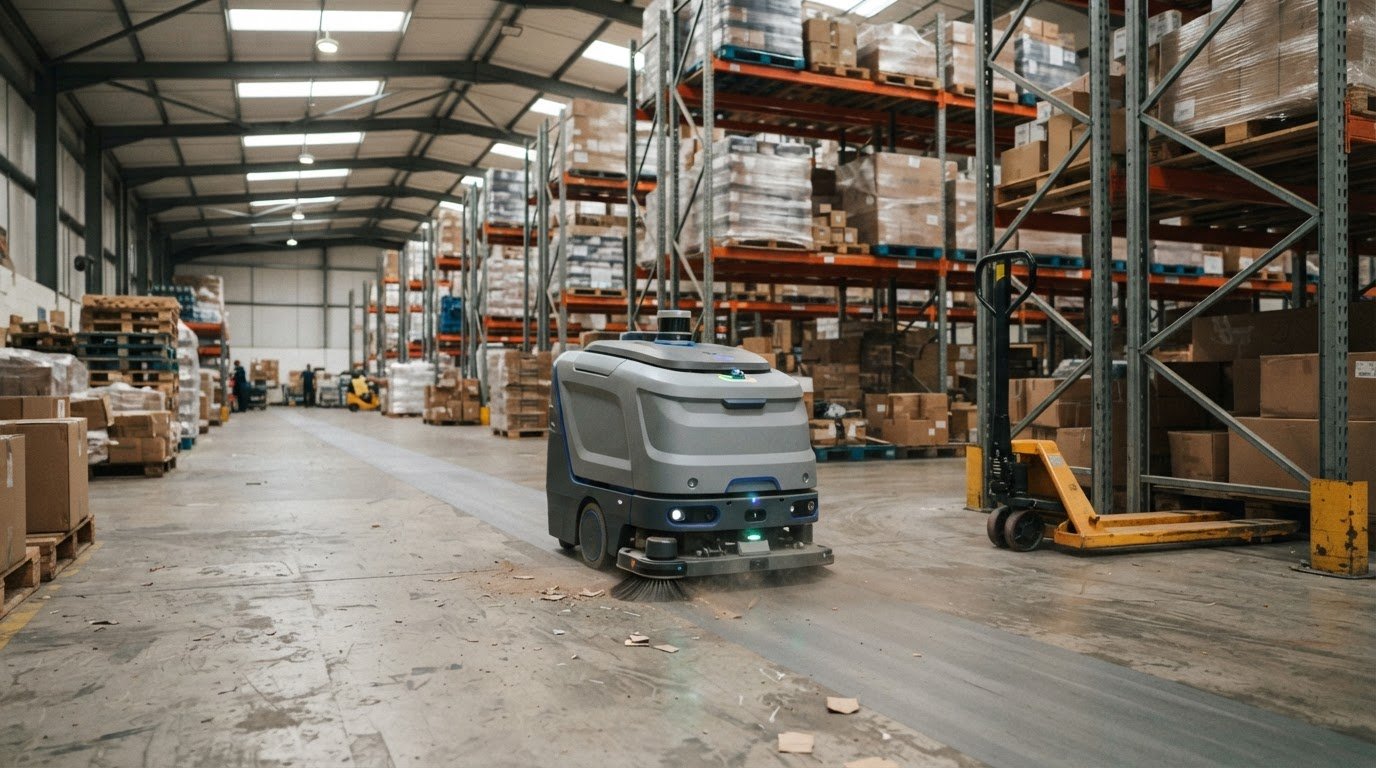
In a warehouse, a sweeper can follow open aisles where dust, packaging fragments or other dry debris collect. A distribution centre with regular routes may be easier to plan than a busy loading area, where pallets and vehicles change access throughout the shift. Match the machine to the floor type and material being collected. A sweeper cannot replace washing a floor marked by grime or liquid.
The PUDU MT1 is an example of an autonomous sweeper designed for this kind of task. Assess its route against the actual site, including aisle clearance, turning space, fixed equipment and places where stock is temporarily stored. Headline cleaning performance alone won’t show whether the machine can cover your working area without regular blockage.
Route timing matters in industrial settings. If forklift activity is high, schedule sweeping for quieter periods and keep the planned path clear. Cleaning an exhibition hall before doors open may avoid visitor traffic; in a warehouse, a route could run outside peak goods movement. Staff should know how to pause or redirect the machine when an unexpected obstruction appears.
Plan for capacity as well as route length. Dustbin capacity, how long the battery lasts on a charge, charging and debris type affect how the work fits into a shift. Assign someone to empty the bin, maintain brushes and respond to alerts. If the machine returns to a dock, include the charging point in the site plan and decide how the schedule resumes afterwards.
Monitor results in a defined area before expanding coverage. Record the zones swept, missed areas, obstructions and staff interventions. Then review whether the floor stays acceptably clean and whether the route needs changing. Repeated blockages near a packing station, for example, may call for a different schedule or a route that avoids the area during active work.
Manual sweeping remains important for corners, narrow gaps, unusual debris and areas blocked by equipment. Staff also need to address spills and inspect places the sweeper cannot reach. Treat automation as scheduled floor coverage, not a replacement for cleaning oversight or every manual task.
For your own site, start with a representative warehouse or venue route and assess its floor type, debris, traffic and charging arrangements. A floor-care site assessment can help connect those requirements with a suitable cleaning approach.
GO Robotics
GO Robotics can help assess where automation fits your venue and discuss service robots suited to your requirements. A site survey provides a basis for recommending a model, while floor type, cleaning task and route remain central to choosing a floor-care machine.
The Pudu BellaBot, Pudu KettyBot and Pudu HolaBot are service robots, not autonomous sweepers or scrubber-dryers. They are not substitutes for machines designed to collect debris or wash floors. If your site has several automation needs, consider floor care separately from other service tasks so each decision stays focused.
Contact GO Robotics to discuss your venue, the work you want to automate and the type of robot that may suit your priorities.
Plan your next step with confidence
Use your site’s cleaning priorities to identify a practical starting point. Choose an area with a clear floor-care task, then consider how a planned trial could fit your team’s routines. This gives you a focused basis for discussing autonomous floor cleaning for large venues, without assuming every area needs the same machine or schedule.
GO Robotics can survey your site before recommending a model. The Pudu CC1 is among its floor-care offerings, while Pudu BellaBot and Pudu KettyBot sit within its wider service-robot range. The right discussion starts with your venue, the work you want to automate and the role staff will continue to play.
Bring those priorities together and the next decision becomes clearer. Contact GO Robotics about floor cleaning to discuss what could suit your site and take a considered next step.
Frequently Asked Questions
How Do Robotic Floor Cleaning Machines Work?
They use mapped areas and programmed tasks to clean without continuous manual steering. Site staff define where and when the machine should work, and who responds if it stops. For example, a facilities manager might schedule a warehouse-aisle routine outside busy goods-movement periods. Staff still handle setup, upkeep, spills and areas the machine cannot reach.
How Do These Autonomous Cleaning Robot Companies Compare?
Compare suppliers by how they match a machine to your floor-care task, assess the site and support deployment. Ask what the recommendation covers, from mapping and staff instruction to maintenance arrangements. Avoid comparing headline cleaning figures alone: a machine for sweeping dry warehouse debris is not interchangeable with a scrubber-dryer. GO Robotics offers the Pudu CC1 for commercial floor care, alongside other service robots for different tasks.
What Should You Consider When Choosing an Autonomous Cleaner?
Consider automation when a machine can take on frequent, repeatable floor work without causing more disruption than it removes. Assess how often the route needs cleaning, how much staff attention the machine requires and whether its work meets your site’s standards. A pilot in one defined zone can reveal practical issues, such as routes blocked by changing stock or tasks that still need manual attention.
What are the benefits of autonomous cleaning machines?
They can repeat planned floor-care tasks, helping teams organise routine cleaning around a venue’s schedule. For example, a warehouse could assign a clear aisle route to a sweeper, leaving staff to handle unusual debris and detail work. The benefits depend on a good fit: stable routes and clear ownership of charging, upkeep and intervention matter as much as the machine’s cleaning function.
What is the difference between a robotic sweeper and a robotic scrubber-dryer?
A sweeper collects dry dust and loose debris; a scrubber-dryer washes suitable hard floors and recovers dirty water. Choose based on the main cleaning problem, not the building’s size. A warehouse collecting packaging fragments may need sweeping, while a marked hard-floor entrance may need scrubbing. If both conditions occur, plan separate tasks and retain manual capacity for spills.
What types of autonomous floor-cleaning robots are suitable for large venues?
For autonomous floor cleaning for large venues, the main options are sweepers for dry debris, scrubber-dryers for hard-floor washing and vacuum robots for suitable carpeted areas. A shopping centre may need different methods for carpeted corridors and a hard-floored entrance. Match each machine to the surface, debris, route and traffic pattern, and retain manual cleaning for specialist care and inaccessible spots.