How to manage workload and guest experience with fewer staff
A hotel room-service shift can feel stretched when orders, guest queries and routine duties arrive at once. A practical approach to how to handle hotel room service with fewer staff starts with setting priorities, identifying where colleagues can help and keeping guests informed. Software and service robots can support selected tasks, but they cannot take responsibility for every guest interaction or service decision. Staff remain essential for judgement, communication and personal care.
This article explains how to organise a short-staffed shift without treating every task as equally urgent. Learn how to prepare colleagues for changing duties, plan cover around demand and spot when workloads are becoming difficult to sustain. It also shows how to protect the parts of the guest experience that depend on a person, while identifying routine work that could be handled differently. The aim is a workable plan your team can adapt as the day changes, not a promise that every shift will run perfectly.
Key Takeaways
- Use a brief shift huddle to set priorities, confirm cover and make sure each key role has backup.
- Plan staffing around bookings, occupancy, events and seasonal demand, rather than waiting for a gap to appear.
- Watch for signs of overload and use service measures to spot where requests are being delayed or missed.
- Separate urgent guest needs from tasks that can wait, and give guests a clear choice about housekeeping.
- Consider whether a delivery robot such as Pudu BellaBot could support routine hotel deliveries while staff focus on guest-facing work.
1. Cross-training staff and preparing shift cover
Cross-training gives your team practical cover when someone is absent or room-service demand shifts. Identify overlapping tasks, such as taking telephone orders, checking order details and preparing delivery trays. Train a named colleague for each task, then record what they can do independently. Keep specialist duties with trained staff: cross-training should not blur food-safety responsibilities.
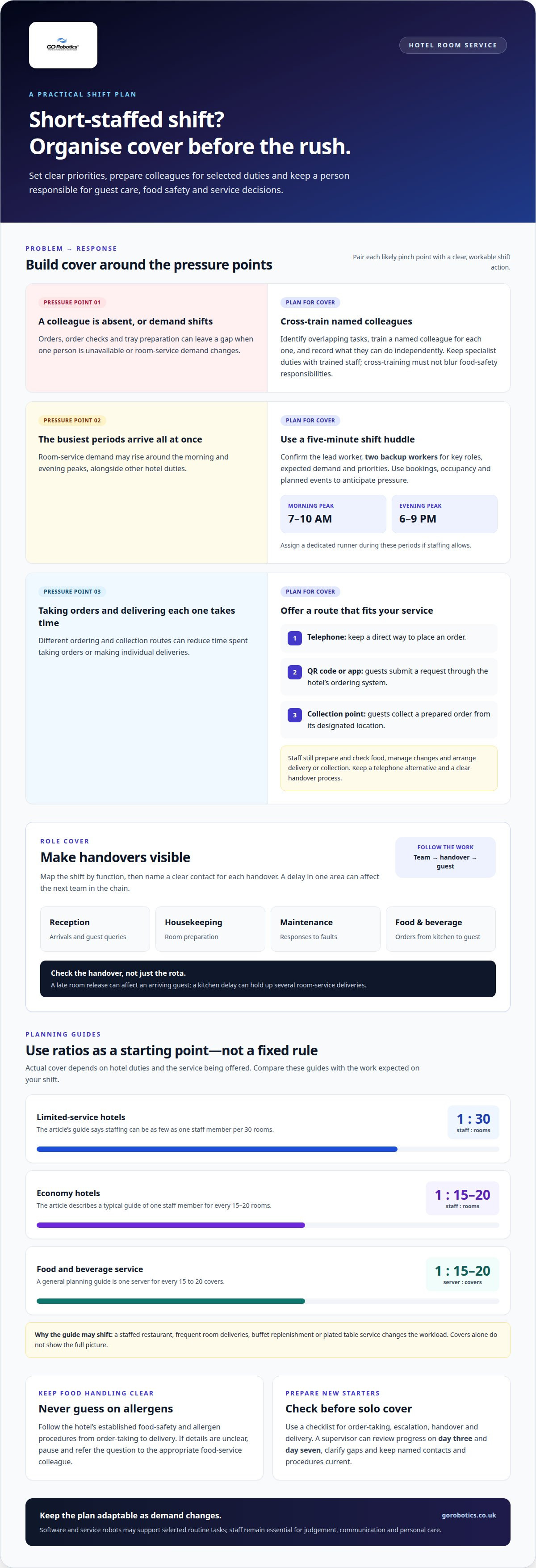
To maintain room service with fewer staff, set a minimum service plan before each shift. A five-minute huddle can confirm the lead worker, two backup workers for key roles, expected demand and priorities. Use bookings, occupancy and planned events to anticipate pressure. During the 7-10 AM and 6-9 PM peak periods, assign a dedicated runner if staffing allows.
Plan cross-training for off-peak periods, agreeing which duties colleagues can cover when restaurant demand is quieter. For example, a front-of-house colleague might take a room-service call, while a kitchen colleague prepares the order using the usual process. Set clear limits so staff know when to pass a request to the department responsible for it.
Room-service options that may reduce staff time include telephone ordering, QR-code or app ordering, and collection from a designated point. These approaches can reduce time spent taking orders or making individual deliveries, but staff still need to prepare, check and hand over food. Choose options that suit your layout and service standards.
For UK food safety and allergen handling, follow your hotel’s established procedures at every stage, from taking the order to delivery. Give guests accurate allergen information through the hotel’s approved process, and never guess or change an order when details are unclear. Train staff to pause and refer questions to the appropriate food-service colleague.
With QR-code or app ordering, guests scan a code or open the hotel’s ordering system, select items and submit a request. Staff receive the order through the system or the hotel’s agreed workflow, prepare it and arrange delivery or collection. Make the menu and ordering instructions easy to find, and provide a telephone alternative.
Food lockers or collection points let guests collect prepared orders instead of waiting for room delivery. Staff place each order in its designated location and tell the guest where and when to collect it. Clear labelling and a reliable handover process help ensure orders reach the right guest and dietary requests remain visible.
Train new starters with a checklist covering order-taking, escalation, handover and delivery. A supervisor can review progress on day three and day seven, then clarify any gaps before the employee works alone in that role. Keep the checklist current, with named contacts and the correct procedure for unusual requests.
2. Core hotel roles, including food and beverage
Map each shift by function, then check where one delay affects another. Reception handles arrivals and guest queries; housekeeping prepares rooms; maintenance responds to faults; and food and beverage teams manage orders from kitchen to guest. A late room release can affect an arriving guest, while a kitchen delay can hold up several room-service deliveries. Give each department a clear handover contact.
Staffing ratios can help you frame a rota, but they aren’t universal rules. Limited-service hotels can operate with as few as one staff member per 30 rooms, while economy hotels typically maintain one staff member for every 15-20 rooms. Compare these guides with your actual duties: a hotel with a staffed restaurant and frequent room deliveries needs different cover from one offering a restricted menu.
For food and beverage, a general planning guide is one server for every 15 to 20 covers. Covers alone don’t show the full workload. A buffet needs replenishment and clearing; a plated meal needs service at tables; room service adds order-taking, preparation coordination and delivery. Estimate the mix of these duties for each service period, then assign staff according to the work expected.
Build forecasts from bookings, occupancy, event schedules and seasonal demand. A conference may create a concentrated breakfast rush, while staggered arrivals can spread reception and food-service work across the day. Review upcoming bookings with department leads and note special menus or group requirements. This gives the kitchen time to plan and helps managers place staff where demand is likely to arise.
Use past order patterns to reduce avoidable food waste. Track which menu items sell during each service period, how often orders change and which prepared items remain unused. If a dish is regularly left over after a quiet evening service, adjust preparation quantities for that period. Maintain food-safety procedures when preparing components in batches and finishing dishes as orders arrive.
Make demand tracking simple enough to use during normal service. Record covers, room-service orders and discarded food by meal period, then compare the pattern with bookings. For example, more early breakfast orders after a group booking may call for a revised preparation schedule. Use the finding to adjust the next comparable shift instead of relying on memory alone.
Digital ordering can change how staff time is used, but it doesn’t remove the need for clear ownership. Decide who checks incoming orders, who tells the kitchen about changes and who updates guests about delays. Keep a telephone route available for guests who need help ordering. A defined handover between reception and food service helps prevent orders being overlooked when the team is busy.
3. Managing staff workload and burnout
A sound plan for how to handle hotel room service with fewer staff should protect the people delivering it. Pressure often rises when room orders overlap with restaurant service, guest queries and routine duties. Review the workload by task, not just by department. If one colleague is handling repeated deliveries and guest complaints, reassign one duty before delays and fatigue build.
Plan staffing before each busy season, using bookings, events and the services you expect to run. Build a 10-15% buffer into staffing levels to absorb unexpected absences. This is a planning guide, not a reason to keep staff constantly on standby. Where demand peaks, temporary staff can provide cover, provided their duties and supervision are clear before the shift.
Relying on urgent hiring after a staffing gap appears can leave managers firefighting while existing staff take on extra work. Planned hiring gives you time to prepare cover and build compliance checks into the process. It also helps set expectations before a new colleague starts. Explain which room-service duties they can take on and who to approach when a request falls outside their training.
Check workload during the shift, not just at handover. Ask which task is backing up, whether staff have been able to take breaks and where a colleague needs support. If restaurant orders are steady but room deliveries are queued, temporarily reassign a trained colleague to delivery. This eases pressure without asking the same person to work faster.
Track four measures each week: late or missed requests, average request completion time, overtime hours and staff departures. Review them together. A rise in late orders alongside increased overtime may point to an overloaded service period. Staff departures or missed breaks can signal a broader workload issue. Discuss the pattern with the team and agree on one practical change to test.
Fewer people handling deliveries can increase the risk of rushing, fatigue, hot-food spills, dropped trays and trips in corridors. Keep routes clear, reinforce safe carrying practices and make hazard reporting straightforward. If a colleague reports unsafe pressure, the shift lead should reassess tasks rather than add another delivery to the queue.
Keep support consistent across departments. Name a supervisor who can pause or reassign work, and make sure staff know how to raise a difficult guest request. Rotate demanding duties where skills allow, and protect breaks when service permits. These steps help colleagues speak up before pressure becomes part of every shift.
When reviewing how to handle hotel room service with fewer staff, consider both staff feedback and service records. Ask which handover or route causes unnecessary effort, then test a change on a comparable shift. Share what worked with the team and update the working practice, so improvements don’t depend on one manager remembering an informal fix.
4. Prioritising essential and deferrable work
When a shift falls short, set clear priorities before the queue builds. Put immediate guest needs first, such as a missing meal, an urgent room fault or a request affecting a guest’s comfort. Assign a named staff member to each urgent task, so the front desk can give accurate updates and knows who is responsible.
Use a simple task board with three categories: urgent guest needs, time-sensitive room work and tasks that can wait. Preparing a room for an arriving guest, for example, takes priority over replenishing a cupboard that still has supplies. Review the board as requests arrive, and move a task only when someone accepts responsibility for it.
Room service needs its own triage. A meal ready for delivery should not sit in the kitchen while staff complete routine paperwork. Where practical, group orders going to the same floor, and tell guests about delays rather than leaving them uncertain. If a request is difficult to fulfil, offer a realistic alternative and record the guest’s choice accurately.
Protect service quality by distinguishing essential tasks from preferred routines. A guest reporting a room fault needs a response; a standard room refresh may be deferred if the guest agrees. Offer guests the option to skip housekeeping, so staff can focus on rooms that need prompt turnover. Record the preference clearly to avoid repeating the offer next shift.
Keep deferrable work visible rather than letting it disappear. A shift lead can note non-urgent stock checks, routine filing or a detailed storeroom tidy, then assign them when capacity returns. Include the task, its location and the responsible department in the handover. This makes it easier to pick up without disrupting guest-facing work.
During a sudden rush, track the immediate workload without making staff switch tasks for every new request. For example, the front desk can collect non-urgent queries while a colleague completes a food delivery. Batch similar work, such as replenishing guest supplies on one corridor, when doing so won’t delay a time-sensitive request.
Set a clear escalation point. If a delayed order affects a guest’s plans, the assigned colleague should tell the shift lead, who can adjust the plan or contact the guest. Keep messages consistent across reception and food service. Accurate updates prevent repeat calls and avoid promises another department can’t meet.
At handover, review open guest requests before routine tasks. State what remains, who has spoken to the guest and what action is next. For instance, note that a meal is awaiting delivery or a room issue needs follow-up. The incoming team can then protect essential service and schedule deferrable work around current demand.
5. Staffing's relationship to guest experience
Measure room-service response times by recording when the order is received, accepted by the kitchen, ready and delivered. Compare each stage across service periods to locate delays, rather than treating every late order as a delivery problem. Gather feedback through a brief post-delivery prompt or a front-desk follow-up.
To assess resource use, record the staff time and ingredients associated with orders, then compare those inputs with order volume and menu choices. Review the figures alongside guest feedback, including complaints, compliments and repeat requests. This gives managers a practical view of service performance without relying on a single measure.
Staffing levels should match the service standards you promise. If guests can order meals to their rooms, assign clear responsibility for taking orders, preparing food and completing delivery. The kitchen handover should identify pending orders and dietary requests, while the delivery colleague confirms the correct room before leaving the service area.
Guests notice gaps between departments as well as delays. For example, a front-desk colleague who cannot see whether an order is being prepared may give an inaccurate update. Set one method for sharing order status between reception and the kitchen, and make a named shift lead responsible for resolving unclear requests.
Protect the parts of the guest experience that need direct attention. A staff member should answer questions about ingredients or a changed order, rather than leaving guests to interpret a digital menu alone. Housekeeping staff can also report a room-service issue they notice during cleaning, such as an uncleared tray, through the hotel’s agreed process.
Use guest comments to identify the specific service point that needs attention. If feedback mentions cold food, check the time between kitchen completion and arrival. If guests report missed dietary details, review how requests pass from order-taking to preparation. A focused review helps managers address the cause, not just apologise for the outcome.
Set service priorities before busy periods and explain them to the team. If the kitchen is managing several orders, keep guests informed about expected delivery and offer a suitable alternative where available. Clear updates protect trust, even when the hotel cannot provide the exact timing a guest first requested.
Review guest experience alongside staff workload. If response times worsen during high occupancy, examine order flow, delivery routes and staff allocation before changing the service promise. Maintain consistent guest-facing standards, but adjust operations where the evidence points to a bottleneck. This helps you preserve personal service while directing limited staff time where it matters most.
GO Robotics: Pudu BellaBot
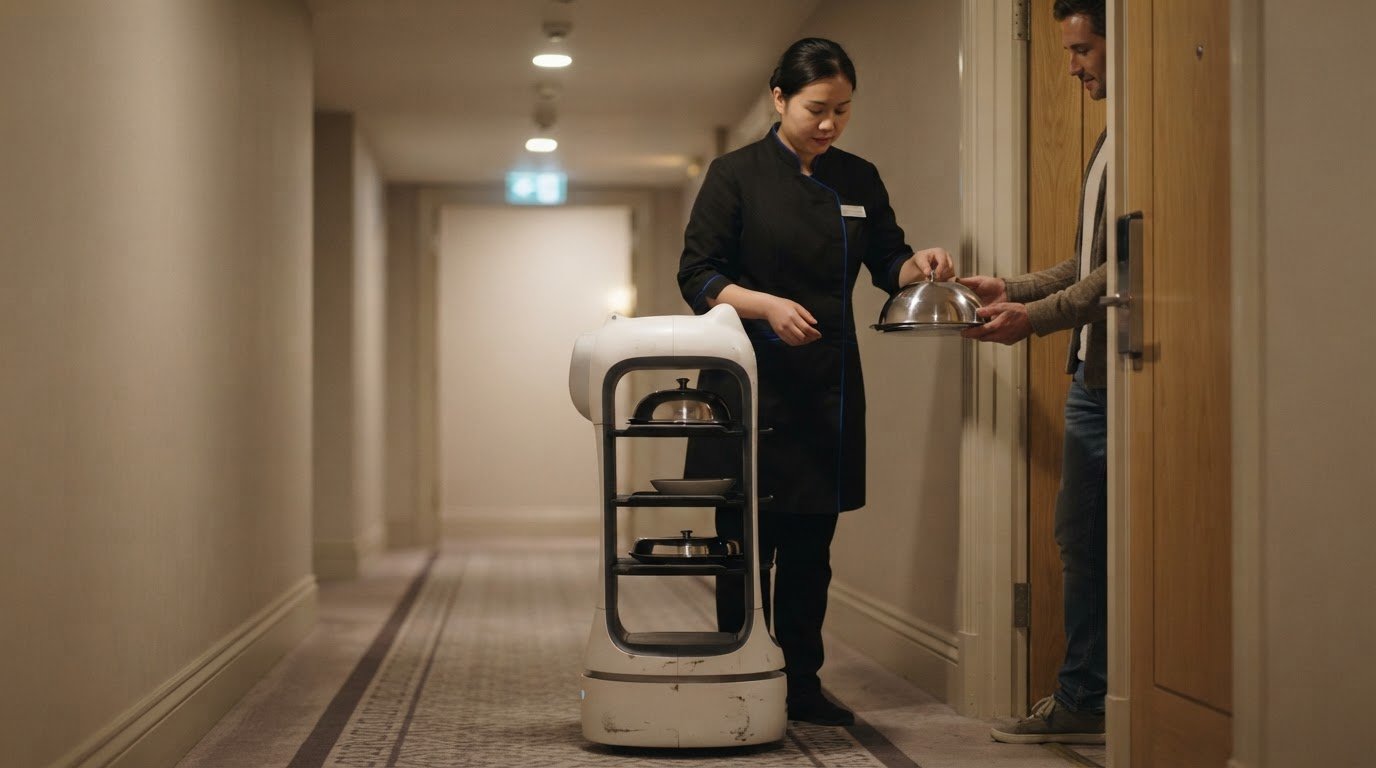
GO Robotics supplies the Pudu BellaBot for hotels considering robotic support with routine delivery tasks. It can help move suitable items between service areas and guest floors, giving staff more time for requests that need personal attention. Start by identifying repeat delivery runs and assessing whether the hotel layout and workflow suit this support.
The robot does not replace staff who prepare orders, answer questions or handle special requests. Instead, consider it as one part of a plan combining clear task priorities, trained colleagues and practical automation. GO Robotics also offers the Pudu KettyBot and Pudu HolaBot for hospitality settings.
To discuss whether the Pudu BellaBot fits your hotel’s delivery needs, contact GO Robotics or visit gorobotics.co.uk.
Build a room-service plan that can adapt
How to handle hotel room service with fewer staff is an ongoing operational question, not a one-off rota adjustment. As guest demand changes, review which tasks need staff attention and where a delivery robot could fit without compromising service.
GO Robotics offers Pudu BellaBot, Pudu KettyBot and Pudu CC1 for businesses considering automation. The right next step is to look at your hotel’s layout, delivery routes and current workflow, then decide whether a robot addresses a specific pressure point. It should support the team, not replace the judgement and personal care guests rely on.
Start with a practical question: which repeated task is taking staff away from guest-facing work? A clear answer gives you a basis for assessing whether automation suits your operation and how it could support your existing service standards.
Discuss hotel automation with GO Robotics and explore a practical next step for your team.
Frequently Asked Questions
Can software replace hotel staff?
No. Software can help organise information, but it cannot provide the judgement and personal attention hotel staff bring to guest service. Use digital tools to keep orders and requests visible, then make sure a person handles changes, complaints and unusual needs. For example, a guest asking to change a meal should reach a staff member who can check the request with the kitchen.
How should you plan the day when you are short?
Start by checking the day’s arrivals, departures, bookings and events, then match available skills to the work those plans create. Decide which services will run as usual and which need a clear limit, such as a shorter room-service menu during a conference rush. Give each shift lead authority to reassign duties, and make sure the front desk can explain service changes to guests.
How do you keep a short-staffed team from burning out?
Protect recovery time and avoid assigning the same person every demanding task. Build breaks into the rota, rotate physically demanding delivery runs and give staff a clear way to flag an unsafe or unmanageable workload. For instance, after a run of room deliveries, a colleague could switch to a seated desk task while another trained team member takes the next delivery.
What room-service tasks can be automated without reducing guest satisfaction?
Routine movement of prepared orders between service points is a practical task to assess for automation. A delivery robot such as the Pudu BellaBot can support this work, while hotel staff remain responsible for preparing and checking food, answering questions and resolving exceptions. Keep a human contact available for guests who need help, and assess the route and handover process before introducing automation.
How should hotels schedule and cross-train staff for room service during busy periods?
Use booking patterns and event schedules to assign staff with the right skills to the busiest room-service shifts. Train colleagues in specific supporting duties, such as order handover or delivery, and practise the process before a peak period. Keep food preparation and allergen questions with staff trained for those duties. A clear rota should show who takes over when a delivery queue grows or someone is reassigned.