Robot with tray carrying capacity: How much can it carry
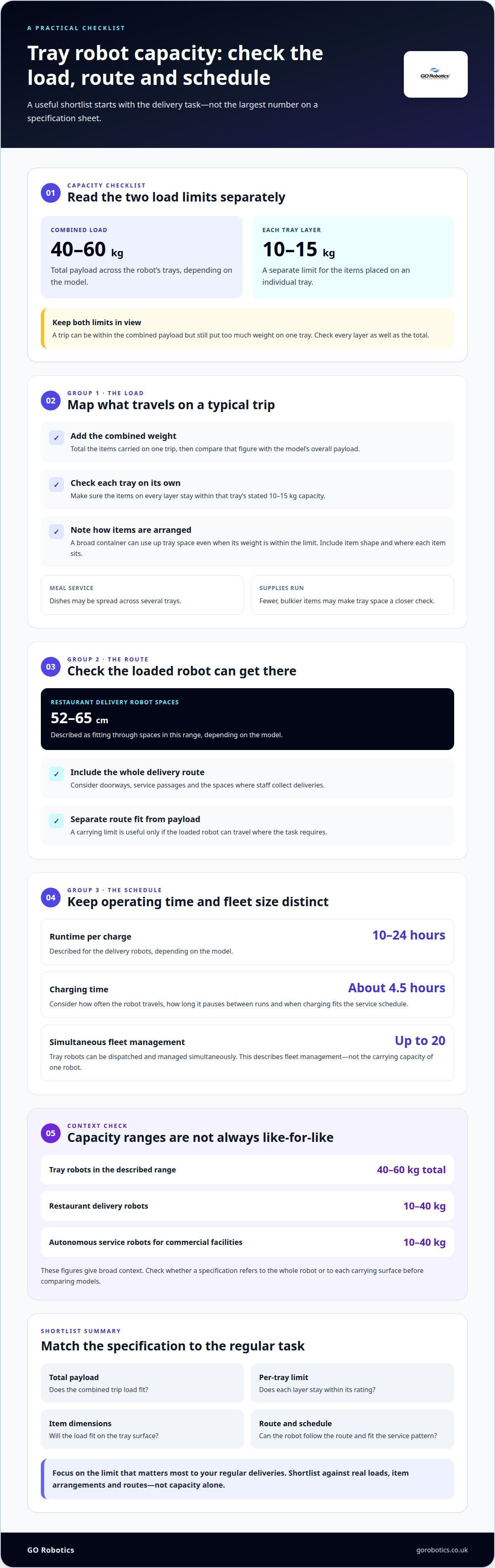
A robot with tray carrying capacity can carry 40-60 kg in total, depending on the model, with 10-15 kg on each tray layer. These figures give you a starting point for understanding the specification, but a useful comparison needs to account for how your service operates.
When assessing a robot with tray carrying capacity, consider what your team needs to deliver and how the robot will fit into existing workflows. Total payload is only one part of the decision. Shortlist models against your venue’s requirements rather than choosing by a single specification.
This guide explains how to read carrying-capacity figures and apply them to your operation. It also covers practical comparison points, helping you describe your needs and decide where a tray robot could fit into your delivery routine.
Key Takeaways
- Tray robots in this range carry 40-60 kg in total, depending on the model, while each layer holds 10-15 kg.
- Compare both the overall payload and the limit for each tray layer against the loads you need to move.
- Think about how your items are distributed across the trays, not just their combined weight.
- Consider the day-to-day delivery task alongside payload when deciding which model suits your venue.
Robot with tray carrying capacity
Payload means the maximum weight a robot can carry. Tray robots in the described range have a total payload of 40-60 kg, depending on the model, while each layer holds 10-15 kg. Read these as separate limits. The total describes the combined load; the layer figure applies to the items placed on an individual tray.
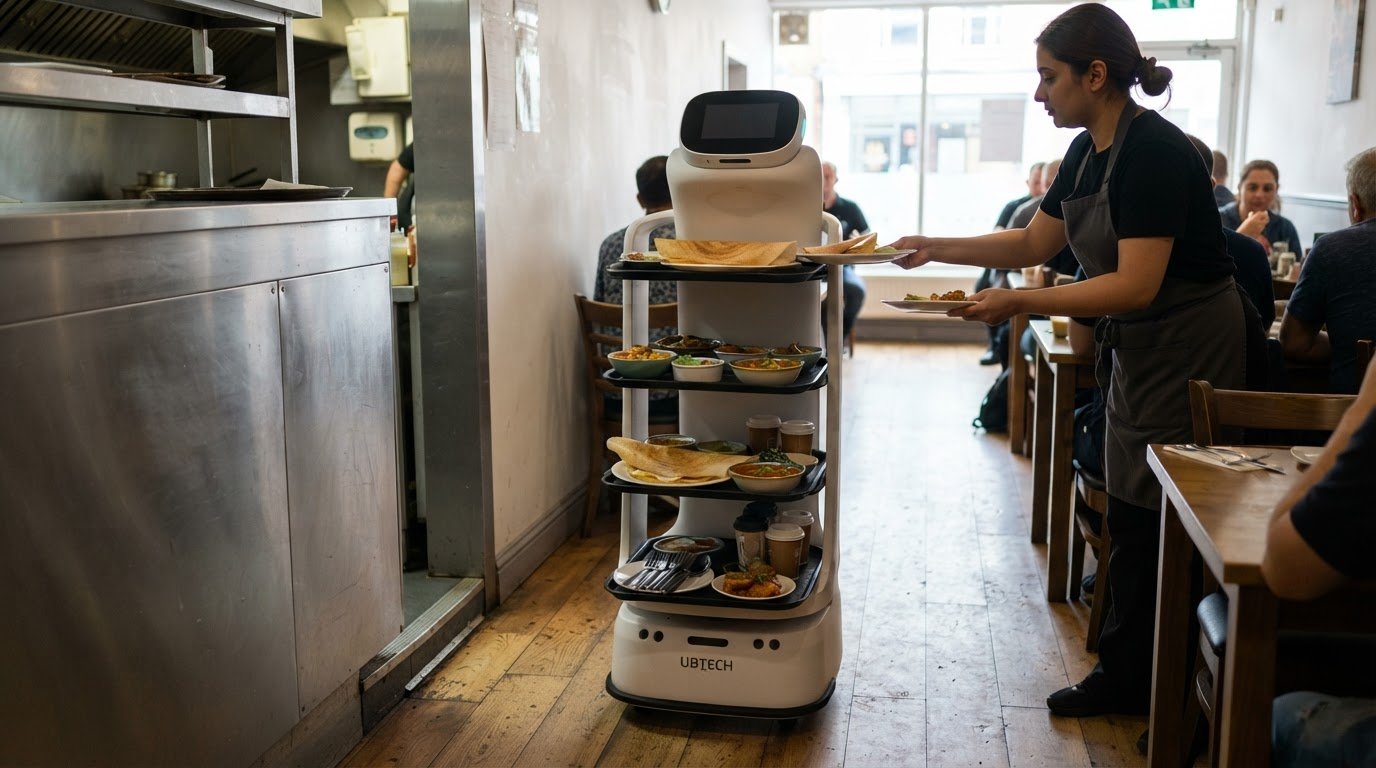
That distinction matters for real deliveries. Several meal plates might stay within the overall payload but exceed the limit for one tray. Distributing items across trays can help keep each tray within its stated limit, while ensuring the total load remains within the robot’s rating.
Other service robots have different stated capacities. Restaurant delivery robots are described with load capacities from 10-40 kg, while autonomous service robots for commercial facilities are listed in a 10-40 kg range. These figures give broad context, not a like-for-like model comparison. Check whether a specification refers to the whole robot or each carrying surface.
Begin with the task. List what a typical journey carries, how staff group the items and where each item sits during transit. A meal service might distribute dishes across trays, while a supplies run may involve fewer, bulkier items. The load arrangement shows whether tray limits or total payload needs closer attention.
- Record the combined weight. Add the items carried on one trip and compare the result with the model’s total payload.
- Assess each tray separately. Check that the load on every layer stays within its 10-15 kg capacity.
- Consider item shape. A broad container can take up tray space even when its weight is within the stated limit.
Weight alone does not establish whether a robot suits the route. Restaurant delivery robots are described as fitting through spaces measuring 52-65 cm, depending on the model. Doorways, service passages and the spaces where staff collect deliveries all form part of the route assessment. Carrying capacity is useful only when the loaded robot can travel where the task requires.
Plan around the real delivery pattern, too. The described delivery robots have a runtime of 10-24 hours per charge, depending on the model, and take about 4.5 hours to charge. Runtime and charging figures are separate from payload. Consider how frequently the robot travels, how long it pauses between runs and when charging fits into the service schedule.
For sites considering several units, fleet capacity is another distinct measure. Up to 20 tray robots can be dispatched and managed simultaneously. That figure describes fleet management, not the weight any one robot can carry. Keep it separate from payload when comparing how a system would serve your operation.
Compare total payload, the limit for each tray, item dimensions, route and delivery schedule. Focus on whichever limit is most relevant to your regular tasks. Frequent small deliveries, for example, put different demands on tray space than a run carrying larger supplies.
Use these details to shortlist models for the work you need done, not simply the one with the largest capacity figure. Relate each specification to your actual loads and routes to assess whether the robot’s carrying limits suit your delivery routine.
GO Robotics
GO Robotics can help you compare tray-based robot options with the loads and routes your team handles. Its range for hospitality deliveries includes Pudu BellaBot, Pudu KettyBot and Pudu HolaBot. The right model depends on the task, how items are arranged on the trays and where they need to go.
GO Robotics assesses your venue during a site survey before recommending a model. Bring examples of typical loads and routes, such as meals travelling from a kitchen to dining areas or supplies moving between service points. This connects payload needs with the conditions the robot will encounter, rather than relying on the headline capacity alone.
Contact GO Robotics to discuss your delivery task and find a suitable robot option for your venue.
Plan your next delivery step
Turn your capacity assessment into an operating brief. Describe the recurring delivery task, who prepares each load, where the robot should hand items over and how staff will handle exceptions. This takes the decision beyond the specification sheet and towards a workable routine.
Set practical criteria before choosing a model. Consider whether it suits your service pattern, whether handovers are straightforward and what staff need to learn. These points help you assess how the robot fits into everyday work and refine the process over time. A robot with tray carrying capacity should support a defined task, not create an extra, disconnected step for staff.
GO Robotics can help turn that brief into a model discussion based on your venue and delivery process. To develop your next steps, outline your delivery requirements with GO Robotics. A considered plan gives your team a practical basis for moving forward, with attention on how the change can support your service.