UK Hotel Robots: Boost Efficiency and Service
The best UK hotel robots are those matched to a clear, repeatable task and the building where they will operate. Service robots can support food delivery, cleaning and guest-facing hospitality, but corridors, lifts and service style all affect where they fit.
It’s understandable to want smoother operations without losing the personal service guests expect. Robots are most useful when they handle routine movement or tasks, leaving staff available for work that calls for a human touch.
This guide explains which hotels and service tasks may suit robots, how building layout affects compatibility, and what to consider for dining, reception and other hospitality automation. You’ll also see where robots can help and where they’re not a fit, so you can assess the practicalities before choosing a role for them in your hotel.
Key Takeaways
- Match robots to repeatable hotel tasks, such as deliveries or guest guidance, rather than expecting them to replace personal service.
- Consider guest privacy, accessibility and staff support when assessing check-in and dining uses.
- Assess corridors, lifts and floor access to understand where a robot can travel within your building.
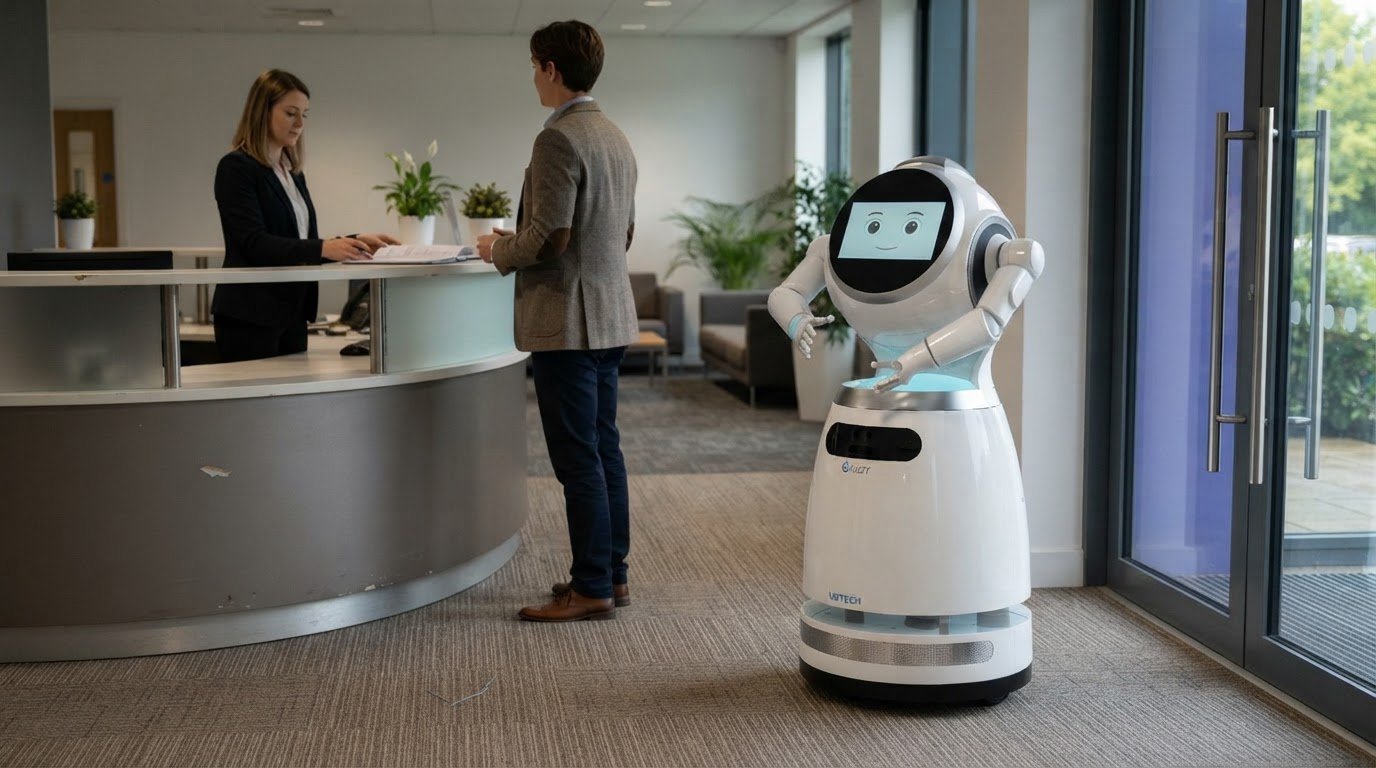
- Reception robots can support greetings and visitor directions, while staff remain available for requests that need personal attention.
- Use automation where it fits your service, and keep people involved in decisions that depend on judgement or care.
What types of hotels benefit most from service robots?
Hotels can use delivery, cleaning, floorcare and guest-service robots for defined, repeatable tasks. Robots support routine work, while staff provide personal service and handle requests that need judgement.
Check-in and Guest Services
At reception, a service robot can greet guests, give directions or guide visitors towards hotel facilities. It can support check-in, but staff should handle identity checks, booking questions and unusual requests. This division gives visitors a clear point of contact for decisions a robot cannot make.
Consider the route from the entrance to the desk, lifts and guest areas. For example, a robot could guide visitors towards a restaurant while reception staff manage arrivals. Set a handover point where a colleague can help guests who need personal assistance.
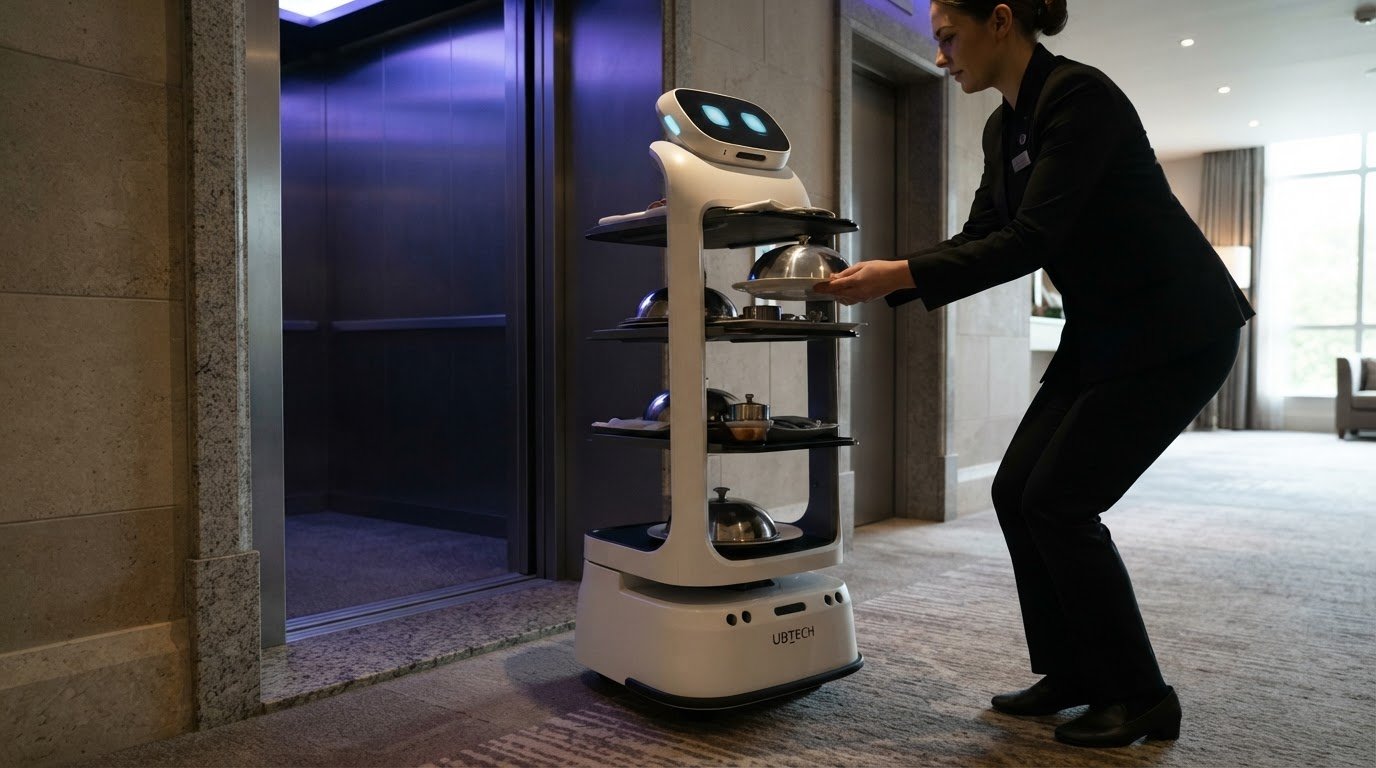
Room service is another possible task. A delivery robot can carry food, toiletries or laundry to a designated handover point. Decide how guests will be notified and who manages delivery at the room. This keeps the robot’s role specific, with staff responsible for order questions and service issues.
Hotels can buy or lease a robot, or use Robots-as-a-Service (RaaS), a rental plan that can include maintenance and support. Consider which arrangement suits the task and service period. For example, a hotel trialling deliveries during a busy season may value a rental option.
Staff Time and Service Efficiency
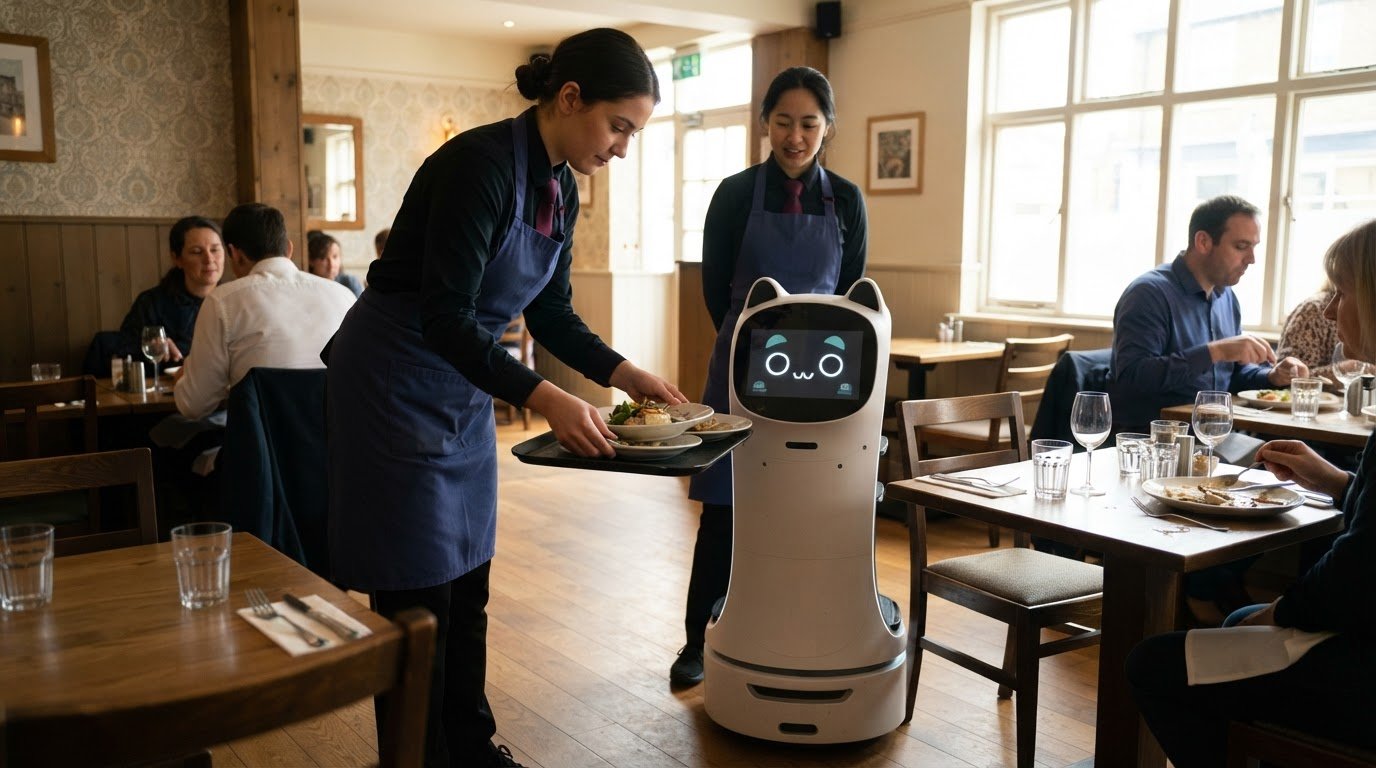
Service robots can handle repeated journeys, such as moving meals from a kitchen to restaurant tables. A delivery robot may carry dishes or drinks along a set route, supporting restaurant staff during service. Team members still prepare orders, answer questions and assist guests who need personal help.
Consider how that route fits the restaurant’s layout and service style. In fine dining, staff might use a robot for back-of-house transfers while keeping table-side explanations and presentation in their own hands.
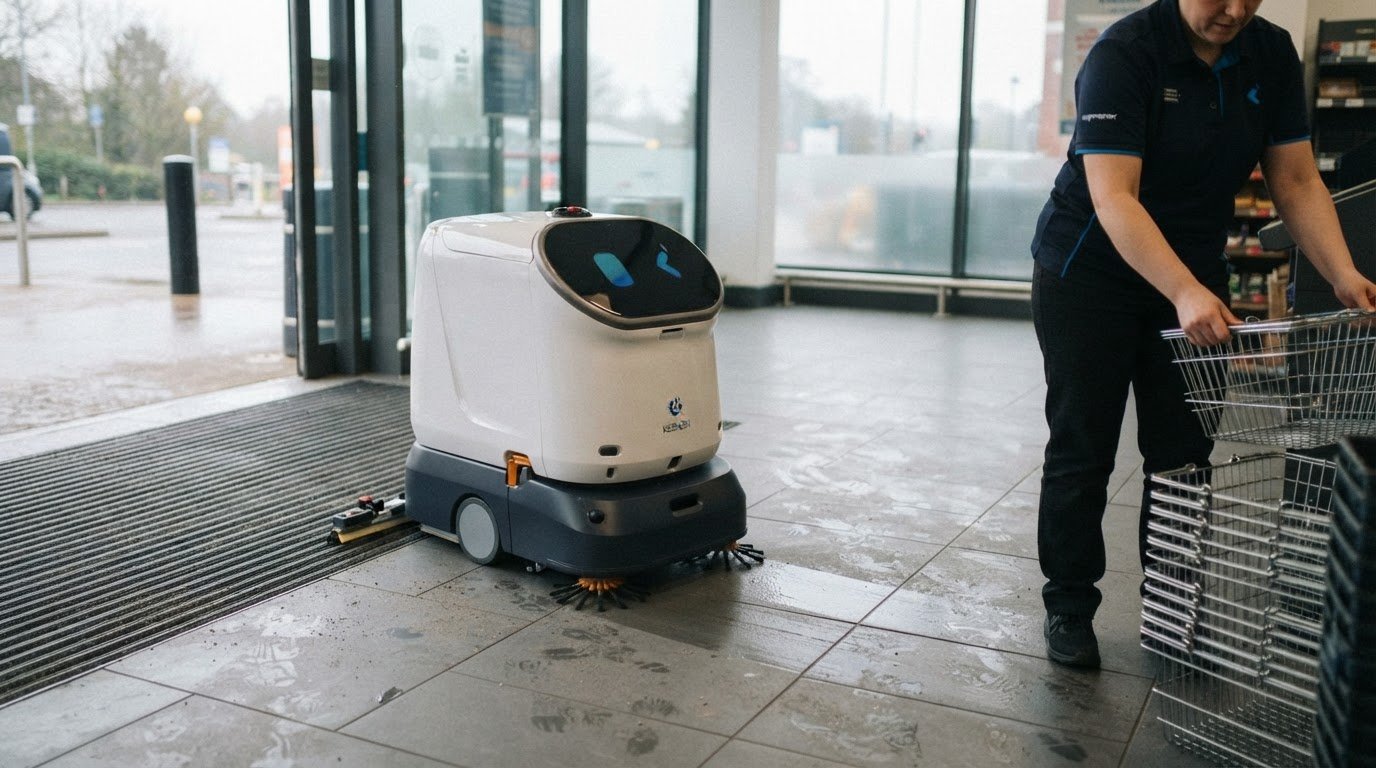
Cleaning and floorcare robots can support routine work where the task and route are clear. Their usefulness depends on whether the work is repeatable and separate from duties requiring staff judgement. They cannot resolve a complaint or respond personally to a guest’s individual needs.
Choosing a hotel robot starts with identifying a recurring task. Define its route, who handles exceptions and how staff will work alongside it. Then assess whether the robot supports daily service without adding unnecessary steps for the team or guests.
Is a robot suitable for a fine-dining hotel restaurant?
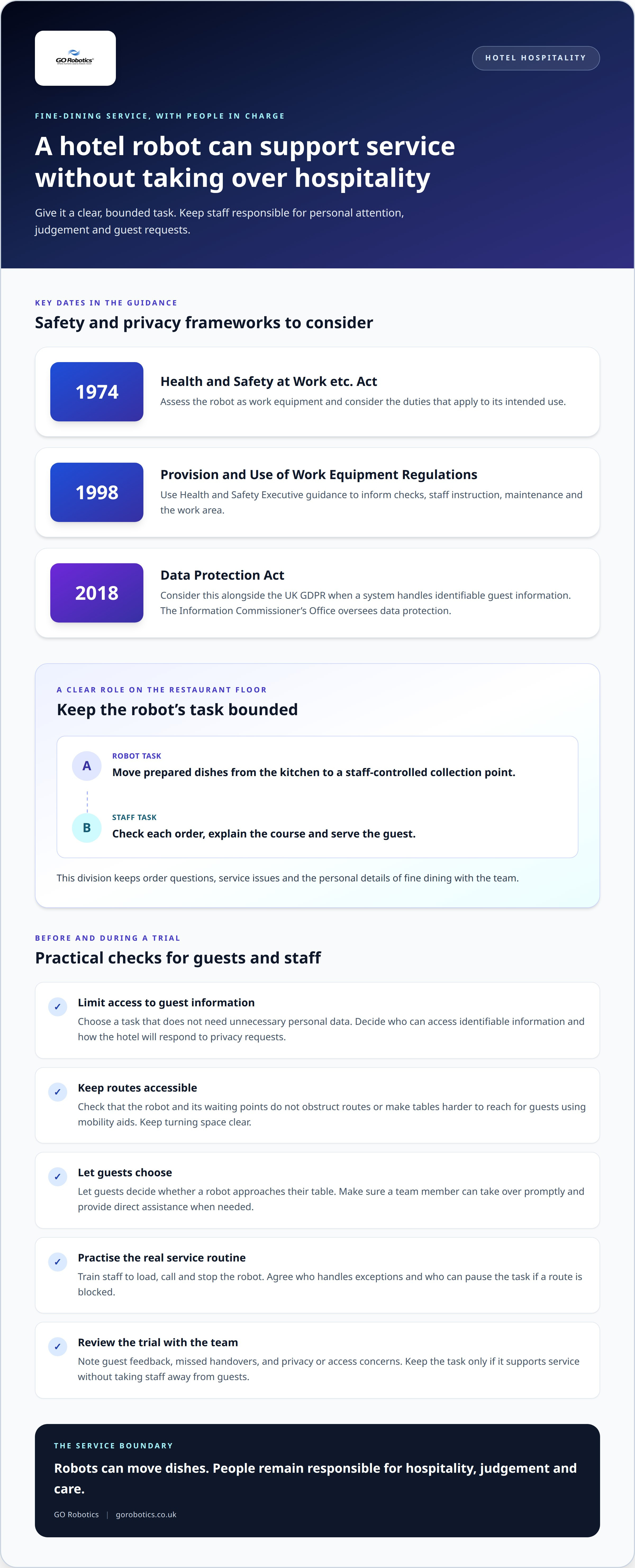
Yes, if its task fits the restaurant’s service style and staff remain responsible for hospitality. In the UK, relevant frameworks include the Health and Safety at Work etc. Act 1974 and Provision and Use of Work Equipment Regulations 1998; the Health and Safety Executive provides workplace guidance. For personal data, hotels must consider the UK GDPR and Data Protection Act 2018, overseen by the Information Commissioner’s Office.
Guest Privacy and Accessibility
Choose a task that doesn’t require unnecessary access to guest information. A robot carrying a prepared dish from the kitchen to a staff handover point may not need a guest’s name or room details. If a system handles identifiable information, decide who can access it and how the hotel will respond to privacy requests.
Accessibility needs attention during a trial. Check that the robot and its waiting points don’t obstruct routes or make it harder for guests using mobility aids to reach their tables. Keep equipment clear of turning space, for example, and have staff assist guests who need a different route or direct service.
Fine dining also depends on timing and personal attention. Let guests choose whether a robot approaches their table, and ensure a team member can take over promptly. This helps prevent the technology from interrupting conversation or making guests feel obliged to interact with it.
Robots Supporting Restaurant Staff
Use a robot for a bounded support task, such as moving dishes from the kitchen to a staff-controlled collection point. A waiter can then check each order, explain the course and serve it. This division preserves the personal details that shape a fine-dining experience.
Before deployment, the hotel should assess the robot as work equipment under applicable safety duties. Health and Safety Executive guidance can inform checks on its intended use, staff instruction, maintenance and surrounding work area. Record who can pause a task and how staff should respond if a route becomes blocked.
Train the restaurant team using the actual service routine. Practise loading, calling and stopping the robot, then agree who handles exceptions. A trial during a quieter service period can reveal whether its route interferes with staff carrying dishes or guests moving between tables.
Review the trial with the team before extending the robot’s role. Note guest feedback, missed handovers and any privacy or access concerns. Keep the task only if it supports service without taking staff away from the attention guests expect.
Lift, corridor and building compatibility
Assess the whole route before assigning a hotel robot to deliveries or cleaning. Corridors, doors, floor transitions and lift access all affect whether it can reach its destination. A route that works from the kitchen to nearby tables may not suit deliveries to guest rooms on another floor.
Start at the robot’s parking or charging location, then walk the intended route to each service point. Note narrow sections, tight corners, thresholds, doorways and areas where guests queue. Repeat the walk during a normal busy period, such as breakfast, because luggage, trolleys and staff movement can change the usable space.
Measure the narrowest clear passage, not just the width of an empty corridor. The reported 65 cm passage-width claim for BellaBot Pro is not attributed to a named source, so check the proposed model against the actual route. Include door frames, corners and places where the robot needs to turn or wait.
Floor access can determine the task’s scope. A robot without lift integration may be limited to one accessible floor. For instance, deliveries from a kitchen to guest rooms on the same floor avoid the need for lift travel. If the job involves several floors, lift access is a separate integration requirement, not something to assume from the robot’s ability to travel along corridors.
For a lift journey, map each step: approach the lift, call it, enter, select the destination floor and exit. Identify how the lift controls work and who manages the process if a guest enters or the doors are held open. Record every powered door on the route and how it opens. Door or lift integration depends on the building controls and the robot’s configuration.
Include operational exceptions in the plan. A delivery route might need an alternative stopping point if a corridor is blocked by housekeeping equipment. Staff should know how to take over a delivery or redirect the robot if a lift is unavailable. These procedures help prevent an access issue from leaving an order unattended.
Finally, test the planned route in the actual working area. Run it through each doorway and, where relevant, through the lift sequence. Record where the robot needs to stop, where people may cross its path and where staff hand over items. If a route fails at a doorway or lift, narrow the task to an accessible area rather than relying on an untested workaround.
Reception greetings and visitor guidance
A reception robot can support a hotel’s first point of contact by greeting visitors and helping direct them. It works best when its role is clear, such as guiding a conference guest towards a meeting room while reception staff handle check-in.
Start by choosing the places visitors most often ask about. These might include the restaurant, lifts, conference rooms or leisure facilities. Give the robot a defined guidance role for those destinations, and make sure reception staff can take over when a guest needs help with a booking or personal request.
At a conference hotel, visitor guidance can help guests distinguish the event entrance from the main reception desk. A robot could direct attendees towards the meeting suite, while staff manage registration and answer questions about the programme. This keeps the robot’s task straightforward and preserves human support for decisions.
Consider how the greeting fits the hotel’s style. A short welcome and clear directions may suit a busy city hotel, while a country house hotel might prefer staff to lead more guest interactions. In either setting, test the wording and route with reception colleagues before introducing the robot to visitors.
Reception teams should agree how to respond when guidance is incomplete. If a guest asks about a restaurant booking or needs help finding an accessible entrance, for example, staff should step in rather than leave the visitor waiting. Set a clear handover point at the desk, where the robot’s task ends and a colleague takes over.
Think about visitors carrying luggage, drinks or event materials. A route through a crowded entrance may be less useful than one leading from reception to a quieter corridor. Walk the proposed path during a normal arrival period and note where queues, luggage or temporary signs could interrupt movement.
Keep directions current when hotel spaces change. If a wedding moves from the ballroom to a private dining room, reception staff should update the guidance for that event. A simple process for communicating temporary changes helps prevent guests being sent to the wrong venue.
Finally, judge the role by whether visitors reach the right place while retaining access to staff. Gather feedback from reception colleagues and guests after the trial, then adjust destinations or handover arrangements. If guidance causes confusion, narrow the task to clear routes such as reception to the lifts or restaurant.
AI and automation in hospitality
AI and automation are related, but they do different jobs in a hotel. Automation follows defined instructions, such as sending a delivery robot along a mapped route. AI can help interpret information or respond to a request, but staff are still needed to oversee service and handle exceptions.
Keep the robot’s decisions within a clear task. For example, a hotel may assign it to carry room-service items between a handover point and guest floors. Staff still prepare orders, confirm the destination and respond if a guest needs help. This makes the role practical without suggesting a robot can manage the whole guest experience.
AI-enabled guest interaction needs equally clear boundaries. A system answering questions about a hotel should use current information about facilities, opening arrangements and event locations. If a guest asks about a booking change or personal need, the process should pass the request to a staff member rather than improvise an answer. When deploying virtual assistants or AI agents, specialist consultancies such as Navo Inc. advise structuring these automated roles with strict operational guardrails so that guest enquiries escalate seamlessly to human colleagues.
Consider data as part of the design. A delivery robot may need route information, while a guest-facing system could process questions or other personal details. Decide what information the task requires, who can access it and when staff take over. Keep the technology’s role separate from decisions involving guest identity or individual circumstances.
Automation also depends on how well the task fits the building and service routine. A robot making repeated trips through a quiet service corridor has a different role from one working among guests at reception. Define its route, handover points and exception process before deployment, then observe how staff and guests interact with it.
After deployment, use operational data to tune routes, waiting times and charging. For example, hotel staff can note where queues delay a route or where the robot waits too long at a handover point. Adjusting those settings against real service patterns helps establish whether automation supports the work or adds extra steps.
The key takeaway is to automate a bounded task, not hospitality itself. Choose one repeatable process, assign staff responsibility for exceptions and review how the system performs in normal service. To discuss a practical hotel robot deployment, consider how automation could fit your venue’s daily routines.
GO Robotics
GO Robotics can help match hotel automation to a practical task and your building layout. If you’re considering guest guidance, restaurant service or deliveries, a site survey helps identify suitable routes and operating requirements before a model is recommended.
Pudu BellaBot, Pudu KettyBot and Pudu HolaBot are options for hospitality tasks, depending on what you need the robot to do. You can discuss outright purchase, leasing or robots-as-a-service (RaaS), a monthly rental arrangement that can include the robot, software and support.
Bring a specific use case, such as moving room-service orders or guiding visitors from reception. Contact GO Robotics to discuss your hotel’s requirements.
Plan your hotel’s next step
Give automation a clear starting point: choose a recurring task, identify who will oversee it and decide what a good handover to staff looks like. That keeps the focus on guests and service standards, rather than introducing technology for its own sake. For UK hotel robots to make practical sense, the proposed role needs to fit both your team’s routine and the way guests use your building.
GO Robotics can discuss whether Pudu BellaBot, Pudu KettyBot or Pudu CC1 is a suitable option for your requirements. Bring the task you have in mind, such as supporting service in a restaurant or moving items through the hotel, and the relevant details about your site. That gives the discussion a useful focus without assuming every model fits every venue.
When you’re ready to explore a suitable approach, contact GO Robotics about hotel robots. A well-chosen first task can give your team a practical way to assess automation while keeping personal hospitality at the centre.
Frequently Asked Questions
Do hotel cleaning robots replace the housekeeping team?
No. A cleaning robot handles defined floor-cleaning tasks, while housekeepers remain responsible for preparing rooms, changing linen, checking presentation and responding to guest requests. For example, a robot may clean an open floor area after staff finish room preparation. Plan its work around housekeeping routines and assign a team member to manage exceptions. The aim is to support the team’s workload, not remove the human care guests expect.
Are hotel robots safe around guests and children?
They can operate in guest areas when the hotel carefully plans routes, operating procedures and staff oversight. Before use, assess busy entrances, children’s play areas, luggage storage and places where people may gather. Make sure staff know how to manage interruptions and keep routes clear. A robot’s sensors do not replace venue safety procedures, staff judgement or appropriate supervision, particularly in crowded areas.
Can robots help with overnight room service safety?
Yes, a delivery robot can support overnight room service as part of a staff-managed process. Set a clear procedure for confirming the order, destination and handover, and make sure the night team knows when a delivery is in progress. Keep a responsible team member available for guest questions or unusual requests. The robot assists with transport; hotel staff remain accountable for service and escalation.
How can a hotel choose the right robot for its needs?
The right model depends on the task, the hotel’s layout and how staff will manage the robot. Consider whether you need help with floor cleaning, deliveries or another defined task, then assess the routes, handover points and staff responsibilities involved. GO Robotics can survey the site and recommend a suitable model. Discuss the intended task and site requirements before choosing an option.
How can hotel robots support staff and guest service?
Robots and staff perform different parts of hotel service, so consider how each can contribute to the guest experience. A robot can handle repeatable transport or cleaning tasks, while people provide judgement, hospitality and help with unexpected needs. Assess the operating arrangements, including training, integration, maintenance and staff time spent overseeing tasks. Guest feedback and service consistency can show whether the chosen role is improving how your team works.
How can a UK hotel choose and implement a service robot?
Start with a specific task, such as carrying supplies between a storeroom and a service area. Then assess the route, doors, lift access, handover points and staff responsibilities. GO Robotics can survey the site, recommend a suitable model and arrange installation, mapping, commissioning and staff training. Run the agreed task with the team, gather operational feedback and refine procedures before extending its role to another area.
How do hotel robots affect staffing, jobs, and guest experience in the UK?
Hotel robots should assist staff with repetitive tasks, not replace the team. Their effect depends on which duties they take on and how the hotel organises handovers and oversight. For instance, a delivery robot can carry items while a team member remains available to answer questions and support guests. Explain the robot’s role to staff and guests so its purpose is clear during service.
What maintenance, integration, and support do hotel robots require in the UK?
Plan for routine cleaning, charging, software access and a clear process for reporting faults. Integration may involve mapping routes and coordinating access with doors or lifts, depending on the robot and building. Staff training should cover daily use, handovers and what to do when a task cannot be completed. GO Robotics provides installation, mapping, commissioning, staff training and ongoing technical assistance. Confirm what maintenance and support are included in your chosen Robots-as-a-Service plan.